
Om Malik 1966-2026

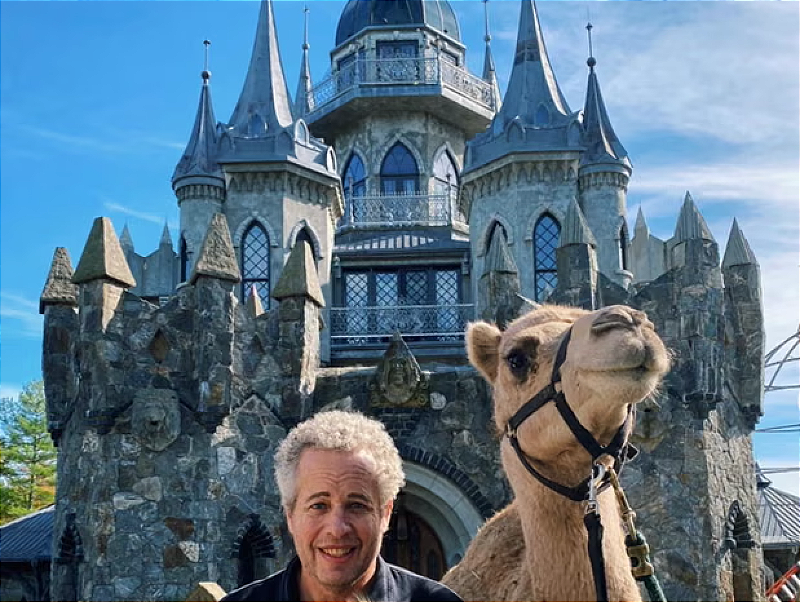
I first met Om Malik in 2006, when we invited him to be a panelist at the web conference that some friends and I had just started in Toronto called Mesh (despite having literally no clue what we were doing). The idea was to bring smart folks together to talk about the wonderful future that blogs and live chat software and other magical Web 2.0 creations were surely going to bring about (LOL). And Om was one of those smart people we wanted to have on stage — I had been reading his blog and his writing at Business 2.0 about broadband and other new technologies, and I wanted him to talk about how the social web was going to change the media (I worked at a newspaper then, and I really wanted something to change the media). And he was everything I expected when we met: funny, smart, shot straight from the hip. I liked him right away.

As we sat around chatting at the MaRS Centre in Toronto, I mentioned to Om that I thought he should turn his blog into a business — just put up a website and sell ads and so on. As I recall, he stayed up late the night before he had to leave for San Francisco, drinking wine and smoking cigars (both of which he gave up after having a heart attack the next year) and he missed his flight. When he got into the office, he got chewed out by an editor and not long after that he quit and turned his blog into Gigaom, hiring writers and working out of his apartment (using a Pringles can or some other gizmo to leech off the free Wi-Fi from the Starbucks across the street, if I remember correctly). Om told a story about how he told his mother he wanted to call the site MegaOm, and she reportedly said “You are getting so big, it should be called GigaOm!” I don’t know if this is true 🙂

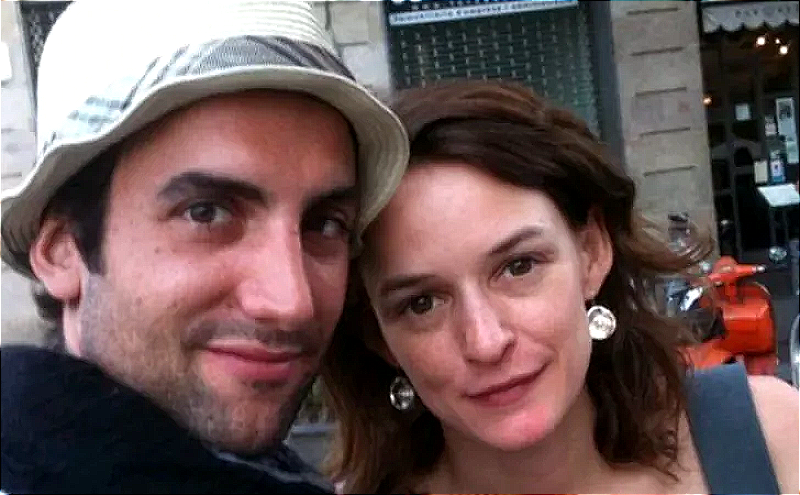
If this is your photo of Om please let me know
Continue reading “Om Malik 1966-2026”

The US and Canada both claim ownership of this tiny island

Machias Seal Island sits in the Gulf of Maine, about ten miles off the coast, and roughly the same distance from New Brunswick’s Grand Manan Island. It’s too small and remote to support a town, or even a village. No one lives there permanently, but you’ll always find someone at home — two lighthouse keepers from the Canadian Coast Guard who rotate through in month-long shifts. But Machias Seal Island isn’t unambiguously Canadian. Canada claims it as its own, but so does the United States. The dispute dates back to the Treaty of Paris in 1783, which ended the American Revolution. The Americans point to a clause granting the U.S. rights to any territory within twenty leagues of its coast; the Canadians cite a 1621 land grant that claimed any island within six leagues of Canadian coastline for the British crown. Machias Seal Island, somewhat inconveniently, satisfies both conditions. (via Now I Know)

Towards the end of his life inventor Nikola Tesla was obsessed with pigeons and telepathy

On a February morning in 1935, a disoriented homing pigeon flew into the open window of an unoccupied room at the Hotel New Yorker. A maid rushed to the 33rd floor and knocked at the door of the hotel’s most infamous denizen: Nikola Tesla. The 78-year-old inventor quickly volunteered to take in the homeless pigeon.”The man who recently announced the discovery of an electrical death-beam, powerful enough to destroy 10,000 airplanes at a swoop, carefully spread towels on his window ledge and set down a little cup of seed,” reported The New York Times. Tesla had, for years, regularly been spotted skulking through the nighttime streets of midtown Manhattan, feeding the birds at all hours. He was known to leave his windows open so the birds could come and go. Once, he was arrested for trying to lasso an injured homing pigeon in the plaza of St. Patrick’s Cathedral. From his jail cell, Tesla told the polices that he and his bird could speak to one another mind to mind. (via Nautilus)

Note: This is a version of my When The Going Gets Weird newsletter, which I send out via Ghost, the open-source publishing platform. You can see other issues and sign up here.

Continue reading “The US and Canada both claim ownership of this tiny island”

Banning teens from social media is bad and also doesn’t work

The UK recently passed a new law that effectively bans children under the age of 16 from using most social-media platforms, a move that the UK government notes was based explicitly on Australia’s similar law, which was passed in 2024 (Britain’s law comes into effect next year). The law covers platforms like Instagram, YouTube, TikTok, Snapchat, Facebook and X but it excludes messaging services like WhatsApp and Signal. Some social app features – such as livestreaming and the ability to be contacted by strangers – will be blocked from users under the age of 18, and those features will also be blocked in related services like online gaming apps. According to the UK’s description, all of these new rules will be backed up by stronger requirements for age checks. In the preamble to the British version of the law, the government tries to answer the question “Why are these changes being made?” and this is the explanation it gives:

The government ran a national consultation from March to May 2026, one of the largest engagement exercises undertaken by this government. The results showed overwhelming public demand for action, with 9 in 10 parents backing a social media ban for under‑16s, and two-thirds of young people agreeing under-16s should not be allowed to use at least some social media platforms. These changes reset the rules so that children are protected from the platforms and online features that create the most harm.

One thing you might notice about this explanation is a complete lack of any evidence that such a law a) is necessary and b) works. All we have is a statement that suggests that most parents and young people – or at least most of those who chose to respond to a request for input – wanted this law to be passed. Or if not this law specifically, then they at least wanted “action,” whatever that means. I’ll get to the part about whether such laws are necessary, but the lack of data on whether such legislation will work or not is interesting, since the British law is based on an Australian law that has been in effect for almost two years now. Surely by now there would be some evidence that it is working? If there is, the British government doesn’t supply any, which isn’t that surprising because as far as I’ve been able to determine that kind of evidence doesn’t exist.

Note: This is a version of my Torment Nexus newsletter, which I send out via Ghost, the open-source publishing platform. You can see other issues and sign up here.

Continue reading “Banning teens from social media is bad and also doesn’t work”

Van Gogh truthers think the famous painter was murdered

Irv Arenberg, an 85-year-old retired ear surgeon, lives in Arizona and counts among his patients the late artist Vincent van Gogh. Arenberg was a teenager when he first encountered Van Gogh, in the guise of the 1956 biopic Lust for Life, and he became fascinated by the Dutch artist, whom he gradually got to know through undergrad art-history classes and the posters he hung in his dorm room. In 1990, after years of practicing medicine and reviewing Van Gogh’s case history via his hundreds of letters, Arenberg published a paper in JAMA diagnosing Van Gogh as suffering not from epilepsy, as the artist’s physician claimed a century earlier, but from Ménière’s disease, an inner-ear affliction that can cause vertigo, of which Van Gogh complained, and tinnitus, a persistent ringing in the ears. Ménière’s, to Arenberg, could better explain Van Gogh’s decision to slice off his ear. After retiring, in 2017, Arenberg recommitted himself to studying Van Gogh and became convinced that art historians had made an even more alarming mistake: Van Gogh had not committed suicide. He’d been murdered. (via Air Mail)

An earthquake in 2011 moved parts of Japan eastward by five or six millimetres

When the magnitude 9.0 Tōhoku earthquake struck off the coast of Japan in 2011, its seismic shivers did more than ripple through the planet. At least one wave traveled 2,900 kilometers (1,800 miles) down to the boundary between Earth’s mantle and liquid outer core, where it was reflected right back to the surface. And there, according to a new analysis of earthquake data from across Japan, it may have done something scientists have never identified before. GPS observations from the time of the earthquake showed that parts of Japan shifted eastward by up to 5 to 6 millimeters. The reflected wave, says a team led by seismologist Sunyoung Park of the University of Chicago, may be what gave Japan that eastward nudge. The Tōhoku earthquake remains one of the most closely studied natural disasters in history. Scientists are still combing through the observations it generated, searching for clues about how major earthquakes unfold and what happens in their aftermath. (via Science Alert)

Note: This is a version of my When The Going Gets Weird newsletter, which I send out via Ghost, the open-source publishing platform. You can see other issues and sign up here.

Continue reading “Van Gogh truthers think the famous painter was murdered”

He invented an early gas mask and a prototype traffic light

A prolific inventor who called himself the “Black Edison,” Garrett Morgan created early versions of the traffic light and gas mask. He began his career as a sewing-machine mechanic before patenting an improved sewing machine design and a hair-straightening product, among other inventions. His breathing device, known as a safety hood, later provided the blueprint for World War I gas masks. In 1923, Morgan invented a safer traffic light. Born in Paris, Kentucky, on March 4, 1877, Garrett Augustus Morgan was the seventh of 11 children. His mother, Elizabeth Reed, was of Indian and African descent and the daughter of a Baptist minister. His father, Sydney, a formerly enslaved man freed in 1863, was the son of a Confederate colonel. One of Morgan’s first inventions involved the sewing machine. After learning the inner workings of the machines and how to fix them at his factory jobs, Morgan obtained a patent for an improved sewing machine and opened his own repair business. (via Biography.com)

In the 1960s the US set off a nuclear explosion in space as part of a project called Starfish Prime

Starfish Prime was a high-altitude nuclear test conducted by the United States, a joint effort of the Atomic Energy Commission (AEC) and the Defense Atomic Support Agency. It was launched from Johnston Atoll on July 9, 1962, and was the largest nuclear test conducted in outer space, and one of five conducted by the US in space. A Thor rocket carrying a W49 thermonuclear warhead (designed at Los Alamos Scientific Laboratory) and a Mk. 2 reentry vehicle was launched from Johnston Atoll in the Pacific Ocean, about 900 miles (1,450 km) west-southwest of Hawaii. The explosion took place at an altitude of 250 miles (400 km), above a point 19 miles (31 km) southwest of Johnston Atoll. It had a yield of 1.4 Mt. The Starfish test was one of five high-altitude tests grouped together as Operation Fishbowl within the larger Operation Dominic, a series of tests in 1962 begun in response to the Soviet announcement that they would end a three-year moratorium on testing. (via Wikipedia)

Note: This is a version of my When The Going Gets Weird newsletter, which I send out via Ghost, the open-source publishing platform. You can see other issues and sign up here.

Continue reading “He invented an early gas mask and a prototype traffic light”

Your dog might be able to smell whether you have cancer

Humans have put dogs’ remarkable sense of smell to use by training them to sniff out explosives and narcotics. Their powerful noses can also detect viruses, bacteria, and signs of cancer in a person’s body or bodily fluids. Like many other diseases, cancers leave specific traces, or odor signatures, in a person’s body and bodily secretions. Cancer cells, or healthy cells affected by cancer, produce and release these odor signatures. They detect these odors in substances called volatile organic compounds (VOCs). Depending on the type of cancer, dogs are able to detect VOCs in a person’s skin, breath, urine, feces, and sweat. Dogs can detect these odor signatures and, with training, alert people to their presence. People refer to dogs that undergo training to detect certain diseases as medical detection dogs. Trained dogs can detect some substances in very low concentrations, as low as parts per trillion, which makes their noses sensitive enough to detect cancer markers in a person’s breath, urine, and blood. (via Medical News Today)

Why does a plate of honey-drizzled bananas show up on this street corner every day?

Two men sat in a car on Abbey Road in Beeston, Nottinghamshire, on the night of February 1, 2025, waiting to catch a ghost. Luke Roberts and Jai Brewer call themselves the “banana hunters,” and they had come to watch a particular street corner opposite a church. For more than a year (some neighbors said two), a plate holding 15 to 20 peeled, honey-drizzled bananas had been turning up there overnight on the first or second of every month. No one had ever seen who left it. The stakeout ended at sunrise without a sighting. Somehow, bananas appeared anyway. The plate sits there in the same condition every month: peeled, whole, untouched by squirrels or foxes or magpies, which is its own quiet riddle. A local volunteer who picks up litter has tried gentle interventions, hoping to discourage the practice without confrontation. It hasn’t worked. On March 2, 2025, the plate moved a few streets over to Albert Road near Broadgate Road, as if whoever is doing this is keeping an internal calendar. (via Boing Boing)

Note: This is a version of my When The Going Gets Weird newsletter, which I send out via Ghost, the open-source publishing platform. You can see other issues and sign up here.

Continue reading “Your dog might be able to smell whether you have cancer”

Former pro wrestler says he is happy working at Walmart

Former WWE wrestler Jon Heidenreich says he is very happy with the life he’s living 20 years removed from his TV run. A few months back, a photo went viral on social media showing Heidenreich working at a Walmart in New Orleans. The picture was shared by a co-worker who was excited to learn that Heidenreich was once a wrestling champion. This has led to Heidenreich taking bookings for appearances and signings again, along with getting booked for an interview on Insight with Chris Van Vliet. Heidenreich said the co-worker who posted the picture was actually from Walmart’s renovation team that travels around. When Heidenreich learned he was from Ohio, he asked if the man had ever heard of Ohio Valley Wrestling. They started talking about wrestling and the co-worker ordered an old Heidenreich action figure for him to sign. Heidenreich, 56, explained that his job at Walmart is working overnights putting out freight. He likes his job and couldn’t ask for a better life than he’s lived. (via f4wonline)

They blasted soil with gamma rays but it continued to emit CO2 for six years

Sébastien Fontaine has been trying to kill dirt. The biochemist, who runs a lab at the French National Institute for Agriculture, Food, and Environment, wanted to know how much carbon is released by soil — just dirt alone, completely devoid of life. His team sealed dirt into jars and blasted them with sterilizing gamma radiation. Then they waited for the carbon dioxide released by the soil — a sign of ongoing microbial respiration — to drop. They waited, and waited, and waited some more: weeks, then months. Under a microscope, the irradiated soil showed no signs of life, but it continued to emit carbon dioxide. The soil wouldn’t stop breathing. Fontaine’s lab repeated the experiments and produced the same results. Finally, convinced that they weren’t dealing with an artifact of the experimental setup, they set out to find the source of breath in dead soil. Now, Fontaine and his colleagues have reported that their soil samples continued to consume oxygen and spew carbon dioxide for six years. (via Quanta)

Note: This is a version of my When The Going Gets Weird newsletter, which I send out via Ghost, the open-source publishing platform. You can see other issues and sign up here.

Continue reading “Former pro wrestler says he is happy working at Walmart”

The Anthropic AI danger chickens come home to roost

In a previous edition of this newsletter, I wrote about the launch of Anthropic’s newest AI model, code-named Mythos, and how the company said that it was too powerful to be trusted — mostly because of its ability to detect and potentially exploit software vulnerabilities — and therefore would only be available to a select few companies for testing as part of something called Project Glasswing. At the time, I and others drew an analogy between Anthropic’s repeated claims about the dangers posed by its AI models and the classic fable about “The Boy Who Cried Wolf” (coincidentally, the latest update to Mythos is code-named Fable), because its claims are seen by some as primarily marketing. Well, regardless of the truth of those claims, based on recent events it appears that the townsfolk have created a Wolf Detection Department, and the full might of the Wolf Protection Force is being brought to bear on the boy and his company.

In his Understanding AI newsletter, Tim Lee put together a good overview of what happened over the past few days. Anthropic, he says, “stunned the AI world by  announcing it was revoking access to Claude Fable 5 and Mythos 5, the powerful new models it released just three days earlier. The government, Anthropic said, had issued an export control directive to suspend all access to Fable 5 and Mythos 5 by any foreign national, whether inside or outside the United States. Because Anthropic doesn’t have a way to limit access to Americans, this amounted to a de facto ban.” According to multiple news reports, researchers working for Amazon found it was possible to bypass Fable’s guardrails and gain access to its cybersecurity capabilities. Anthropic CEO Dario Amodei, however, argued in a blog post that the type of bypass that occurred does not pose the same risk as a broader jailbreak, and therefore a ban is unwarranted.

Whether it is warranted or not, however, is unfortunately (or fortunately, depending on your point of view) up to the government to decide, not Anthropic. The company may believe that it is the only one capable of managing or harnessing a tool like AI — and it may even be right — but that is not going to stop the government of Donald J. Trump from doing whatever the hell it wants, even if it doesn’t really know what it is doing or why. On top of that, as AI researcher and former White House advisor Dean Ball noted in a recent newsletter post entitled “Leviathan Waking,” there is a very real sense that Anthropic is either being naive or foolhardy in the way it went about releasing Mythos, since that release came so soon after the company was declared a supply-chain risk for not playing ball by allowing the Department of War to use its AI to target weapons (which I wrote about here). Ball described it in this way:

In D.C., Anthropic’s rapid release of Mythos after the supply-chain risk controversy with the Department of War was not just seen as another step in the development of AI, even if that is what it was. It was seen by many as a move against the United States Government—a private company, developing a weapon, as a move against the government. What else, really, could one have expected? The stark reality is that making superintelligence is a profoundly political act even in the healthiest of societies, to say nothing of the filthily political world we Americans currently inhabit.

Note: This is a version of my Torment Nexus newsletter, which I send out via Ghost, the open-source publishing platform. You can see other issues and sign up here.

Continue reading “The Anthropic AI danger chickens come home to roost”

Two nuns who left a Brazilian convent are now married

Francília Costa and Luiza Silvério first met in a convent in Brazil back in 2019. Costa had been raised by deeply religious grandparents and was encouraged to join the convent, while Silvério joined as a teenager while searching for purpose. The pair initially didn’t like each other, with Silvério admitting that she thought Costa was “an unbearable and stuck-up little nun.” Costa shared that she also didn’t like Silvério. Proximity made the heart grow fonder in this case, and the pair gradually became close friends. However, they each struggled with their mental health while living in the convent. Together, Costa and Silvério made the decision to leave the convent in 2020 for their mental health. Neither could afford to live alone and so continued to live together. Then, one night in 2023, Costa realised her true feelings for her friend. She admitted her feelings to Silvério, who kissed her in return. The couple are now married. (via The Pink News)

An anonymous group posted code-breaking puzzles online and then suddenly disappeared

Cicada 3301 is the name of three sets of puzzles posted under the name ‘3301’ online between 2012 and 2014. The first appeared on 4chan on January 4, 2012, and ran for nearly a month; a second came in 2013, and a third in 2014. The third puzzle remains unsolved. The stated aim was to recruit “intelligent individuals.” The puzzles focused heavily on data security, cryptography, steganography, and Internet anonymity. One has been called “the most elaborate and mysterious puzzle of the Internet age,” and The Washington Post listed it among the “top 5 eeriest, unsolved mysteries of the Internet.” Many have speculated that the puzzles were a recruiting tool for the NSA, CIA, MI6, or Mossad. Cicada 3301’s last verified message came in April 2017. (via Boing Boing)

Note: This is a version of my When The Going Gets Weird newsletter, which I send out via Ghost, the open-source publishing platform. You can see other issues and sign up here.

Continue reading “Two nuns who left a Brazilian convent are now married”

On his deathbed her dad admitted that he robbed a bank

Thomas Randele was dying of lung cancer and had a secret. In March of 2021, with his daughter at his bedside after his first chemotherapy session, he made a stunning confession: He was a fugitive, and had been one for more than five decades. When he was 20 years old, he’d robbed an Ohio bank of $215,000. And his real name was not Thomas Randele but Theodore Conrad. He implored his daughter not to look into the case. But after this bombshell revelation, Ashley did what most curious people would do. With every click, her father’s dark past unspooled before her eyes. In Lynnfield, Massachusetts, Thomas Randele was a car salesman and a country club golf pro. He doted on his daughter and showed up for her soccer games in khaki pants and fast cars. But back in Cleveland, he was Ted Conrad, an elusive bank robber. He was barely out of his teens when he’d pulled off one of the largest heists in Ohio history — the equivalent of $1.7 million today — inspired by his favorite movie. (via CNN)

Some 3D printers are using the proboscis from a dead mosquito as a nozzle

Nature has long inspired engineering innovations. Recent advances in biohybrid research have taken this inspiration further by directly integrating biotic materials into engineered systems. 3D necroprinting is a biohybrid manufacturing technique that repurposes female mosquito proboscides as high-resolution 3D printing nozzles. The mosquito proboscis, with its unique geometry, structure, and mechanics, enables printed line widths as fine as 20 μm, surpassing commercially available 36-gauge dispense tips by ~100%. The mosquito proboscis dispense tip can withstand internal pressures of approximately 60 kPa, enabling effective fluid extrusion. Demonstrated applications include high-resolution printing of complex structures such as a honeycomb structure, a maple leaf, and bioscaffolds encapsulating cancer cells and red blood cells. (via Science.org)

Note: This is a version of my When The Going Gets Weird newsletter, which I send out via Ghost, the open-source publishing platform. You can see other issues and sign up here.

Continue reading “On his deathbed her dad admitted that he robbed a bank”

This British mansion has one resident who lives on the porch

When it last changed hands, in 2020, 2-8A Rutland Gate was Britain’s most expensive house, selling for £210m. The word “house” hardly does it justice; palace is probably more accurate. It is in Knightsbridge, one of the most glamorous parts of London, and has 45 rooms, four lifts, an indoor pool and 116 windows, 68 of which overlook Hyde Park. But no one is enjoying those views. This palace has been empty for years. There may not be anyone inside, but there is someone outside and I’m afraid I’ve woken him up. On the porch is a makeshift tent, made mostly from umbrellas. A bearded head emerges, looking a little bleary, but cheerful. The porch is filled with stuff, which spills out along the railings: baskets, books and newspapers, pictures, teddy bears, games, a couple of bicycles, lots of flowers in vases, pots and bins. (via The Guardian)

David Hockney says the Old Masters used a camera lucida to create their art

The story begins when Hockney visits an exhibit by Jean-Auguste-Dominique Ingres at the National Gallery in London in 1999. At the exhibit, Hockney is struck, in particular, by the pen-and-ink drawings and, most specifically, by the portraits, which were produced around 1816. What catches his painter’s eye is that they seem incredibly detailed and “uncannily ‘accurate.'” Hockney, who knows from his own experience as a portrait painter how hard it is to produce such detail, suspects that something else might be at work. He knows that Andy Warhol used a slide projector to project photographs from which he traced his images, and Hockney is convinced Ingres must have used a similar device. But if Ingres made use of a similar device, what was it? Photography was not invented until 1839; the camera lucida, however, was invented in 1806. It consists of a prism at the end of a metal rod, which extends from a weighted stand or clamp that can be placed over a sheet of drawing paper. (via American Scientist)

Note: This is a version of my When The Going Gets Weird newsletter, which I send out via Ghost, the open-source publishing platform. You can see other issues and sign up here.

Continue reading “This British mansion has one resident who lives on the porch”

Three chess friends battled demons and saved each other

They began as strangers playing chess in Central Park. Frank was a scholar of South Asian textiles, known to friends as a guy who will lend a hand. Lincoln was homeless, living on a sidewalk on 59th Street. Paul was an older man living alone, in an apartment across the street from the Dakota, one of New York’s storied addresses.They formed the kind of casual friendships that can happen over a chessboard.Last year, when Frank realized that he had not seen Paul around in a while, he started asking people whatever happened to him. No one knew. So one day in September, he went to Paul’s apartment to check up on him, not knowing what to expect. He opened the door, and the smell that came out would have killed a herd of elephants. Paul, 87, was incoherent and ragged, and the place was filled with rotting food and rat feces. For the three men — Frank Ames, Paul Trahan and Lincoln Cyrus — that day last September began an unlikely chain of events that would ultimately save one life, maybe two. (via the New York Times)

Experiments on worms show that learning and memories can be transferred

In the 1960s, an eccentric behavioral psychologist named James McConnell convinced the scientific establishment that planarian worms, like Pavlov’s dogs, could be classically conditioned — and that memories of this training could be transferred from worm to worm through cannibalism. These bizarre findings were replicated by other scientists. Now, 60 years later, the worms have stopped learning, and nobody knows why. If a planarian is chopped in half, both halves will regrow into a new worm — the tail will grow a new head, and the head will grow a new tail. McConnell started beheading his trained planarians. The worms that grew back from the severed heads behaved as the originals had, associating light with a shock — a result he expected, given the preservation of their brains. What surprised McConnell was that the worms that regenerated from headless tails remembered, too. This meant that whatever form the worms’ memories took, they weren’t the exclusive purview of the brain. (via Quanta)

Note: This is a version of my When The Going Gets Weird newsletter, which I send out via Ghost, the open-source publishing platform. You can see other issues and sign up here.

Continue reading “Three chess friends battled demons and saved each other”