Attempted murder


Links that interest me and maybe you


From Wikipedia: “Hyraceum is the petrified and rock-like excrement composed of both urine and feces of the rock hyrax and closely related species. The rock hyrax defecates in the same location over generations, which may be sheltered in caves. These locations form middens that are composed of hyraceum and hyrax pellets, which can be petrified and preserved for over 50,000 years. It is also a sought-after material that has been used in both traditional South African medicine and perfumery. The material hardens and ages until it becomes a fairly sterile, rock-like material that contains compounds giving it an animalic, complex fermented scent that combines the elements of musk, castoreum, civet, tobacco and agarwood. The material is harvested without disturbing the animals by digging strata of the brittle, resinous, irregular, blackish-brown stone; because animals are not harmed in its harvesting, it is often an ethical substitute for deer musk and civet, which require killing or inflicting pain on the animal.”

From Amusing Planet: “In 2009, a construction crew digging the foundation for a new hotel in Antakya, Turkey, made an astonishing discovery. They uncovered a vast mosaic dating back to Roman times, along with more than 35,000 artifacts spanning some 2,300 years from at least 13 different civilizations. Construction of the hotel was immediately put on hold, while a six-month excavation took place. Eleven years later, the 200-room Museum Hotel Antakya opened its doors. The hotel’s five floors are suspended on steel columns above the actual archeological site, where the 11,000 square feet Roman mosaic lay in-situ. The hotel’s lowest floor houses an open-air museum with glass floors and walkways providing a view of the mosaic and the various excavation pits. The guest rooms are stacked above this open space, hovering above the site in a stacked honeycomb structure, with glass windows directly overlooking the findings.”
Note: This is a version of my When The Going Gets Weird newsletter, which I send out via Ghost, the open-source publishing platform. You can see other issues and sign up here.
Continue reading “Thousand-year-old poop is a key ingredient in perfume”

A little over a year ago, things looked fairly bleak for Google on the legal front (and on other fronts, but we’ll get to that later). In August of last year, Judge Amit Mehta of the federal court for the District of Columbia handed down a decision in the US government’s antitrust case against the search giant that could not have been more blunt: “Google is a monopolist, and it has acted as one to maintain its monopoly,” he ruled. This is the core tenet of modern antitrust law — not just the existence of a monopoly, but the employment of illegal methods in order to maintain that monopoly. In particular, Mehta ruled that the payments Google makes to Apple and other companies in return for being the default search engine in their browsers and on their devices — payments that totaled more than $20 billion dollars last year — were an unfair restraint on competition. So a slam-dunk decision in favor of competition, right? Google has to be broken up, has to sell off Chrome, has to stop paying Apple and others billions, etc. etc. Right? Well, no.
The judge’s definitive ruling certainly convinced some people that all of these remedies were both necessary and likely to occur, including Tim Wu — the Columbia Law professor (and former special assistant to Obama on competition policy) who came up with the term “net neutrality” back in the day. Wu wrote a piece for the New York Times that sounded like he was dancing on Google’s grave, and that the remedies listed above — selling off Chrome, dismantling the company’s search business, etc. — were almost a fait accompli (although he hedged his bets). But as it turns out, Mehta has done virtually none of those things in his decision on remedies, which came out late Tuesday. No forced sell-off of Chrome or Android. No end to the billion-dollar payments to Apple and others for search. No requirement to share real-time search-index data with competitors (although some sharing is required). Here’s how Bloomberg described it:
Alphabet Inc.’s Google will be required to share online search data with rivals while avoiding harsher penalties, including the forced sale of its Chrome business, a judge ruled in the biggest US antitrust case in almost three decades. Tuesday’s ruling represents a blow to the government, falling far short of the most severe remedies sought by antitrust enforcers after the court found Google illegally monopolized the search market. Judge Amit Mehta said he will bar Google from entering into exclusive contracts for distribution but would still allow the search giant to pay its partners — a key win for Apple Inc., which has received roughly $20 billion a year for making Google search the default on iPhones. The finding follows the Washington, DC, judge’s ruling last year that Google illegally monopolized the markets for online search and search advertising. Mehta held a three-week hearing in April to determine a fix.
Note: This is a version of my Torment Nexus newsletter, which I send out via Ghost, the open-source publishing platform. You can see other issues and sign up here.
Continue reading “The Google antitrust decision isn’t popular but it’s the right one”

From Boing Boing: “For the first fourteen years of his life, Viraj Dhanda, who has autism and apraxia (a neurological condition that limits muscle movements and motor skills), was non-verbal, non-communicative, and assumed to be intellectually disabled. He was diagnosed with autism at age 2. It wasn’t until his father, Sumit, experimented with various communication and keyboard devices that Viraj could work with one part of his body with which he had sufficient dexterity — his right thumb — that he discovered that his son was far from intellectually disabled. He was brilliant. In less than three years, Viraj went from learning basic math to calculus. “I hated being labeled mentally disabled. People thought I was behavioral because I flopped on the floor, used my body to communicate, but what was I supposed to do?” Viraj Dhanda said. “I was desperate for the world to know that I had a fully functional brain.”

From Wikipedia: “Shadow Hare (or Shadowhare) is the pseudonym of a vigilante superhero who operated in Cincinnati, Ohio from 2005-2010. He stated that he lived in Milford, Ohio. Wearing a handmade black suit with a stylized hare on the front, along with a cape and mask, he patrolled the streets looking for crimes in progress, and gave out meals to the homeless. Although not supported or endorsed by the Cincinnati Police Department, he cooperated with police, making citizen’s arrests when necessary. Shadow Hare claimed to be skilled in Shōrin-ryū and mixed martial arts, and carried mace, a taser, and handcuffs. He once received a dislocated shoulder while assisting a woman who was being robbed. He frequented Cincinnati public events, using his tagline “I see the shadows of shadows.” He received a fair amount of international internet and television news coverage, ranging from supportive to mocking.”
Note: This is a version of my When The Going Gets Weird newsletter, which I send out via Ghost, the open-source publishing platform. You can see other issues and sign up here.
Continue reading “He didn’t speak for 14 years and just got admitted to MIT”
From Boing Boing: “For the first fourteen years of his life, Viraj Dhanda, who has autism and apraxia (a neurological condition that limits muscle movements and motor skills), was non-verbal, non-communicative, and assumed to be intellectually disabled. He was diagnosed with autism at age 2. It wasn’t until his father, Sumit, experimented with various communication and keyboard devices that Viraj could work with one part of his body with which he had sufficient dexterity — his right thumb — that he discovered that his son was far from intellectually disabled. He was brilliant. In less than three years, Viraj went from learning basic math to calculus. “I hated being labeled mentally disabled. People thought I was behavioral because I flopped on the floor, used my body to communicate, but what was I supposed to do?” Viraj Dhanda said. “I was desperate for the world to know that I had a fully functional brain.”

From Wikipedia: “Shadow Hare (or Shadowhare) is the pseudonym of a vigilante superhero who operated in Cincinnati, Ohio from 2005-2010. He stated that he lived in Milford, Ohio. Wearing a handmade black suit with a stylized hare on the front, along with a cape and mask, he patrolled the streets looking for crimes in progress, and gave out meals to the homeless. Although not supported or endorsed by the Cincinnati Police Department, he cooperated with police, making citizen’s arrests when necessary. Shadow Hare claimed to be skilled in Shōrin-ryū and mixed martial arts, and carried mace, a taser, and handcuffs. He once received a dislocated shoulder while assisting a woman who was being robbed. He frequented Cincinnati public events, using his tagline “I see the shadows of shadows.” He received a fair amount of international internet and television news coverage, ranging from supportive to mocking.”
Note: This is a version of my When The Going Gets Weird newsletter, which I send out via Ghost, the open-source publishing platform. You can see other issues and sign up here.
Continue reading “He didn’t speak for 14 years and just got admitted to MIT”
A little over a year ago, things looked fairly bleak for Google on the legal front (and on other fronts, but we’ll get to that later). In August of last year, Judge Amit Mehta of the federal court for the District of Columbia handed down a decision in the US government’s antitrust case against the search giant that could not have been more blunt: “Google is a monopolist, and it has acted as one to maintain its monopoly,” he ruled. This is the core tenet of modern antitrust law — not just the existence of a monopoly, but the employment of illegal methods in order to maintain that monopoly. In particular, Mehta ruled that the payments Google makes to Apple and other companies in return for being the default search engine in their browsers and on their devices — payments that totaled more than $20 billion dollars last year — were an unfair restraint on competition. So a slam-dunk decision in favor of competition, right? Google has to be broken up, has to sell off Chrome, has to stop paying Apple and others billions, etc. etc. Right? Well, no.
The judge’s definitive ruling certainly convinced some people that all of these remedies were both necessary and likely to occur, including Tim Wu — the Columbia Law professor (and former special assistant to Obama on competition policy) who came up with the term “net neutrality” back in the day. Wu wrote a piece for the New York Times that sounded like he was dancing on Google’s grave, and that the remedies listed above — selling off Chrome, dismantling the company’s search business, etc. — were almost a fait accompli (although he hedged his bets). But as it turns out, Mehta has done virtually none of those things in his decision on remedies, which came out late Tuesday. No forced sell-off of Chrome or Android. No end to the billion-dollar payments to Apple and others for search. No requirement to share real-time search-index data with competitors (although some sharing is required). Here’s how Bloomberg described it:
Alphabet Inc.’s Google will be required to share online search data with rivals while avoiding harsher penalties, including the forced sale of its Chrome business, a judge ruled in the biggest US antitrust case in almost three decades. Tuesday’s ruling represents a blow to the government, falling far short of the most severe remedies sought by antitrust enforcers after the court found Google illegally monopolized the search market. Judge Amit Mehta said he will bar Google from entering into exclusive contracts for distribution but would still allow the search giant to pay its partners — a key win for Apple Inc., which has received roughly $20 billion a year for making Google search the default on iPhones. The finding follows the Washington, DC, judge’s ruling last year that Google illegally monopolized the markets for online search and search advertising. Mehta held a three-week hearing in April to determine a fix.
Note: This is a version of my Torment Nexus newsletter, which I send out via Ghost, the open-source publishing platform. You can see other issues and sign up here.
Continue reading “The Google antitrust decision isn’t popular but it’s the right one”

From The Times: “The message from the stranger popped into my Instagram account on June 10, 2024. The sender was a man calling himself Charles Chen, who said he was an international student at Stanford. I checked his Instagram page. It featured photos of a young Chinese man with other young people at Stanford, in Newport Beach, California, and at other locations in the United States. I asked Charles where he was from. After a week of silence, he replied to say that he was from China. Then he asked if I spoke Chinese, and he posed the question in Mandarin. I’m studying East Asian affairs and I do speak Mandarin, but I had no idea how he could know this. Suddenly I felt on edge. I was beginning to suspect that Charles might be working for the Chinese Communist Party (CCP) and he could be trying to recruit me as a spy.”

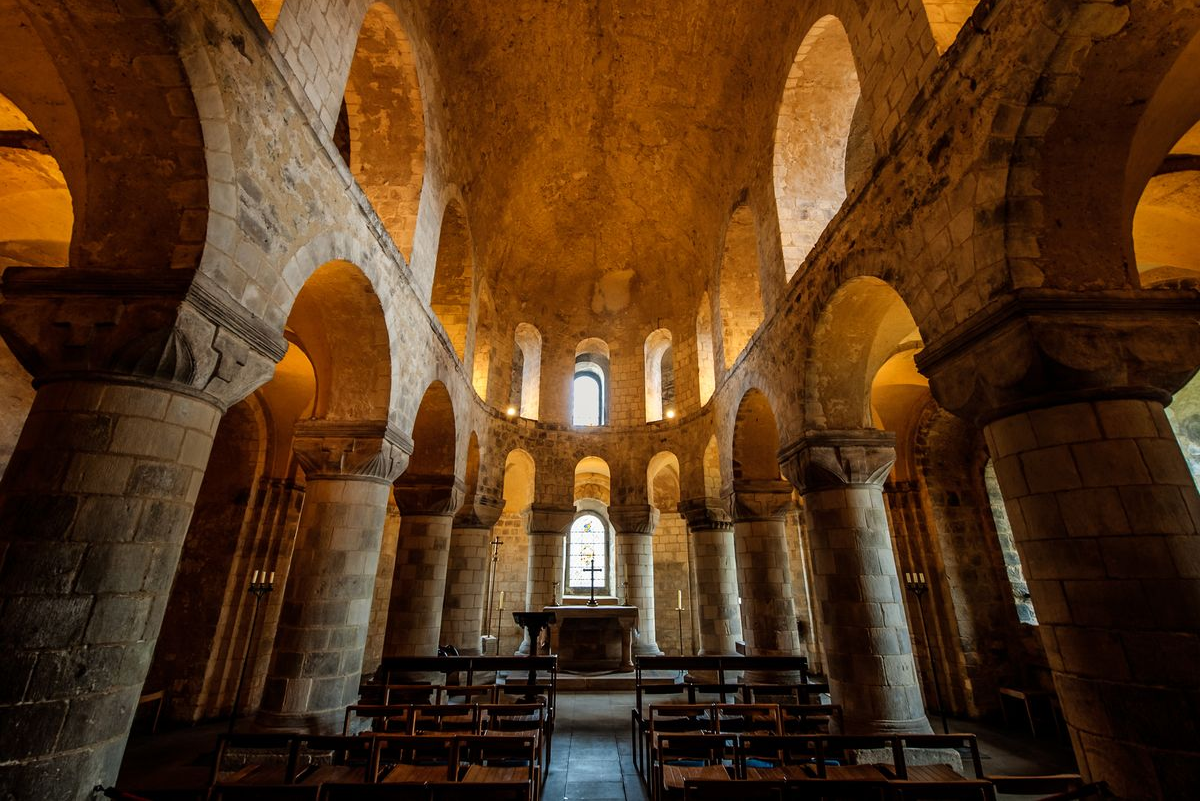
From Popular Mechanics: “A rare dig into the soil of the famed Tower of London — the first excavation at the site in a generation — yielded two skeletons from around 1500. As archaeologists dug deeper into the ground, they found roughly 20 more burials, including one group grave likely tied to the 1348 “Black Death” plague. The dig began as a trial excavation in 2019 to prepare the on-site Chapel Royal of St Peter ad Vincula for a new elevator. The archaeologists discovered the remains of two skeletons. Subsequent excavations outside the chapel as deep as 10 feet below the surface revealed everything from a 14th-century Black Death group burial to three skeletons from the late 12th or early 13th centuries buried in coffins—an unusually expensive burial for that time. The Tower of London was built alongside the River Thames in the 1070s as a royal palace. It also served as a prison for high-status individuals (including King Henry VI).”
Note: This is a version of my When The Going Gets Weird newsletter, which I send out via Ghost, the open-source publishing platform. You can see other issues and sign up here.
Continue reading “Student says a Chinese agent tried to recruit her as a spy”
From The Times: “The message from the stranger popped into my Instagram account on June 10, 2024. The sender was a man calling himself Charles Chen, who said he was an international student at Stanford. I checked his Instagram page. It featured photos of a young Chinese man with other young people at Stanford, in Newport Beach, California, and at other locations in the United States. I asked Charles where he was from. After a week of silence, he replied to say that he was from China. Then he asked if I spoke Chinese, and he posed the question in Mandarin. I’m studying East Asian affairs and I do speak Mandarin, but I had no idea how he could know this. Suddenly I felt on edge. I was beginning to suspect that Charles might be working for the Chinese Communist Party (CCP) and he could be trying to recruit me as a spy.”

From Popular Mechanics: “A rare dig into the soil of the famed Tower of London — the first excavation at the site in a generation — yielded two skeletons from around 1500. As archaeologists dug deeper into the ground, they found roughly 20 more burials, including one group grave likely tied to the 1348 “Black Death” plague. The dig began as a trial excavation in 2019 to prepare the on-site Chapel Royal of St Peter ad Vincula for a new elevator. The archaeologists discovered the remains of two skeletons. Subsequent excavations outside the chapel as deep as 10 feet below the surface revealed everything from a 14th-century Black Death group burial to three skeletons from the late 12th or early 13th centuries buried in coffins—an unusually expensive burial for that time. The Tower of London was built alongside the River Thames in the 1070s as a royal palace. It also served as a prison for high-status individuals (including King Henry VI).”
Note: This is a version of my When The Going Gets Weird newsletter, which I send out via Ghost, the open-source publishing platform. You can see other issues and sign up here.
Continue reading “Student says a Chinese agent tried to recruit her as a spy”


From NBC: “Finland’s air force, now part of NATO, still flies swastikas on a handful of unit flags — but is preparing to phase them out, largely to avoid awkwardness with its Western allies. The history of the Finnish air force’s use of the swastika, which since the 20th century has largely been associated with Nazi tyranny and hate groups, is more complex than at first appearance. Finland’s air force adopted the swastika emblem in 1918 soon after country gained its independence after more than a century of Imperial Russian rule. Count Eric von Rosen of neighboring Sweden donated Finland’s first military plane in 1918, which bore his personal symbol, the swastika. The Finnish air force soon after adopted a blue swastika on a white background as the national insignia on all its planes from 1918 to 1945. Von Rosen was the brother-in-law of Hermann Goering, a decorated World War I German fighter pilot who became an early Nazi Party member. Goering went on to lead Germany’s Luftwaffe.”

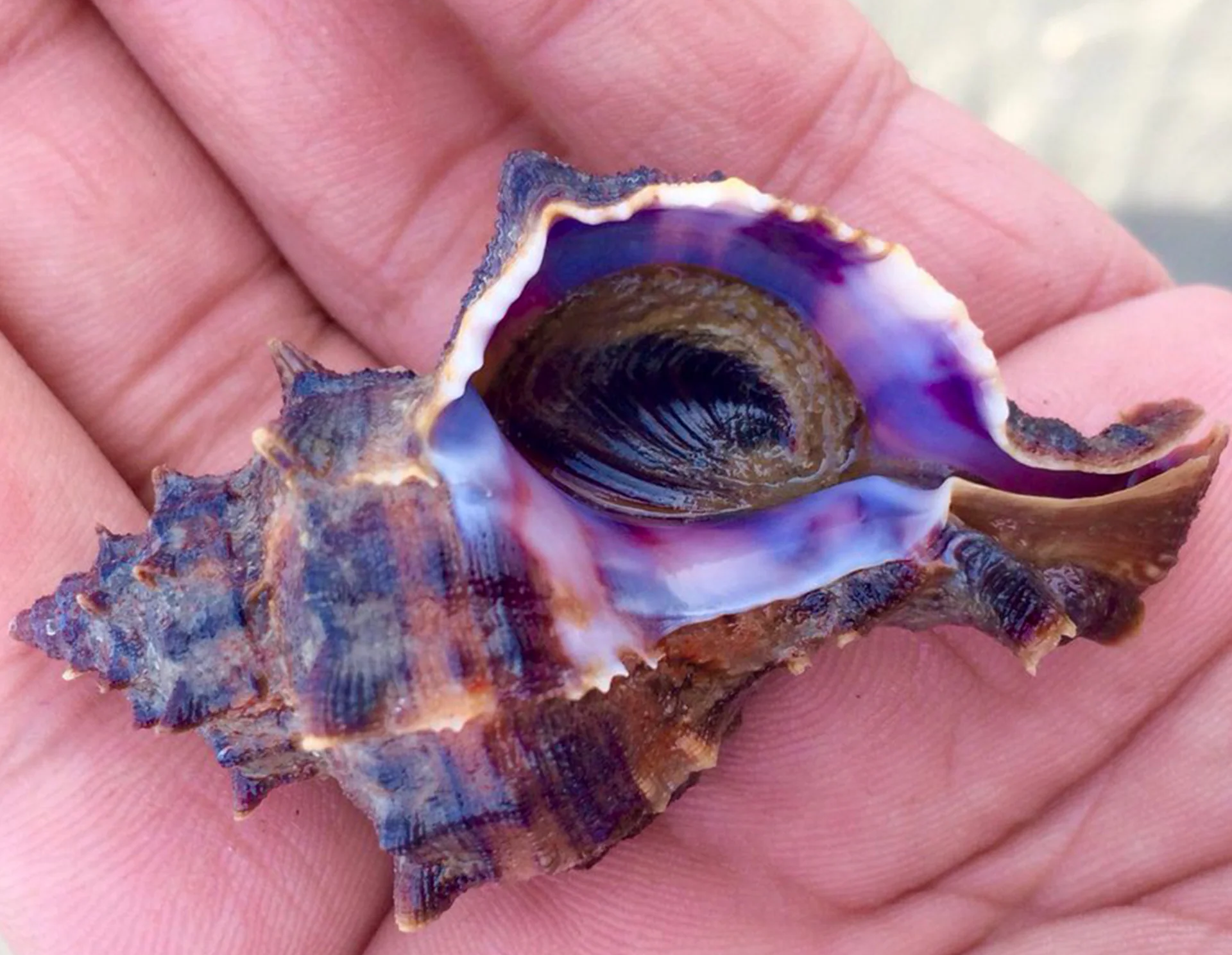
From Emergence: “According to the ancient Phoenicians, a dog chewed a mollusk and its tongue turned bright purple, and its human owners noticed. Tyrian purple was the most rare and expensive pigment in human history and is at least four thousand years old. To make one ounce of Tyrian purple pigment, harvest the hypobranchial gland mucus of 250,000 predatory murex sea snails. To do this, some say boil them for days, some say crush the snails and let them bake in the sun, and some say ferment their liquids in vats of urine. Ancient Mexicans also created this purple from snails they called tixinda, but they learned how to milk the mucus from the snails and return the creatures safely to the Pacific without killing them. The few remaining snail dyers — only nineteen Mixtec people legally permitted to do so as of 2011 — harvest once every moon cycle between October and March. On the Internet, you can buy one genuine snail-sourced ounce of Tyrian purple pigment for $115,098.97, plus tax.”
Note: This is a version of my When The Going Gets Weird newsletter, which I send out via Ghost, the open-source publishing platform. You can see other issues and sign up here.
Continue reading “Why does Finland have the swastika on some of its flags?”
From NBC: “Finland’s air force, now part of NATO, still flies swastikas on a handful of unit flags — but is preparing to phase them out, largely to avoid awkwardness with its Western allies. The history of the Finnish air force’s use of the swastika, which since the 20th century has largely been associated with Nazi tyranny and hate groups, is more complex than at first appearance. Finland’s air force adopted the swastika emblem in 1918 soon after country gained its independence after more than a century of Imperial Russian rule. Count Eric von Rosen of neighboring Sweden donated Finland’s first military plane in 1918, which bore his personal symbol, the swastika. The Finnish air force soon after adopted a blue swastika on a white background as the national insignia on all its planes from 1918 to 1945. Von Rosen was the brother-in-law of Hermann Goering, a decorated World War I German fighter pilot who became an early Nazi Party member. Goering went on to lead Germany’s Luftwaffe.”

From Emergence: “According to the ancient Phoenicians, a dog chewed a mollusk and its tongue turned bright purple, and its human owners noticed. Tyrian purple was the most rare and expensive pigment in human history and is at least four thousand years old. To make one ounce of Tyrian purple pigment, harvest the hypobranchial gland mucus of 250,000 predatory murex sea snails. To do this, some say boil them for days, some say crush the snails and let them bake in the sun, and some say ferment their liquids in vats of urine. Ancient Mexicans also created this purple from snails they called tixinda, but they learned how to milk the mucus from the snails and return the creatures safely to the Pacific without killing them. The few remaining snail dyers — only nineteen Mixtec people legally permitted to do so as of 2011 — harvest once every moon cycle between October and March. On the Internet, you can buy one genuine snail-sourced ounce of Tyrian purple pigment for $115,098.97, plus tax.”
Note: This is a version of my When The Going Gets Weird newsletter, which I send out via Ghost, the open-source publishing platform. You can see other issues and sign up here.
Continue reading “Why does Finland have the swastika on some of its flags?”