From Substack: “The problem of unexploded ordnance (UXO) in Cambodia is a grave legacy of the Khmer Rouge period, with landmines and cluster munitions posing threats to the personal safety of people and communities, but also contaminating land that could otherwise be used for housing, agriculture and other infrastructure. After 25 years of demining, the dangers still persist, although incidences of death and injury have been falling over time. Apopo’s mine-sniffing rats are a pivotal part of addressing this issue. These African rats are much larger, about the size of a cat, and can live for up to eight years. What makes these rats ideal for mine detection is their extraordinary sense of smell, which they use to detect explosives.”
He passed himself off as an oil magnate and conned people out of billions
From the New Yorker: “When she left, she passed by the couple’s twin Mercedes-Benzes. She saw the men at a nineteen-twenties-themed club luncheon, wearing top hats and tailcoats. Turner seemed to especially relish dressing up and mingling with bigwigs. At one fund-raiser, he reportedly bought a table for ten thousand dollars, then raised his paddle at the auction and pledged a hundred thousand more.When the first heat of summer arrived, West Palm Beach emptied out. As soon as Maria returned, this past August, she called up Turner to arrange a drink. His number wasn’t working, which seemed odd. Then one of her friends told her to Google “Alan Todd May.” Maria was soon staring at a mugshot: May, the man in the photo, was slimmer, and his hair was darker, but he was clearly the person she knew as Jacob Turner. He had escaped from a federal prison almost five years earlier, she read, while serving a twenty-year sentence for an oil fraud that had netted him millions.”
Note: This is a version of my personal newsletter, which I send out via Ghost, the open-source publishing platform. You can see other issues and sign up here.
From Reuters: “A family of Russian sleeper agents flown to Moscow in the biggest East-West prisoner swap since the Cold War were so deep under cover that their children found out they were Russians only after the flight took off, the Kremlin said on Friday.”Before that, they didn’t know that they were Russian and that they had anything to do with our country,” Kremlin spokesman Dmitry Peskov told reporters. “And you probably saw that when the children came down the plane’s steps that they don’t speak Russian and that Putin greeted them in Spanish. He said ‘buenas noches’.” Among those released in the prisoner swap were the so-called illegal sleeper agents – the Dultsevs, a husband and wife who were convicted by a court in Slovenia of pretending to be Argentinians in order to spy, who were flown back to Russia with their two children.”
The little-known, informal and underground financial system known as Hawala
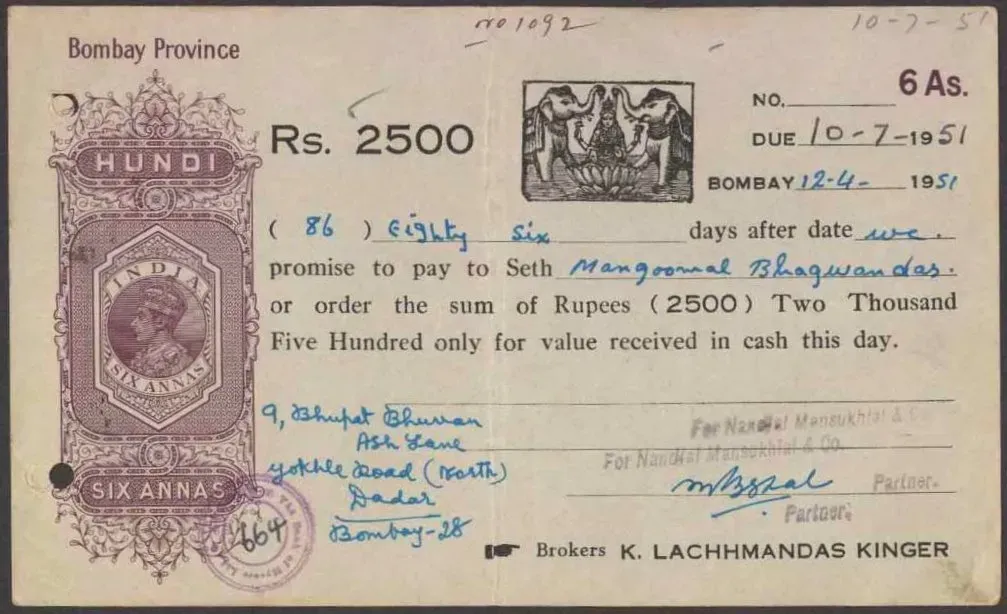
From False Positive: “Imagine that you are a textile merchant somewhere along the 6,000 kilometer stretch of the ancient Silk Road. The last thing you want to do, in such a dangerous environment, is carry cash on you. Hawala is an Arabic term roughly meaning to change or to transfer. It refers to a system in which networks of brokers (hawaladars) facilitate the movement of value from one geographic location to another. Nobody really knows when Hawala was first used. But there is evidence from the 6th century that Muhammed, the founder of Islam, was familiar with at least some version. Similar systems, with equally ancient roots, have existed in India (Hundi), Thailand (phoe kuan), and China, whose term Fei-Chien translates to flying money. And they have collectively come to be referred to as different varieties of “underground banking.”
Note: This is a version of my personal newsletter, which I send out via Ghost, the open-source publishing platform. You can see other issues and sign up here.
From the New York Times: “Before the media vans took over Main Street, before the environmental testers came to dig at the soil, before the doctor came to take blood, Katie Krautwurst, a high-school cheerleader from Le Roy, N.Y., woke up from a nap. Instantly, she knew something was wrong. Her chin was jutting forward uncontrollably and her face was contracting into spasms. She was still twitching a few weeks later when her best friend, Thera Sanchez, captain of one of the school’s cheerleading squads, awoke from a nap stuttering and then later started twitching, her arms flailing and head jerking. Two weeks after that, Lydia Parker, also a senior, erupted in tics and arm swings and hums. Then word got around that Chelsey Dumars, another cheerleader, who recently moved to town, was making the same strange noises, the same strange movements, leaving school early on the days she could make it to class at all.”
A psychiatrist who specializes in addiction says 12-step programs like AA don’t work
From NPR: “Since its founding in the 1930s, Alcoholics Anonymous has become part of the fabric of American society. AA and the many 12-step groups it inspired have become the country’s go-to solution for addiction in all of its forms. These recovery programs are mandated by drug courts, prescribed by doctors and widely praised by reformed addicts. Dr. Lance Dodes sees a big problem with that. The psychiatrist has spent more than 20 years studying and treating addiction. Dodes tells NPR’s Arun Rath that 12-step recovery simply doesn’t work, despite anecdotes about success. There is a large body of evidence now looking at the AA success rate, and the success rate of AA is between 5 and 10 percent. Not only, it’s harmful to the 90 percent who don’t do well. AA is never wrong (according to AA) so if you fail at Alcoholics Anonymous, then it’s you that’s failed.”
Note: This is a version of my personal newsletter, which I send out via Ghost, the open-source publishing platform. You can see other issues and sign up here.
From The Guardian: “Since those early days of the war, with the help of a motley group of intrepid friends, Marushchak has achieved something quite extraordinary. He has organised the evacuation of dozens of museums across Ukraine’s frontline – packing, recording, logging and counting each item and sending them to secret, secure locations away from the combat zone. Among the many tens of thousands of artefacts he has rescued are individual drawings and letters in artists’ archives, collections of ancient icons and antique furniture, precious textiles, and even 180 haunting, larger-than-life medieval sculptures known as babas, carved by the Turkic nomads of the steppe. “At times,” said Chuyeva, “he has been doing almost unbelievable things” – putting himself into extreme personal danger for the sake of often humble-seeming regional museum collections on Ukraine’s frontline.”
How Josephine Cochrane invented the dishwasher in 1885
From Neatorama: “Cochrane’s husband met his untimely demise leaving her and their two children to fend for themselves. Given that it was also in the 19th century, being a widow with two children to feed and raise, life wasn’t going to be rainbows and skittles. Despite not having a formal education in the sciences, Cochrane had been exposed to her civil engineer father and her grandfather, who had first patented the steamboat. And so, she looked for a problem that needed an urgent solution. Cochrane was fed up with chipped, nicked, or cracked dishes and utensils, and she wondered why nobody had ever thought of inventing a machine that could do all of that labor for her. With the help of the local mechanic George Butters, Cochrane was able to invent the first dishwasher and she filed her patent in December 1885 for the “Cochrane Dishwasher”. Then came the equally challenging part of the whole process: actually selling the machine.”
Note: This is a version of my personal newsletter, which I send out via Ghost, the open-source publishing platform. You can see other issues and sign up here.
From ESPN: “In the summer of 2018, inside a national arena that felt more like a small-college gym, the NBA commissioner shot free throws with the president of Rwanda. It was a meeting of disparate men with complementary motives. Adam Silver, a lawyer and NBA lifer who grew up in a wealthy New York suburb before presiding over one of the most progressive leagues in sports, was in Rwanda to build on a mission to extend the NBA’s reach to every corner of the world. Paul Kagame, a former rebel general credited with stopping one of the worst atrocities in modern history but who for years had been assailed as a dictator who smothers opposition through arrests, disappearances and killings, was looking to forge a partnership that would boost Rwanda’s economy and, critics say, distract the world from his human rights record.”
A physicist explains why he would rather fight a horse-sized duck than 100 duck-sized horses
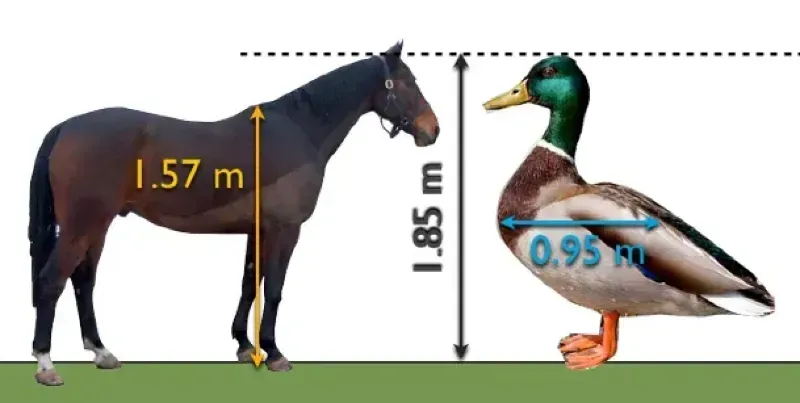
From Wired: “First, this duck could obviously not fly. You can just imagine how big the wings would have to be for a 3,000 kg bird. It’s not going to happen. But the problems aren’t just with flying. What about the duck’s legs? A duck-sized duck has two approximately cylindrical legs. Looking at the duck image, I measure a leg radius of about 0.005 meters. What is the compression pressure in these legs for a normal duck? It would be weight of the duck divided by the total cross-sectional area. If we ramp this up to our horse-sized duck, what happens? The mass increases and so does the radius of the leg. The horse-sized duck is 6.85 times larger than a duck. The leg would also be 6.85 times larger. This would give a horse-duck compression pressure close to 100 times the pressure of a normal duck. I think this duck would just sit there quacking – but really loud quacks. I could just toss some rocks at it until I was declared the winner.”
Note: This is a version of my personal newsletter, which I send out via Ghost, the open-source publishing platform. You can see other issues and sign up here.
From the New York Times: “Challenged by his friend, the swimmer Duke Kahanamoku, Harry Prieste shinnied up a 15-foot flagpole at the end of the 1920 Summer Olympics in Antwerp, Belgium, and stole the official flag. The Irish linen flag came home with Prieste to Los Angeles, the fruit of his athletic prank and further evidence of his presence at the seventh Summer Olympiad, where he won the bronze medal in platform diving. For 77 years the flag was stored in a suitcase during Prieste’s years in swimming and diving shows, as a vaudeville comedian, a tumbler, a banjo player, a circus juggler and an Ice Follies performer. He did not regard the flag as valuable or worth returning until a reporter told him at a United States Olympic Committee banquet three years ago that the International Olympic Committee had been unable to find the missing Antwerp flag, the first one with the five rings. ”I can help you with that,” he said. ”It’s in my suitcase.”
She fell 14,000 feet without a parachute and somehow survived
From ESPN: “Each step that Emma Carey takes is a size six miracle. She has no feeling in her legs, no sense of when her feet land or they’re in the air. That means her legs give her brain zero feedback, so she has to think about where her legs are going but never feels where they are. There’s a little bit of a hitch in her gait, where her legs are just a tad mechanical going up and down. But it’s not even noticeable until she specifically says to watch for it. Most people would have no idea that she is paralyzed from the waist down, or that she survived the unthinkable: In June 2013, Carey went skydiving for the first time and fell 14,000 feet out of a helicopter into an empty cow pasture in Switzerland, with two tangled parachutes and her instructor passed out on her back.”
Note: This is a version of my personal newsletter, which I send out via Ghost, the open-source publishing platform. You can see other issues and sign up here.
From The Week: “Though the Allies considered some highly inventive schemes to beat Adolf Hitler, few are more bizarre than an alleged plot to make the Fuhrer lose interest in world domination by secretly drugging him with female sex hormones. Cardiff University professor Brian Ford says he uncovered the plan while reviewing recently declassified documents for his new book, Secret Weapons: Technology, Science, And The Race To Win World War II. British spies figured that if they could lace Hitler’s food with estrogen, over time he would become less cruel and aggressive, Ford says. The idea was to “feminize” Hitler, and make him behave more like his sister, Paula, a “mild-mannered secretary.” The Brits were encouraged by then-recent research into the effects of sex hormones. “There were agents who would be able to get it into his food.”
Scientists say sharks caught off the coast of Brazil have tested positive for cocaine
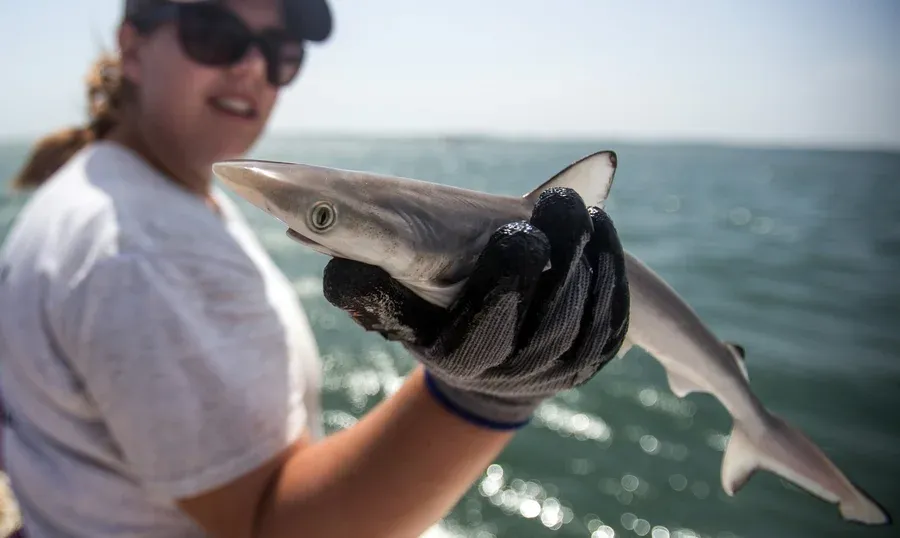
From Scientific American: “Sharks swimming off the cost of Brazil have something a little startling coursing through their systems: cocaine. The drug had never previously been found in wild sharks. But that doesn’t mean these fish are unique; scientists just hadn’t previously tested any shark for coke. The effort was a slam dunk, with the 13 sharks that were examined all testing positive for the drug in their muscles and liver, according to a new study. What this means for the sharks is an open question, say the study co-authors Enrico Mendes Saggioro and Rachel Ann Hauser-Davis. No one has ever studied the behavioral or physiological impacts of cocaine in sharks, Hauser-Davis says, but her ongoing research on environmental contamination in these apex predators suggests the notorious drug is only one of the animals’ worries.”
A Navy pilot captured by the North Vietnamese blinked a call for help in Morse code
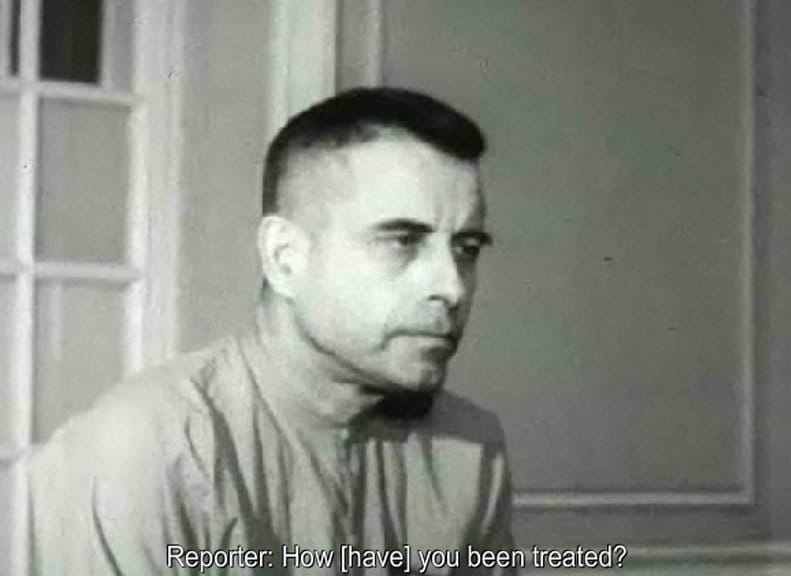
From Futility Closet: “Captured by the North Vietnamese in 1965, Navy pilot Jeremiah Denton was forced to participate in a propaganda interview to be broadcast in the United States. Pretending to be blinded by the spotlights, he began blinking — seemingly random spasms and tics. He answered interrogators’ questions with a trace of defiance, knowing he would be beaten again and again, but hoping that America would detect his secret message in Morse code. He blinked the word “T-O-R-T-U-R-E” — alerting U.S. Naval Intelligence for the first time that American prisoners were being tortured. In his Investigator’s Guide to Steganography (2003), Gregory Kipper notes that captured soldiers would also sometimes use hand signals to transmit messages during photo ops; “often, these gestures were airbrushed out by the media.”
(Editor’s note: If you like this newsletter, please share it with someone else. And if you really like it, perhaps you could subscribe, or contribute something via my Patreon. Thanks for being a reader!)
Bill Gates has a McDonald’s gold card that gives him food anywhere in the world for life
From Yahoo: “Few perks in fast food are as elusive and sought-after as the McDonald’s Gold Card, which grants its holder free meals. However, the benefits of these cards can vary. While some are limited to local venues, others, like the one Bill Gates has, allow him to eat for free at any McDonald’s globally. Warren Buffett, another notable recipient of this privilege, discussed his own McDonald’s Gold Card during a 2007 CNBC interview, revealing the more localized nature of his card. During an interview with Becky Quck, Buffett showed what was in his wallet. “And, ah, here we have my McDonald’s card which lets me eat free at any McDonald’s in Omaha for the rest of my life. So that’s why the Buffett family has Christmas dinner at McDonald’s. It explains a lot of things,” he said.
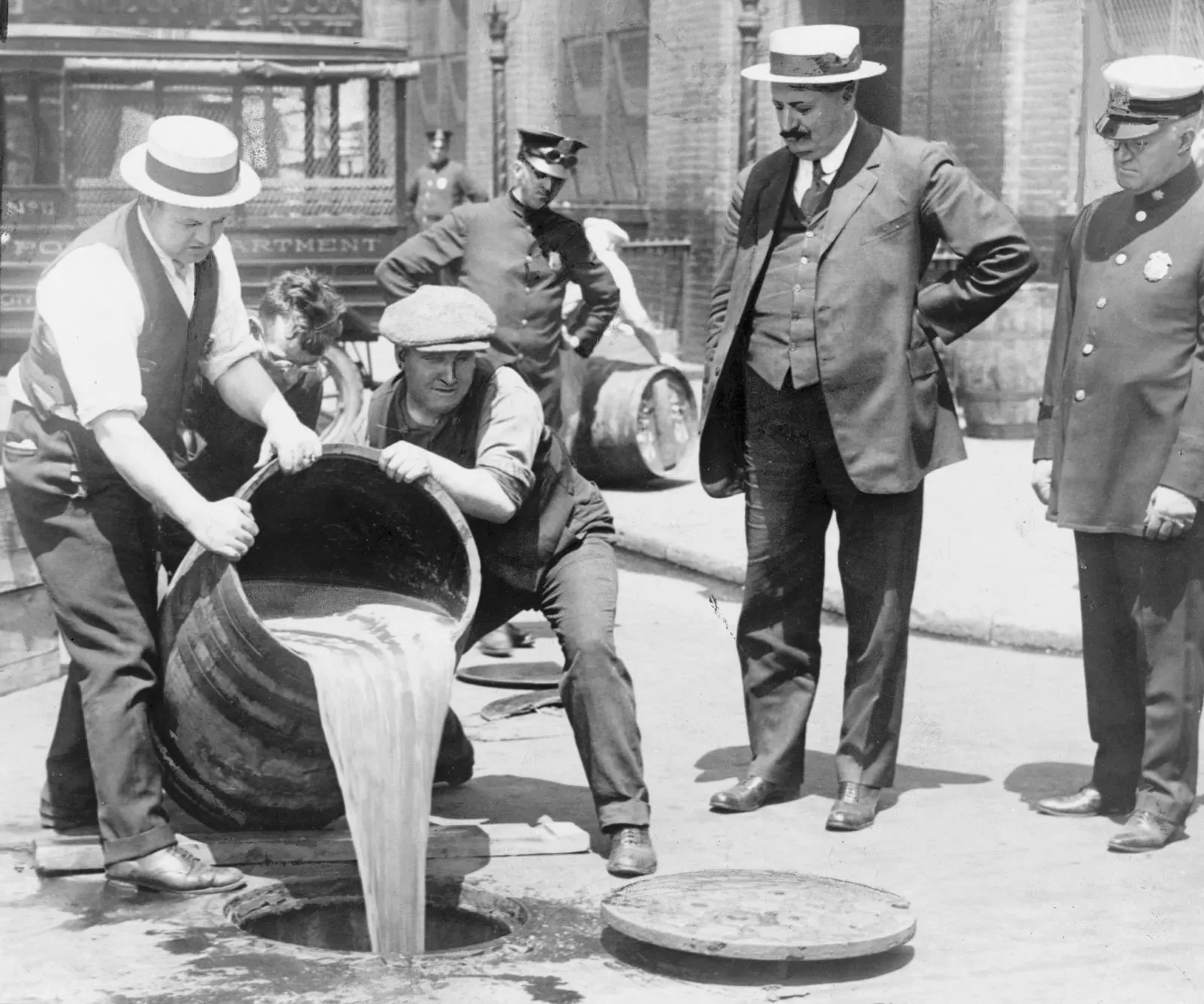
The US government poisoned alcohol during Prohibition with deadly consequences
From Slate: “It was Christmas Eve 1926, the streets aglitter with snow and lights, when the man afraid of Santa Claus stumbled into the emergency room at New York City’s Bellevue Hospital. Santa Claus, he kept telling the nurses, was just behind him, wielding a baseball bat. Before hospital staff realized how sick he was—the alcohol-induced hallucination was just a symptom—the man died. So did another holiday partygoer. And another. As dusk fell on Christmas, the hospital staff tallied up more than 60 people made desperately ill by alcohol and eight dead from it. Within the next two days, yet another 23 people died in the city from celebrating the season. Doctors were used to the symptoms of alcohol poisoning, but this outbreak was different. The deaths, as investigators would shortly realize, came courtesy of the U.S. government.”
Some scientists think this unusual star system is evidence of extraterrestrials
From Discover: “In 2016, word came out about the discovery of a downright strange astrophysical object, somewhere in the constellation Cygnus. Citizen scientists had been combing through the data from four years of NASA’s Kepler mission when they encountered the star, officially named KIC 8462852. And it was an oddball. It randomly dimmed, like a flickering lightbulb, and could stay that way for several days. It fluctuated intensely and erratically, sometimes dropping up to 22 percent in brightness. “Stars just don’t do that,” says Tabetha Boyajian, the astronomer who led the ensuing scientific investigation into the findings. KIC 8462852 – better known as Tabby’s Star, after Boyajian – continues to befuddle citizen scientists and astronomers alike. While researchers have thrown numerous theories at the wall, some of which have partially stuck, they’re still searching for one hypothesis that explains everything.”
A paraplegic man walks with the Olympic flame thanks to an exoskeleton
Kevin Piette, paraplegic since an accident, made history today by carrying the Olympic flame with his exoskeleton! 💪
Acknowledgements: I find a lot of these links myself, but I also get some from other newsletters that I rely on as “serendipity engines,” such as The Morning News from Rosecrans Baldwin and Andrew Womack, Jodi Ettenberg’s Curious About Everything, Dan Lewis’s Now I Know, Robert Cottrell and Caroline Crampton’s The Browser, Clive Thompson’s Linkfest, Noah Brier and Colin Nagy’s Why Is This Interesting, Maria Popova’s The Marginalian, Sheehan Quirke AKA The Cultural Tutor, the Smithsonian magazine, and JSTOR Daily. If you come across something interesting that you think should be included here, please feel free to email me at mathew @ mathewingram dot com