Novartis has settled a lawsuit by the estate of Henrietta Lacks that alleged the pharmaceutical giant unjustly profited off her cells, which were taken from her tumor without her knowledge in 1951 and reproduced in labs to enable major medical advancements, including the polio vaccine. It’s the second settlement in lawsuits filed by the estate that accused biomedical businesses of reaping rewards from a racist medical system that took advantage of Black patients like Lacks. The settlement ends litigation between Novartis and the estate of Lacks, a mother who died of cervical cancer at age 31. Doctors at Johns Hopkins Hospital took Lacks’ cervical cells in 1951 without her knowledge, and the tissue taken from her tumor before she died became the first human cells to continuously grow and reproduce in lab dishes. HeLa cells became a cornerstone of modern medicine, enabling countless scientific and medical innovations, including the development of genetic mapping and even COVID-19 vaccines. (via AP News)
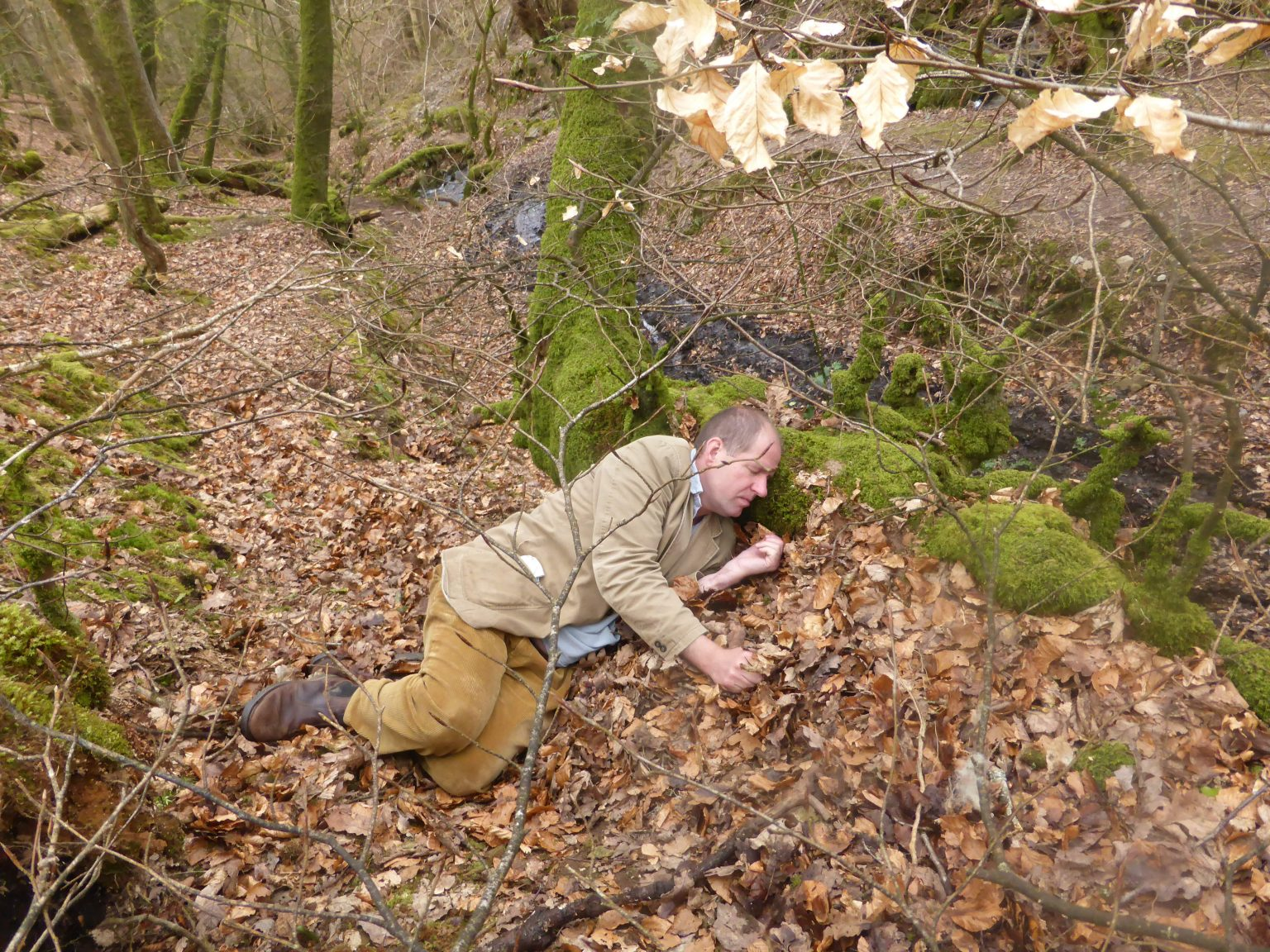
Why did British barrister Charles Foster decide to live like an animal?
have become The Man Who Eats Worms,” Charles Foster shrugs, sorrowfully. “It’s not really a very interesting subject. It doesn’t tell you anything about how badgers experience the world.” This combination of self-deprecation and a quest for deeper purpose is what defines Foster, the 53-year-old barrister and Oxford medical tutor who decided to shed his professional human trappings and live like an animal. It also defines the book he has written about his experiences, called Being a Beast . Eating earthworms, licking slugs and scuffling around on all fours, he and his then eight-year-old son (or cub) Tom lived nocturnally for six weeks as badgers in a Welsh wood; his farmer friend dug out a sett for them in the hillside. In the East Lyn river, Foster thrashed around as an otter, catching the occasional unlucky fish in his mouth, and failing to notice a leech attached to his lip for an hour as his face numbed from the cold. (via New Statesman)
Note: This is a version of my When The Going Gets Weird newsletter, which I send out via Ghost, the open-source publishing platform. You can see other issues and sign up here.
A couple of months ago, a man arrived for his 50th dinner at Nisei, the one-Michelin-starred Japanese fine-dining restaurant in Russian Hill. As he sauntered up Polk Street in his signature white tennis shoes, jeans, blazer, and backpack, the entire Nisei staff was waiting outside to greet him with a round of applause. It was as if royalty had arrived. Except by all accounts, it was just a guy named Michael Grepo. Grepo, 67, is a single, former federal employee who, for the past 38 years, has been living in a rent-controlled in-law apartment in Miraloma Park. It’s the same neighborhood where he grew up in a Filipino family. He pays $1,000 a month, utilities included. He doesn’t own a car. He takes Muni to dinner. When he’s not eating out, he makes himself monastic bowls of tofu and steamed kale. But since his retirement in 2018, he has become a regular at the kind of restaurants that don’t normally have regulars. (via the SF Standard)
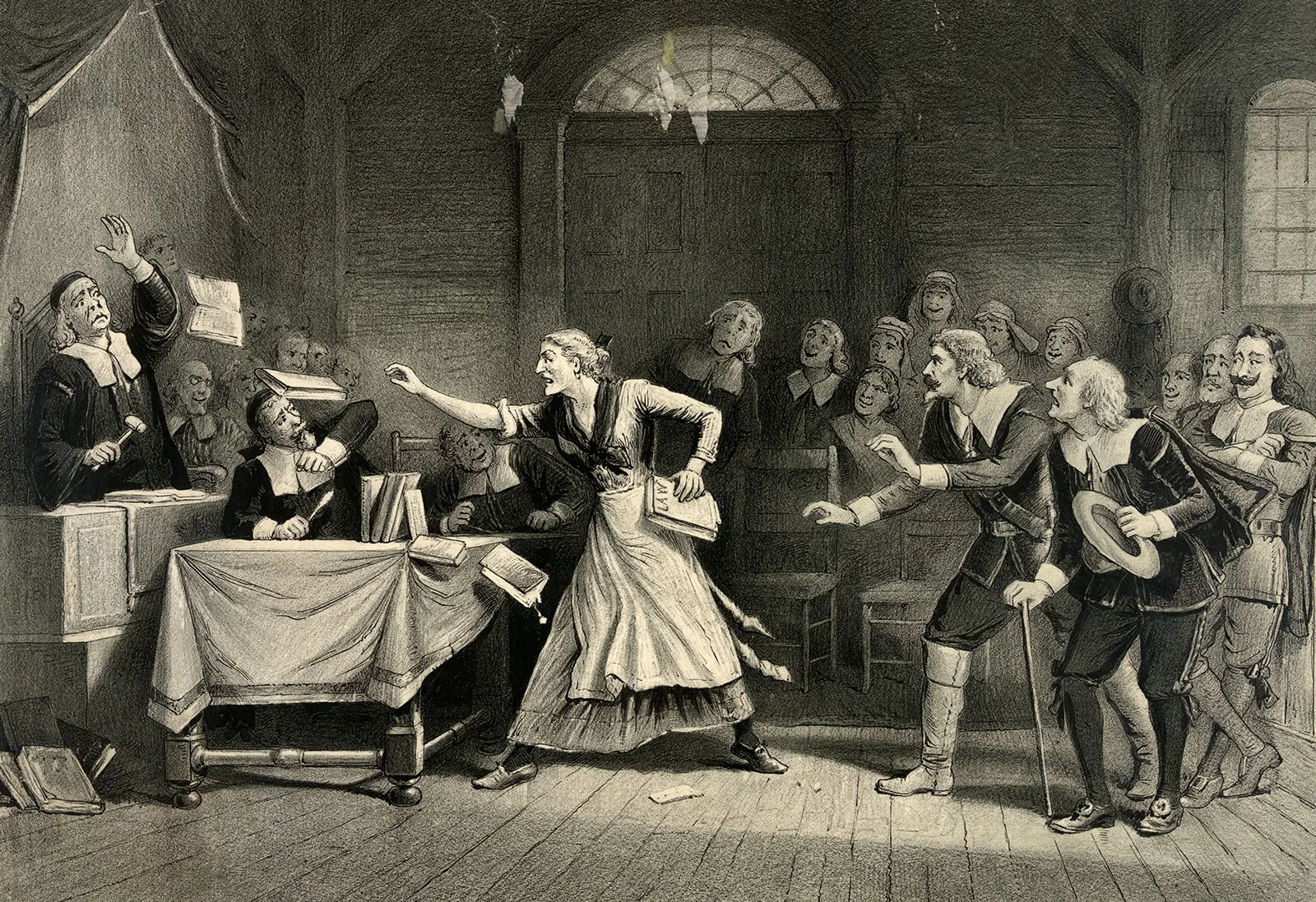
The European witch trials were a result of competition between Catholics and Protestants
Between 900 and 1400, Christian authorities were unwilling to so much as admit that witches existed, let alone try someone for the crime of being one. This was not for lack of demand. Belief in witches was common in medieval Europe and in 1258 Pope Alexander IV had to issue a canon to prevent prosecutions for witchcraft. By 1550, Christian authorities had reversed their position entirely. Witches now existed in droves and, to protect citizens against the perilous threat witchcraft posed to their safety and well-being, had to be prosecuted and punished wherever they were found. In the wake of this reversal, a literal witch-hunt ensued across Christendom. The great age of European witch trials would not end for another 150 years. By the time it did, no fewer than 80,000 people had been tried for witchcraft, half of them executed. We argue that this reflected non-price competition between Catholic and Protestant churches for religious market share in confessionally contested parts of Christendom. (via Peter Leeson)
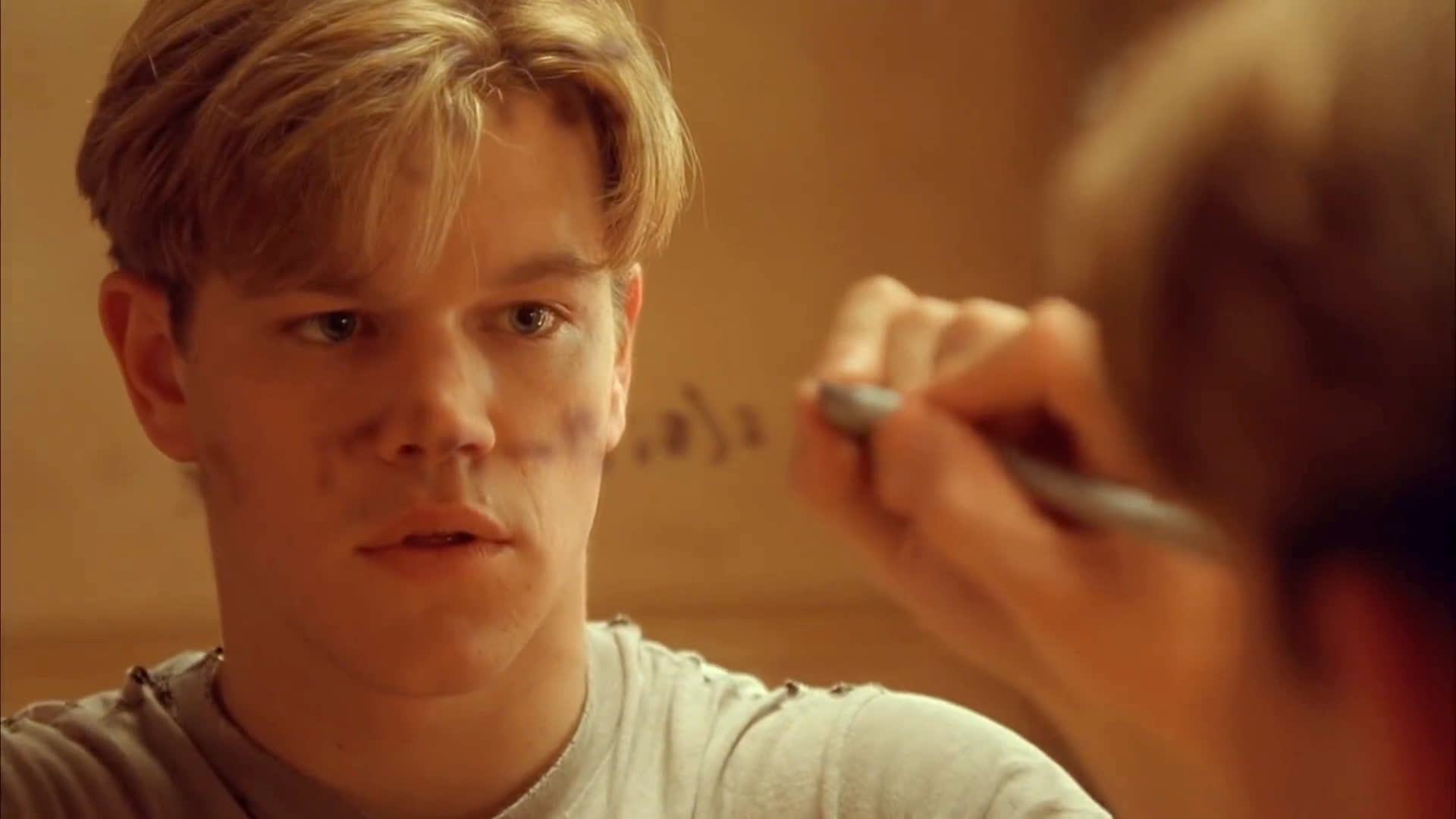
He thought they were homework but they were famous unsolved problems
In 1939, George Dantzig rushed off to his graduate statistics class at UC Berkeley. As he sat down among the other graduate students in class, his eye was caught by a set of math problems written up on the blackboard. Assuming them to be the day’s assigned homework, he copied them down and turned them in to his professor, and apologized for taking so long to do the homework. Early Sunday morning about six weeks later, Dantzig and his wife were awakened by someone banging on their front door. They were surprised to find an out-of-breath Neyman with an excited look on his face, clutching a couple of rumpled papers. He had just written an introduction to one of the papers and wanted to send it out for publication. As it turned out, the problems Dantzig had mistaken for homework were really two famous unsolved statistics problems that were now, at the suggestion of Neyman, taken up as his doctoral dissertation. (From UMD)
Hi everyone! Mathew Ingram here. I am able to continue writing this newsletter in part because of your financial help and support, which you can do either through my Patreon or by upgrading your subscription to a monthly contribution. I enjoy gathering all of these links and sharing them with you, but it does take time, and your support makes it possible for me to do that. I also write a weekly newsletter of technology analysis called The Torment Nexus.
The Tully Monster was an ancient marine animal whose fossils have only been found in Illinois
Tullimonstrum, colloquially known as the Tully monster or sometimes Tully’smonster, is an extinct genus of soft-bodied bilaterian marine animal that lived in shallow tropical coastal waters of muddy estuaries during the Pennsylvanian, about 310 million years ago. Examples of Tullimonstrum have been found only in sediments deposited far from the palaeocoast (formally termed the Essex biota), in the Mazon Creek fossil beds of Illinois. This creature had a mostly cigar-shaped body, with a triangular tail fin, two long stalked eyes, and a proboscis tipped with a mouth-like appendage. Amateur collector Francis Tully found the first of these fossils in 1955 in a fossil bed known as the Mazon Creek formation. He took the strange creature to the Field Museum of Natural History, but paleontologists were stumped as to which phylum Tullimonstrum belonged to. (via Wikipedia)
Scientists say that the giraffe’s long neck evolved for sexual combat
If you’re a fan of Rudyard Kipling’s Just So Stories, you’ll recall “How The Elephant Got His Trunk,” “How The Leopard Got His Spots,” and the like. You probably also remember from basic biology the regnant evolutionary account of “How The Giraffe Got His Long Neck.” It lent itself to contrasting Lamarckian selection — in which early giraffes stretched their necks to reach higher leaves, thereby bequeathing their long neckedness to subsequent generations — with Darwinian natural selection, in which evolution favored those individual giraffes whose genetic background endowed them with longer necks, thus selecting for this trait. Although Lamarck remains in disfavor, research recently published in the journal Science strongly suggests that a different and far sexier variant of natural selection — appropriately termed sexual selection — has been operating. Time to revise the textbooks. But not completely. (via Nautilus)
He built a chessboard with a taser built in that shocks you if you make the wrong move
Acknowledgements: I find a lot of these links myself, but I also get some from other places that I rely on as “serendipity engines,” such as The Morning News from Rosecrans Baldwin and Andrew Womack, Jodi Ettenberg’s Curious About Everything, Dan Lewis’s Now I Know, Robert Cottrell and Caroline Crampton’s The Browser, Clive Thompson’s Linkfest and Why Is This Interesting by Noah Brier and Colin Nagy. If you come across something you think should be included here, feel free to email me at mathew @ mathewingram dot com
Svetlana, who was then eighty-one years old, lived in a senior citizens’ center in Spring Green, Wisconsin. When we met, she was dressed in baggy gray sweatpants and sunglasses. She was short and compact, and her once red hair had turned white and had started to thin. Scoliosis had given her a hunch, and she used a cane. She showed me her one-bedroom apartment, and the little desk by a window where her typewriter stood. Her bookshelf included the Russian-English dictionary that her father had used. Svetlana was welcoming, and spoke with the energy of someone who hadn’t told her story in a long time. After a few hours, she wanted to take a walk. We headed down a quiet street, to a garage sale, where a man in a Harley-Davidson T-shirt was selling a small cast-iron bookshelf. He asked Svetlana if she wanted to buy it. She couldn’t, she said. She had only twenty-five dollars until her welfare check came. (via the New Yorker)
She discovered 35 forgotten Rembrandt etchings while cleaning out an old desk
Charlotte Meyer is a Dutch woman who made a life-changing discovery in 2020, when she decided to sort through a drawer of heirlooms that had long gone untouched. Years before, when Meyer’s grandfather died, he left her a folder of prints that had been in the family for roughly a century. When Meyer finally opened the folder, she found 35 etchings created by the Dutch master Rembrandt van Rijn, whose 17th-century paintings and prints are renowned as some of the greatest visual art to come out of the Western world. Meyer’s grandfather collected the etchings between 1900 and 1920. They were small, with some measuring only a few centimeters in length. At first, Meyer wasn’t sure if the artworks were truly by Rembrandt. She felt sheepish calling experts at the Stedelijk Museum Amsterdam, but when the experts arrived at Meyer’s home and went through the etchings, the full weight of the find sank in. (via the Smithsonian)
Note: This is a version of my When The Going Gets Weird newsletter, which I send out via Ghost, the open-source publishing platform. You can see other issues and sign up here.
Svetlana, who was then eighty-one years old, lived in a senior citizens’ center in Spring Green, Wisconsin. When we met, she was dressed in baggy gray sweatpants and sunglasses. She was short and compact, and her once red hair had turned white and had started to thin. Scoliosis had given her a hunch, and she used a cane. She showed me her one-bedroom apartment, and the little desk by a window where her typewriter stood. Her bookshelf included the Russian-English dictionary that her father had used. Svetlana was welcoming, and spoke with the energy of someone who hadn’t told her story in a long time. After a few hours, she wanted to take a walk. We headed down a quiet street, to a garage sale, where a man in a Harley-Davidson T-shirt was selling a small cast-iron bookshelf. He asked Svetlana if she wanted to buy it. She couldn’t, she said. She had only twenty-five dollars until her welfare check came. (via the New Yorker)
She discovered 35 forgotten Rembrandt etchings while cleaning out an old desk
Charlotte Meyer is a Dutch woman who made a life-changing discovery in 2020, when she decided to sort through a drawer of heirlooms that had long gone untouched. Years before, when Meyer’s grandfather died, he left her a folder of prints that had been in the family for roughly a century. When Meyer finally opened the folder, she found 35 etchings created by the Dutch master Rembrandt van Rijn, whose 17th-century paintings and prints are renowned as some of the greatest visual art to come out of the Western world. Meyer’s grandfather collected the etchings between 1900 and 1920. They were small, with some measuring only a few centimeters in length. At first, Meyer wasn’t sure if the artworks were truly by Rembrandt. She felt sheepish calling experts at the Stedelijk Museum Amsterdam, but when the experts arrived at Meyer’s home and went through the etchings, the full weight of the find sank in. (via the Smithsonian)
Note: This is a version of my When The Going Gets Weird newsletter, which I send out via Ghost, the open-source publishing platform. You can see other issues and sign up here.
Sean Penn always knew that rescuing Jacob Ostreicher from his years of Bolivian imprisonment would be difficult. Ostreicher, a then-52-year-old Hasidic businessman who had moved to the country from Brooklyn to manage a rice farm, got stuck there for two and a half years after he was accused of money laundering and criminal organization. His detainment in one of Bolivia’s most brutal prisons had attracted international attention — ABC News’ Nightline had run a segment about his incarceration; it was covered by the New York Times, the BBC, the Associated Press, and the Bolivian and Jewish press. It seemed like he would never get back to the States. Until suddenly, in December 2013, he returned. The Bolivian justice minister claimed Ostreicher had slipped away while out of prison on house arrest. Chaya Gitty Weinberger, Ostreicher’s daughter, told the Times that her father had been “dropped off in Pacific waters,” then released — but only after her uncle had negotiated a ransom. A State Department spokesperson would only confirm to news organizations that Ostreicher was in the United States. What really happened remained a mystery. (via NY mag)
This Nobel Prize winner’s invention can generate pure drinking water from the air
A Nobel laureate’s environmentally friendly invention that provides clean water if central supplies are knocked out by a hurricane or drought could be a life saver for vulnerable islands, its founder says. The invention, by the chemist Prof Omar Yaghi, uses a type of science called reticular chemistry to create molecularly engineered materials, which can extract moisture from the air and harvest water even in arid and desert conditions. Atoco, a company that Yaghi founded, said its units, comparable in size to a 20ft shipping container and powered entirely by ultra-low-grade thermal energy, could be placed in local communities to generate up to 1,000 litres of clean water every day, even if centralised electricity and water sources were interrupted by drought or storm damage. Yaghi, who won the 2025 Nobel prize in chemistry, said the invention would change the world and benefit islands in the Caribbean. (via The Guardian)
Note: This is a version of my When The Going Gets Weird newsletter, which I send out via Ghost, the open-source publishing platform. You can see other issues and sign up here.
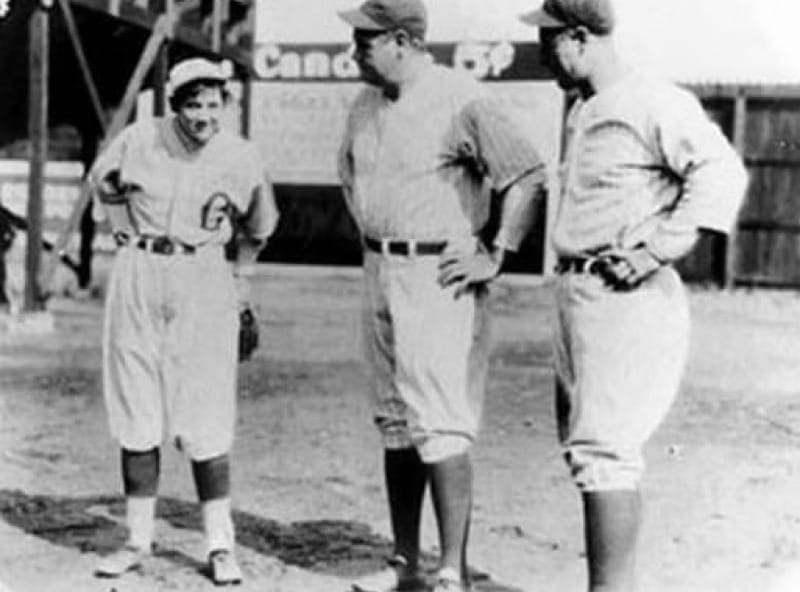
When World War II came to America, baseball was one of the early victims. Many Major League players were in their early 20s and, therefore, subject to the draft. the owner of the Cubs, Philip K. Wrigley (of chewing gum fame) started the All-American Girls Professional Baseball League in 1943. While many know about the AAGPBL due to the 1992 movie A League of Their Own, few realize that women played professional, minor league baseball until 1931. That year, a young woman named Jackie Mitchell ended women’s hopes of breaking into the big leagues. How? By striking out Babe Ruth. And, for good measure, she struck out Lou Gehrig too. Ruth, then 36 years old and on the downside of his career, led the league in home runs with 46 – but it was a tie. The other guy to also hit 46 homers was Gehrig, a 28 year old first baseman, and Ruth’s teammate on the New York Yankees. (via Now I Know)
The name of the Chicxulub meteor crater was chosen because it’s hard to pronounce
The Chicxulub crater is an impact crater buried underneath the Yucatán Peninsula in Mexico. Its center is offshore, but the crater is named after the onshore community of Chicxulub Pueblo. It was formed slightly over 66 million years ago when an asteroid, about ten kilometers in diameter, struck Earth. The crater is estimated to be 200 kilometers in diameter and is buried to a depth of about 1 kilometer beneath younger sedimentary rocks. It is one of the largest impact structures on Earth. The crater was discovered by Antonio Camargo and Glen Penfield, geophysicists who had been looking for petroleum in the Yucatán Peninsula during the late 1970s. Hildebrand, Penfield, Boynton, Camargo, and others published their paper identifying the crater in 1991. Penfield recalled that part of the motivation for the name Chicxulub was “to give the academics and NASA naysayers a challenging time pronouncing it” after years of dismissing its existence. (via Wikipedia)
Note: This is a version of my When The Going Gets Weird newsletter, which I send out via Ghost, the open-source publishing platform. You can see other issues and sign up here.
When World War II came to America, baseball was one of the early victims. Many Major League players were in their early 20s and, therefore, subject to the draft. the owner of the Cubs, Philip K. Wrigley (of chewing gum fame) started the All-American Girls Professional Baseball League in 1943. While many know about the AAGPBL due to the 1992 movie A League of Their Own, few realize that women played professional, minor league baseball until 1931. That year, a young woman named Jackie Mitchell ended women’s hopes of breaking into the big leagues. How? By striking out Babe Ruth. And, for good measure, she struck out Lou Gehrig too. Ruth, then 36 years old and on the downside of his career, led the league in home runs with 46 – but it was a tie. The other guy to also hit 46 homers was Gehrig, a 28 year old first baseman, and Ruth’s teammate on the New York Yankees. (via Now I Know)
The name of the Chicxulub meteor crater was chosen because it’s hard to pronounce
The Chicxulub crater is an impact crater buried underneath the Yucatán Peninsula in Mexico. Its center is offshore, but the crater is named after the onshore community of Chicxulub Pueblo. It was formed slightly over 66 million years ago when an asteroid, about ten kilometers in diameter, struck Earth. The crater is estimated to be 200 kilometers in diameter and is buried to a depth of about 1 kilometer beneath younger sedimentary rocks. It is one of the largest impact structures on Earth. The crater was discovered by Antonio Camargo and Glen Penfield, geophysicists who had been looking for petroleum in the Yucatán Peninsula during the late 1970s. Hildebrand, Penfield, Boynton, Camargo, and others published their paper identifying the crater in 1991. Penfield recalled that part of the motivation for the name Chicxulub was “to give the academics and NASA naysayers a challenging time pronouncing it” after years of dismissing its existence. (via Wikipedia)
Note: This is a version of my When The Going Gets Weird newsletter, which I send out via Ghost, the open-source publishing platform. You can see other issues and sign up here.
More than halfway through the crime novel he wrote, Robert Fuller describes the frustration of a detective locked in a mystery. He rubbed the back of his neck. “Now what?” he said aloud. It has been a week since someone made their way into Fuller’s assisted living apartment in Potomac, Maryland, police say, and fatally shot the 87-year-old millionaire in the head. Authorities released surveillance video Friday of a suspect walking on the facility’s grounds the morning of Feb. 14 around the time Fuller was killed. The video shows the back of a slender person wearing dark pants with long dark hair flowing over a yellowish checkered shirt. Investigators hope someone will recognize the shirt or the person’s gait, produced as if they’re favoring one foot. Detectives don’t know if the person depicted is a man or woman, was acting alone or what their motive was. (via MSN)
A colonel in the Mexican revolution was born female but lived as man for 70 years
Amelio Robles Ávila was a colonel during the Mexican Revolution. Assigned female at birth, Robles lived openly as a man from age 24 until his death at age 95. From a young age, Robles showed an interest in activities that were considered masculine, learning to tame horses and handling weapons, and becoming an excellent marksman and rider. Robles gained the respect of peers and superiors as a capable military leader, and was eventually given his own command. According to historians, Robles adopted a male identity not as a survival strategy but because of a strong desire to be a man. Robles’s male identity was accepted by family, society, and the Mexican government. According to a former neighbor, if anyone called Robles a woman or Doña (an honorific for women, similar to English Lady), he would threaten them with a pistol. (via Wikipedia)
Note: This is a version of my When The Going Gets Weird newsletter, which I send out via Ghost, the open-source publishing platform. You can see other issues and sign up here.
Referencing my desire to disprove that AI is “merely a stochastic parrot,” Claude told me that “political theory may be the one field where ‘stochastic parrot’ is actually a compliment, since the whole discipline consists of creatively recombining things Tocqueville and Mill already said.” Ouch.
Professors at top universities are — in good part because of what it now takes to get a good job in the field — more focused on publishing erudite contributions to niche debates in scholarly journals which only a handful of their colleagues will ever read than on teaching and mentoring the ever-dwindling ranks of their students.
Yascha Mounk gets an AI to write an academic paper in political theory and says the result is more or less indistinguishable from papers written by experts in the field