
Gorgeous sunset last night as I paddled around the lake

Links that interest me and maybe you
Note: I originally wrote this for the daily newsletter at the Columbia Journalism Review, where I am the chief digital writer
The protests over the death of George Floyd and the way they have been covered (or not covered) by newsrooms around the country has widened existing stress fractures in journalism around the topic of race. One of the things that is being called into question is the concept of objectivity. Wesley Lowery, a reporter with 60 Minutes, put some of this into words with a recent essay in the New York Times entitled “A Reckoning Over Objectivity, Led by Black Journalists.” Whatever the ideals behind objectivity might be, Lowery wrote, in practice it translates into an industry in which “the mainstream has allowed what it considers objective truth to be decided almost exclusively by white reporters and their mostly white bosses.” And it’s important to note that this not only leaves Black journalists—and other journalists of color—on the outside looking in, but also makes for worse journalism, if by journalism we mean representing the truth about the world as accurately as possible.
What qualifies as objective journalism, Lowery says, “is constructed atop a pyramid of subjective decision-making: which stories to cover, how intensely to cover those stories, which sources to seek out and include, which pieces of information are highlighted and which are downplayed.” The piece sparked a conversation on Twitter, including a response from Tom Rosenstiel, a veteran journalist and executive director of the American Press Institute, and the co-author of a classic journalism textbook called The Elements of Journalism (a book that Lowery cites approvingly in his essay). In a multi-tweet thread, Rosenstiel tried to clarify what he said were some of the historic aspects of how objectivity became an industry standard principle. The practice began as a way of injecting more scientific rigor into the practice of journalism, he says, but instead it has turned into a devotion to false balance and other elements of what journalism professor Jay Rosen calls “the view from nowhere.”
Rosenstiel is quite right that objectivity started as an attempt to make journalism more rigorous by applying the scientific method, a structure and process designed to arrive at an objective truth. But the industry probably shouldn’t congratulate itself too much on the purity of the intentions behind this change: it wasn’t just that journalists or publishers suddenly decided that objectivity would be a good thing. It was also seen as a way to make journalism more palatable to advertisers, as the consumer-focused ad industry was becoming more national in scope. Over the next 50 years or so, objectivity came to be seen as a bedrock principle of journalism, to the point where some newspaper journalists— and journalism teachers—still argue that dismantling it will kill journalism. But as Lowery points out, what qualifies as objectivity is in the eye of the beholder, and that eye is still predominantly male and white.
Continue reading “Objectivity isn’t a magic wand”
Note: I originally wrote this for the daily newsletter at the Columbia Journalism Review, where I am the chief digital writer
The most benign view of Google, Facebook, and Amazon is that any social or political disruption and turmoil these behemoths have caused is a side-effect of the beneficial services they provide, and any over-sized market power they have is the result of good old-fashioned hard work or an accident of economics and technology. But what if that’s not the case? Dipayan Ghosh is a former Facebook staffer and a former policy advisor to the Obama White House who now runs the Digital Platforms and Democracy Project at Harvard, and the author of a new book called Terms of Disservice: How Silicon Valley is Destructive by Design. Ghosh argues that these companies are monopolists, and that they engage in a wide variety of disturbing conduct — much of it involving the data of their users — not accidentally but very deliberately. “I believe that Facebook, Google, and Amazon should be seen as out-and-out monopolists that have harmed the American economy in various ways, and have the potential to do much greater harm should their implicit power go uncurbed,” Ghosh writes.
All this week, we’ve been discussing some of the themes in Ghosh’s book — including privacy, competition, algorithmic accountability, and the idea of a new social contract — in a series of roundtables hosted on Galley, CJR’s discussion platform. The Tuesday roundtable, for example, started with a one-on-one conversation about privacy with Ghosh, followed by a day-long open discussion that included Ed Felten, a professor of computer science and public affairs at Princeton and a former Deputy Chief Technology Officer with the White House; Jennifer King, the director of privacy at Stanford Law School’s Center for Internet and Society; Olivier Sylvain, a professor of law at Fordham University and director of the McGannon Center for Information Research; and Jules Polonetsky, who is CEO of the Future of Privacy Forum. The question before the panel was: “Is online privacy broken, and if so what should we do about it?”
Ghosh argued that not only is online privacy broken, but the digital giants have played a key role in breaking it to their advantage, with personal data at the heart of their business model. “These firms increasingly and perpetually violate consumer privacy to serve this consistent business model by collecting personal information in an uninhibited manner,” Ghosh says. “And relatively little of that activity is properly scrutinized, resulting in the radical corporate violation of individual privacy.” One question that came up in the roundtable was why, after two decades of this digital platform model, there isn’t a federal privacy law? Ghosh says this is a result of what he calls the “privacy paradox.” Most users don’t see the privacy harm when they sign up for a free service — they get immediate gratification from connecting with friends, and only much later to do see the downsides in the form of data breaches, etc.
Continue reading “Are digital giants like Facebook destructive by design?”

“It turns out that the garden gnome that we now use to ornament our garden were once real-life garden hermits. Yes, a real person who lives in a real hermitage, in a real garden. From the 15th to 18th century, wealthy estate owners were not content with just having lavish and perfectly landscaped grounds that looked natural with all the follies, rustic-looking trees, and lakes – there had to be a Garden Hermit that actually lived there.
Garden hermits, also known as ornamental hermits, were people who are hired by rich landowners to live in their estate where they purposely built a hermitage, with follies, grottoes, or rockeries to complete its overall look. They were expected to permanently live on-site, shun the public life, and basically live in solitude. These ‘hermits’ were encouraged to dress like druids, too. Some would go as far as not bathing, and or trimming their hair and nails.”
(via)

In a novel he wrote in 1863, entitled “Paris In The Twentieth Century,” science-fiction pioneer Jules Verne described a city with a network of electric lights, gas-powered automobiles, wind power, machines that transmit text and photos across long distances, high-speed trains that run on magnetic levitation, and computerized weapon systems. The central character of the story is Michel Dufrénoy, who graduates in 1960 with a major in literature and the classics, but finds they have been forgotten in a futuristic world where only business and technology are valued (he eventually dies after a famine and nuclear winter-style disaster wipes out most of France). Verne’s publisher refused to publish the book because he thought it was too dystopian and would ruin the author’s career, and the writer locked it in a safe, where it was forgotten until one of Verne’s great-grandsons found it. It was eventually published in 1994.


This article is a fascinating look at the connection between certain kinds of mental illness and the different social or cultural circumstances that lead to them: “In Cambodia, for example, it’s commonly believed that the body is riddled with channels that contain a wind-like substance – and if these become blocked, the resulting wind overdose will cause the sufferer to permanently lose the use of a limb or die. Out of 100 Khmer patients at one psychiatric clinic in the US, one study found that 36% had experienced an episode of the illness at some point. Bouts usually proceed slowly, starting with a general feeling of malaise. Then, one day, the victim will stand up and notice that they feel dizzy – and this is how they know that the attack is starting. Eventually they’ll fall to the ground, unable to move or speak until their relatives have administered the appropriate first aid, which usually consists of massaging their limbs or biting their ankles.”
“In the central plateau region of Haiti, people regularly fall sick with “reflechi twòp”, or “thinking too much”, which involves ruminating on your troubles until you can barely leave the house. In South Korea, meanwhile, there’s “Hwa-byung” – loosely translated as “rage virus” – which is caused by bottling up your feelings about things you see as unfair, until you succumb to some alarming physical symptoms, like a burning sensation in the body. Dealing with exasperating family members is a major risk factor – it’s common during divorces and conflicts with in-laws.”
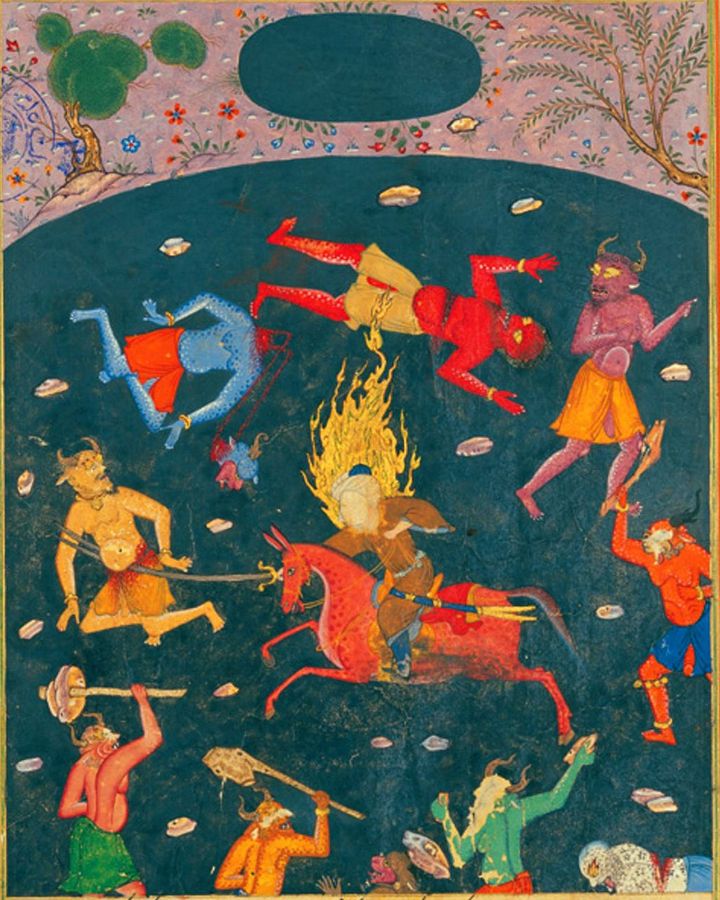
“in the Islamic world, it’s widely believed that it’s possible to become possessed by “jinns”, or evil spirits. They can be good, bad, or neutral, but they’re generally blamed for erratic behaviour. The concept is so mainstream, it’s even in the Muslim holy book, the Koran. “A lot of my patients do hold these beliefs quite strongly,” says Shahzada Nawaz, a consultant psychiatrist at North Manchester General Hospital in the UK. Nawaz explains that the ability to invoke jinns is particularly useful in Islamic cultures, because of the stigma that tends to accompany Western mental illnesses. One study of 30 Bangladeshi patients attending a mental health service in an east London borough found that their family members often felt that jinn possession was responsible.”

Note: I originally wrote this for the daily newsletter at the Columbia Journalism Review, where I am the chief digital writer
Donald Trump’s war on social media escalated recently after Twitter added a warning label to two of his tweets, with a link to a fact-check of the information he posted, and then blocked a third tweet with a message about violent content. Within days, Trump issued an executive order calling on the FCC to investigate whether social-media companies should lose the protection of Section 230 of the Communications Decency Act, which gives online platforms immunity for the content they host, because of what he claims are biased decisions about content. In contrast, Facebook has done nothing about Trump’s comments, despite the fact that a number of staffers have walked out to protest its lack of action—an unprecedented show of dissent for the company—and some have even quit their jobs. The executive order is widely viewed as legally dubious, but it is a convenient stick with which to threaten the social platforms. Will it work? Is that why Facebook has declined to take any action? Which approach is the right one, Twitter’s labelling or Facebook’s hands-off strategy?
To address these and other related questions, we used CJR’s Galley platform to host a virtual discussion with a group of journalists, legal analysts and other experts. Parker Molloy, editor-at-large for Media Matters, said the executive order is just another attempt to deal with what conservatives feel is a liberal bias in social-media companies. “Is there any evidence of this? No. We’ve done study after study after study on this topic, and there’s honestly no reason to believe there’s some sort of liberal/progressive bias at social-media companies. Conservatives are really just trying to ‘work the refs’ as a way to push these companies into adopting a pro-conservative bias.” Eric Goldman, a law professor at Santa Clara University and co-director of the High Tech Law Institute, said the order was aimed at internet companies—to discourage them from moderating conservative content—but was also a diversionary tactic to get the media to stop focusing on all the people who died from COVID-19. Even if the order has no actual legal effect, Goldman says, Trump “has likely accomplished his goals.”
Bridget Barrett, a researcher at the University of North Carolina, says that Facebook “had an opportunity here to clearly communicate what it would and wouldn’t tolerate, and for Trump, it looks like almost everything will be allowed. As someone who has spent the past couple months digging into the policies that platforms set for their users, this is incredibly frustrating. More importantly, as someone who wants our democracy to work, this is incredibly worrying.” And Errin Haines, editor-at-large for The 19th, a nonprofit news entity focused on gender politics, said “as a major source of information for a majority of people around the world and in our country, both of these platforms do have a responsibility to do no harm.” Jonathan Zittrain, a professor at Harvard Law School, made the broader point that “it’s strange that people like Mark (Zuckerberg, chief executive of Facebook) and Jack (Dorsey, chief executive of Twitter) have as much power as they do—whether to promote or squelch speech across billions of posts and users per day, including the power to do nothing.”
Continue reading “Trump vs social media”
Note: I originally wrote this for the daily newsletter at the Columbia Journalism Review, where I am the chief digital writer
When Twitter said earlier this month that it was making some changes to “limit the spread of potentially harmful or misleading content” by adding warning labels to tweets, one of the most obvious questions was whether the company would apply the labels to Trump’s various misinformed tweets. On Tuesday, we got the answer, when labels were added to two tweets posted to Trump’s account on the topic of mail-in voting ballots. The labels appeared just below the text of the tweet, with a hyperlink that said “Get the real story on mail-in voting.” The link took users to a collection of tweets with facts about the topic, curated by Twitter staff into what the company calls a Moment. The move was greeted with cheers in some quarters, while Trump and his supporters — including his son Donald Jr. — angrily tweeted about how the company was clearly trying to manipulate public opinion in advance of the federal election. Trump even promised to “strongly regulate, or close them down,” despite an obvious lack of any federal ability to do this.
On the one hand, it’s a tiny victory in the ongoing battle to stamp out misinformation online. After years of being accused of spreading lies, propaganda, and other noxious substances through its network, and of doing little to stop it, Twitter finally seems to be taking some baby steps towards responsible curation (Facebook said it would not take similar action because it believes that “people should be able to have a robust debate about the electoral process”). But at the same time, Twitter’s move is like taking a tiny drop of poison from a very large ocean and putting a label on it saying “for more information about poison, click here.” In fact, Twitter’s decision to add this kind of warning label raises as many questions as it answers. To take just one example, social researchers have found that fact-checking can cause what is known as the “implied truth effect,” where users assume that because one specific statement has been fact-checked and found to be false, others that haven’t been fact-checked must be true.
As a number of observers pointed out after Twitter added the label, the way that the company chose to phrase it was also imperfect. Saying “Get the facts about mail-in ballots” could be interpreted by some as adding weight to the misinformation rather than debunking it. Researchers such as Whitney Phillips of Syracuse University and Joan Donovan of Harvard’s Shorenstein Center often talk about the risks inherent in calling attention to misinformation, in part because doing so can amplify the incorrect info and cause it to travel much farther than it would have otherwise. Many wondered whether Twitter users would even bother clicking on the link, let alone read the facts in the Twitter Moment. Activist Charlotte Clymer said that Twitter’s label “is the most mild form of accountability” imaginable. The warning doesn’t say Trump is wrong or misleading people, she noted, and most people would probably scroll by without even noticing. “It’s weak and cowardly.”
Continue reading “Twitter fact-checks Trump, but will it do any good?”