
At first, it looks as though the woman in this video is opening a small door leading down into a basement, but then she flips up a hidden panel in the floor that reveals steps down and around the corner is a tiny, two-storey theatre that dates back to the mid-1800s sometime. As far as I can tell, a wealthy family who lived above the theatre — which is in Ragusa, in Sicily, and is known as the Teatro Donnafugata (Theatre of the Missing Woman) — had a private entrance built that led to their private balcony. Could be related to the nearby Castello Donnafugata, a royal palace that was built by a baron and has 122 rooms.
The Uyuni salt flats in Bolivia

He convinced people to drink tea instead of eating it

Sometime in his adolescence, in the 700s, Lu Yu, an aspiring writer and professional clown, had his first taste of tea soup. This probably occurred not far from Lu’s childhood home: a Buddhist monastery that overlooked a scenic lake in Central China. But Lu was unimpressed; he called the soup “ditch water.”
What bothered Lu was not the tea, but all the other ingredients. The offending brew contained scallions, ginger, jujube dates, citrus peels, Dogwood berries, and mint, all of which cooks “threshed” together to make a smooth paste. The result was a chunky soup, or even a sauce.
Lu Yu, in fact, adored tea—he’d go on to become the “tea god” and the world’s greatest tea influencer. But the tea he loved—brewed only from powdered tea leaves, without any other flavoring—was, in the grand sweep of human history, a recent invention. People in Asia, where tea trees are native, ate tea leaves for centuries, perhaps even millennia, before ever thinking to drink it. And it is Lu Yu who is chiefly responsible for making tea drinking the norm for most people around the world.
via Atlas Obscura
Not your everyday secret entrance
At first, it looks as though the woman in this video is opening a small door leading down into a basement, but then she flips up a hidden panel in the floor that reveals steps down and around the corner is a tiny, two-storey theatre that dates back to the mid-1800s sometime. As far as I can tell, a wealthy family who lived above the theatre — which is in Ragusa, in Sicily, and is known as the Teatro Donnafugata (Theatre of the Missing Woman) — had a private entrance built that led to their private balcony. Could be related to the nearby Castello Donnafugata, a royal palace that was built by a baron and has 122 rooms.
The Uyuni salt flats in Bolivia

He convinced people to drink tea instead of eating it
Sometime in his adolescence, in the 700s, Lu Yu, an aspiring writer and professional clown, had his first taste of tea soup. This probably occurred not far from Lu’s childhood home: a Buddhist monastery that overlooked a scenic lake in Central China. But Lu was unimpressed; he called the soup “ditch water.”
What bothered Lu was not the tea, but all the other ingredients. The offending brew contained scallions, ginger, jujube dates, citrus peels, Dogwood berries, and mint, all of which cooks “threshed” together to make a smooth paste. The result was a chunky soup, or even a sauce.
Lu Yu, in fact, adored tea—he’d go on to become the “tea god” and the world’s greatest tea influencer. But the tea he loved—brewed only from powdered tea leaves, without any other flavoring—was, in the grand sweep of human history, a recent invention. People in Asia, where tea trees are native, ate tea leaves for centuries, perhaps even millennia, before ever thinking to drink it. And it is Lu Yu who is chiefly responsible for making tea drinking the norm for most people around the world.
via Atlas Obscura
Ukraine, viral media, and the scale of war

If there’s one thing Twitter and Facebook and Instagram and TikTok are good at, it’s distributing content and making it go viral, and Russia’s invasion of Ukraine is no exception to that rule. Every day, there are new images and videos, and some become that day’s trending topic: the video clip of Ukrainian president Zelensky in military fatigues, speaking defiantly about resisting Russia’s attack; photos of Kyiv’s mayor, a six-foot-seven-inch former heavyweight boxing champion, in army fatigues; a man standing in front of a line of Russian tanks, an echo of what happened in China’s Tianenmen Square during an uprising in 1989; the old Ukrainian woman who told Russian soldiers to put sunflower seeds in their pockets, so sunflowers would grow on their graves; the soldiers on Snake Island who told a Russian warship to “fuck off.” The list goes on.
Not surprisingly, some of these viral images are fake, or cleverly designed misinformation and propaganda. But even if the inspiring pictures of Ukrainians rebelling against Russia are real (or mostly real, like the photo of Kyiv’s mayor in army fatigues, which was taken during a training exercise in 2021), what are we supposed to learn from them? They seem to tell us a story, with a clear and pleasing narrative arc: Ukrainians are fighting back! Russia is on the ropes! The Washington Post writes that the social-media wave “has blunted Kremlin propaganda and rallied the world to Ukraine’s side.” Has it? Perhaps. But will any of that actually affect the outcome of this war, or is it just a fairy tale we are telling ourselves because it’s better than the reality?
The virality of the images may drive attention, but, from a journalism perspective, it often does a poor job of representing the stakes and the scale at-hand. Social media is a little like pointillism—a collection of tiny dots that theoretically combine to reveal a broader picture. But over the long term, war defies this kind of approach. The 40-mile long convoy of Russian military vehicles is a good example: frantic tweets about it fill Twitter, as though users are getting ready for some epic battle that will win the war, but the next day the convoy has barely moved. Are some Ukrainians fighting back? Yes. But just because we see one dead soldier beside a burned-out tank doesn’t mean Ukraine is going to win, whatever “win” means. As Ryan Broderick wrote in his Garbage Day newsletter, “winning a content war is not the same as winning an actual war.”
Note: This was originally published as the daily newsletter for the Columbia Journalism Review, where I am the chief digital writer
Continue reading “Ukraine, viral media, and the scale of war”Ukraine, Russia, hacking, and misinformation
Note: This was originally published as the daily newsletter for the Columbia Journalism Review, where I am the chief digital writer
As soldiers and civilians in Ukraine continue to resist an invasion by Russian troops. a very different kind of war is being fought on a separate front: namely, the internet. Within hours of Russian troops attacking cities and government facilities in Ukraine, hackers—including some who claimed to be affiliated with the underground group known as Anonymous—went after a number of Russian government sites and systems. Some of these cyber-attacks appeared to be designed just to cause annoyance, while others were aimed at shutting down the Russian government’s operational abilities, or revealing what military intelligence officials in Russia might know. Along with the hacking of computer systems, the battle has also seen attempts by Russia to hack information networks, by using propaganda and misinformation on social and traditional media.
Some of the cyber-hacking attempts are from random vigilantes trying to have some impact on the broader conflict, but some were invited by the Ukrainian government itself. Messages started to appear on a variety of hacker forums starting Thursday morning asking for volunteers to protect critical infrastructure and conduct cyber missions against Russia, according to a report from Reuters. “Ukrainian cybercommunity! It’s time to get involved in the cyber defense of our country,” the posts read, asking hackers to apply via Google docs. Yegor Aushev, co-founder of a cybersecurity company in Kyiv, told Reuters he was asked to write the post by a senior Defense Ministry official.
Groups of pro-Ukrainian hackers have also come together to launch a variety of attacks on Russian infrastructure and command-and-control systems, Politico reported. And a group of “hacktivists” based in Belarus who are opposed to Russia’s invasion, known as the Belarusian Cyber Partisans, said they have created a tactical organization to help Ukraine’s military fight against Russia. The group claimed in January that it had encrypted parts of the computer systems used by the state railway in Belarus, in an attempt to slow down the movement of troops by rail, since the government in Belarus is friendly towards Russia and attacks on Ukraine might begin there (which they did).
Continue reading “Ukraine, Russia, hacking, and misinformation”Trump’s long-delayed social network off to rocky start
Note: This was originally published as the daily newsletter for the Columbia Journalism Review, where I am the chief digital writer
Within days of the January 6 attack on the US Capitol building, most of the leading social networks—including Facebook, Twitter, and YouTube—had banned Donald Trump from their platforms, since they said he used his social accounts to amplify the anti-democratic conspiracy theories that led to the attack, and to cheer on the right-wing groups that planned it. In March, a spokesman said Trump would be launching his own social network very soon: “We’re going to see President Trump returning to social media in probably about two or three months, with his own platform,” Jason Miller, a Trump advisor, told Fox News. Miller said the service was going to be big, and that Trump was “gonna bring tens of millions of people to this new platform.”
Two or three months came and went, but no Trump-led social network launched. When Trump launched a blog in May of last year, there was some speculation that maybe it was the social app Miller and others were talking about, but they said it was not (the blog was unceremoniously shut down in June due to low traffic numbers). When Gettr, a Twitter-like network aimed at right-wing users, launched in August of last year, some thought it was the new Trump-led social network, since Miller was at the helm of it. But it was not. In October, Trump announced that he would be launching his new social app—to be called Truth Social—in November, and that it would be part of a media conglomerate called Trump Media & Technology Group, which he planned to create by merging with a special-purpose acquisition company or SPAC.
Trump Social didn’t launch in November, or December, or January. Finally, this week, the new network actually launched—but it wasn’t the kind of debut some were expecting, given that the Trump team had been working on it for a year. The service opened Monday, but was “almost entirely inaccessible in the first days of its grand debut because of technical glitches, a 13-hour outage and a 300,000-person waitlist,” the Washington Post reported. Even some Trump supporters made jokes about the teething pains of the new service: Jenna Ellis, a former member of Trump’s legal team, posted a photo to Instagram showing Trump sitting at a desk with his finger hovering over a laptop, which Ellis said was the former president “letting us on to Truth Social one at a time.”
Continue reading “Trump’s long-delayed social network off to rocky start”Medieval Photoshop
Manipulating and enhancing images may seem something that is particular to the current digital age, but as researcher Anna Dlabacová describes, some medieval manuscripts such as The Kattendijke Chronicle, a late fifteenth-century manuscript from the Low Countries, contain fascinating examples of analogue image editing. In one image of people in a boat, for example, both the people and the land the boat is headed towards have been taken from other manuscripts.
At first sight, the image of a group of people in a boat might appear to be a straightforward woodcut that was pasted into a manuscript (fig. 1). Since single leaf prints – woodcuts and engravings – were used more often in handwritten books from the second half of the fifteenth century (see e.g., Rudy 2019), this example might not seem particularly special. A closer look, however, reveals several indications that there is much more to this image than meets the eye.

The so-called Kattendijke Chronicle derives its name from its seventeenth-century owner, Johan Huyssen of Kattendijke (1566-1634). In the 1990s his descendants made the manuscript available to a small team of researchers, which in 2005 resulted in an edition with an in-depth introduction that focused on textual, heraldic and codicological aspects, and explored the profile of the author of the Chronicle (Janse et al. 2005). The latter worked in Holland (possibly Haarlem?) and completed the book in or shortly after 1491.

No, you can’t speed read, no matter what Evelyn Wood told you
The 1960s and ’70s were a time for many things — moon landings, peace and love, Watergate, etc. — and one of those things was the rise of TV pitchmen selling snake oil of various kinds, like the old K-Tel and Popeil commercials in which they hawked pocket fishing rods and record-flipping gizmos (which were created by old carny and Vegas pitchmen Phil Kives and Ron Popeil). Along with all the other pitchmen was a pitchwoman: Evelyn Wood, a grandmotherly type who pitched her magic Speed Reading course.

Evelyn claimed that she could teach anyone how to read at thousands of words per minute with perfect comprehension (the average person reads at about 100-200 words a minute). The only problem with Evelyn’s pitch is that her process didn’t work — but she, and the business types she hired managed to turn it into a profitable business anyway, thanks to endorsements and cheesy commercials.
A Utah school teacher and a member of the Church of Latter-Day Saints, Evelyn did a master’s degree in speech at the University of Utah, and this was what set her off on the path to speed reading. “I turned in my thesis to Dr. Lowell Lees,” Wood would recount, “and watched in amazement as he read my eighty-page paper as fast as he could turn the pages.” Inspired by this feat, Wood dived into the business of teaching people to read
Continue reading “No, you can’t speed read, no matter what Evelyn Wood told you”Resurrected bill raises red flags, including for journalists

In 2020, members of Congress introduced a bill they said would help rid the internet of child sexual-abuse material (CSAM). The proposed legislation was called the EARN IT Act—an abbreviation for the full name, which was the Eliminating Abusive and Rampant Neglect of Interactive Technologies Act. In addition to establishing a national commission on online child sexual exploitation prevention to come up with the best practices for eliminating such content, the bill stated that any online platforms hosting child sexual-abuse material would lose the protection of Section 230 of the Communications Decency Act, which gives electronic service providers immunity from prosecution for most of the content that is posted by their users.
The bill immediately came under fire from a number of groups—including the Electronic Frontier Foundation, the Freedom of the Press Foundation, and others—who said it failed on a number of levels. For example, as Mike Masnick of Techdirt noted, Section 230 doesn’t protect electronic platforms from liability for illegal content such as child sexual-abuse material, so passing a law exempting them from that protection is redundant, and unnecessary. Critics of the bill also said it could cause online services to stop offering end-to-end encryption, used by activists and journalists around the world, because using encryption is a potential red flag for those investigating CSAM.
In the end, the bill was dropped. But it was resurrected earlier this year, reintroduced by Richard Blumenthal and Lindsey Graham (the House has revived its version as well), and many groups say the current version is as bad as the original, if not worse. The EFF said the bill would still “pave the way for a massive new surveillance system, run by private companies, that would roll back some of the most important privacy and security features in technology used by people around the globe.” The group says the act would allow “private actors to scan every message sent online and report violations to law enforcement,” and potentially allow anything hosted online—including backups, websites, cloud photos, and more—to be scanned by third parties.
Note: This was originally published as the daily newsletter for the Columbia Journalism Review, where I am the chief digital writer
Continue reading “Resurrected bill raises red flags, including for journalists”Switzerland’s hidden artillery placements and bunkers
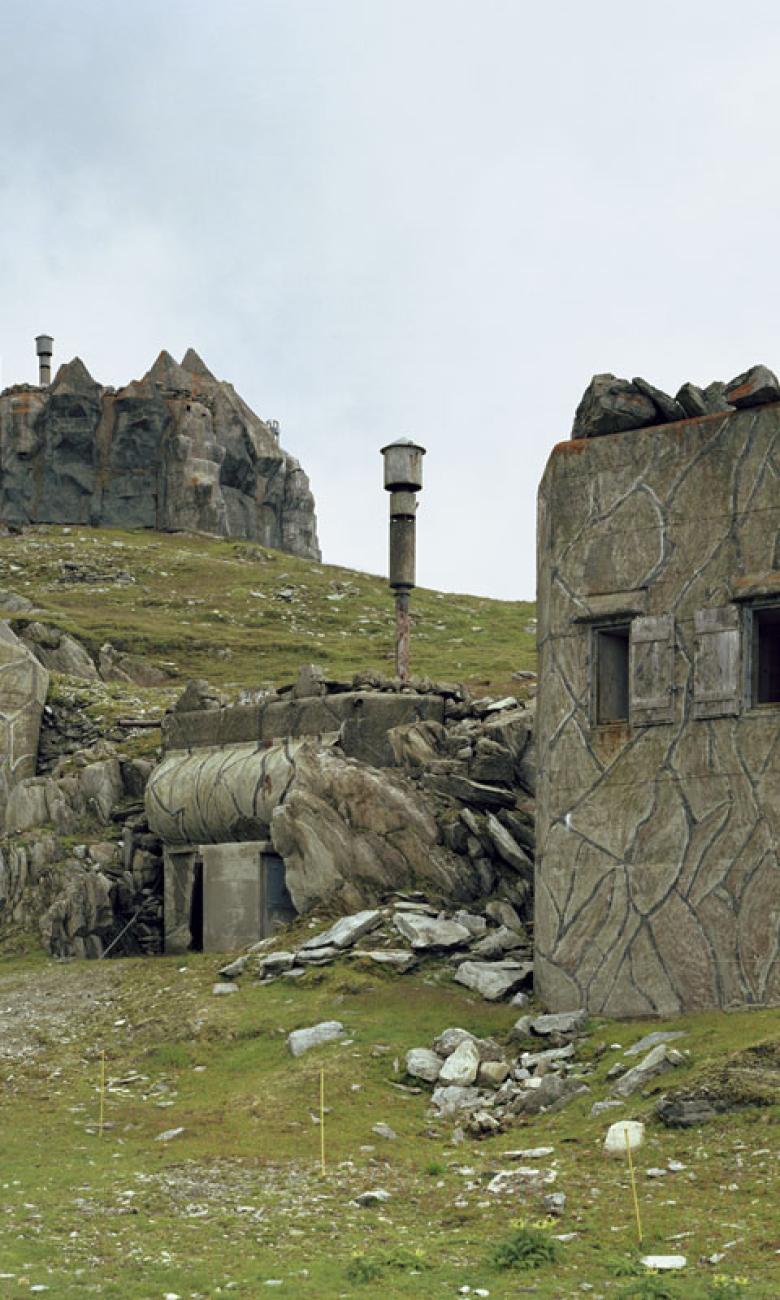
Plenty of countries have built massive defenses in case of invasion (the Great Wall of China comes to mind), but few have taken it quite as far as Switzerland, which built an incredible network of hidden bunkers and artillery placements across the country, many of them disguised as rock formations, hillside chalets, or even regular homes. The enormous fortress chain was built in the 1940s, at an estimated cost of $10 billion in today’s dollars, after Germany started invading countries as part of its global expansion. There are believed to be more than 8,000 of them, known as the Swiss National Redoubt.

The most important parts of the redoubt were the fortifications of Sargans, St. Maurice, and the Gotthard region. Besides cannons and howitzers, the infrastructure in many of these caverns and tunnels consisted of dormitories, kitchens, field hospitals, rooms for the sick, bakeries, and enough space to accommodate 100 to 600 soldiers for up to several months.
Meta is looking a lot less invincible these days
Note: This was originally published as the daily newsletter for the Columbia Journalism Review, where I am the chief digital writer
Over the past few years, criticism of “Big Tech” has grown from an undercurrent of dissatisfaction into a full-fledged crusade by Congress, the Federal Trade Commission, and other critics to blunt the power of the quasi-monopolies that control consumer technology, and Facebook—which recently changed its name to Meta—has been at or near the top of that short list. When Congress held hearings into the 2016 election, Mark Zuckerberg, Meta’s CEO, was front and center, as he has been in antitrust lawsuits launched by the FTC and a number of states. This isn’t surprising, given Meta’s control over the information consumption habits of more than two-and-a-half billion people around the world. Despite all this negative attention, however, Meta’s market power continued to grow, along with its market value, which climbed as high as a trillion dollars last year, up from three hundred billion in 2017.
The past week has been a very different story, however. On February 2, Meta’s market value was still close to seven hundred and sixty-five billion dollars, not that far from its peak, at least in proportional terms. The following day, its share price fell by more than twenty-five percent, wiping about two hundred billion dollars from the company’s market value—the largest decrease in value in the history of US stock exchanges, according to a report from CNBC. When the dust settled, Meta’s share price was lower than it had been since May of 2020. The stock dropped again the following day, although not by as much, and fell again the day after, although it has since recovered somewhat.
What happened? The most obvious answer is that Meta reported its quarterly financial results, and investors and stock analysts didn’t like what they heard. Although the company’s revenue was a little above expectations, its forecast for the current quarter was well below what analysts were looking for, and its earnings were much lower than consensus forecasts. Most important of all, the number of users who login to the service every day fell for the first time in the company’s eighteen-year history, to below two billion. The drop was not a very large one, but when you have been growing steadily for more than a decade, even a small drop can take on huge importance. As the Washington Post noted, the loss of users “was greatest in Africa, Latin America and India, suggesting that the company’s product is saturated globally.”
Continue reading “Meta is looking a lot less invincible these days”What it’s like to see 100 million colours

If you know how vision works, you may know that what you see — and particularly what colours you can see — is controlled by the rods and cones in your retina, at the back of your eye. Rods are sensitive to light, and cones allow you to see colour. Most people have three different types of cones, which allows them to see up to 1 million shades of colour — this is known as trichromacy. But relatively recently, scientists became aware that certain people, in most cases women, have a fourth type of cone, and this allows them to see up to 100 million different shades of colour. They are called “tetrachromats.”
Continue reading “What it’s like to see 100 million colours”It would be easy to look at the vivid array of colour contained in the paintings of artist Concetta Antico and assume she is using artistic licence. The trunks of her eucalyptus trees are hued with violet and mauve; the yellow crest on her cockatoo has hints of green and blue; the hypercolour of a garden landscape looks almost psychedelic.
“It’s not just an affectation and it’s not artistic licence,” says Antico. “I’m actually painting exactly what I see. If it’s a pink flower and then all of a sudden you see a bit of lilac or blue, I actually saw that.”
Antico is a tetrachromat, which means she has a fourth colour receptor in her retina compared with the standard three which most people have. While those of us with three of these receptors – called cone cells – have the ability to distinguish around one million different colours, tetrachromats see an estimated 100 million.