
How Sean Penn saved a man trapped in a Bolivian prison

Sean Penn always knew that rescuing Jacob Ostreicher from his years of Bolivian imprisonment would be difficult. Ostreicher, a then-52-year-old Hasidic businessman who had moved to the country from Brooklyn to manage a rice farm, got stuck there for two and a half years after he was accused of money laundering and criminal organization. His detainment in one of Bolivia’s most brutal prisons had attracted international attention — ABC News’ Nightline had run a segment about his incarceration; it was covered by the New York Times, the BBC, the Associated Press, and the Bolivian and Jewish press. It seemed like he would never get back to the States. Until suddenly, in December 2013, he returned. The Bolivian justice minister claimed Ostreicher had slipped away while out of prison on house arrest. Chaya Gitty Weinberger, Ostreicher’s daughter, told the Times that her father had been “dropped off in Pacific waters,” then released — but only after her uncle had negotiated a ransom. A State Department spokesperson would only confirm to news organizations that Ostreicher was in the United States. What really happened remained a mystery. (via NY mag)

This Nobel Prize winner’s invention can generate pure drinking water from the air

A Nobel laureate’s environmentally friendly invention that provides clean water if central supplies are knocked out by a hurricane or drought could be a life saver for vulnerable islands, its founder says. The invention, by the chemist Prof Omar Yaghi, uses a type of science called reticular chemistry to create molecularly engineered materials, which can extract moisture from the air and harvest water even in arid and desert conditions. Atoco, a company that Yaghi founded, said its units, comparable in size to a 20ft shipping container and powered entirely by ultra-low-grade thermal energy, could be placed in local communities to generate up to 1,000 litres of clean water every day, even if centralised electricity and water sources were interrupted by drought or storm damage. Yaghi, who won the 2025 Nobel prize in chemistry, said the invention would change the world and benefit islands in the Caribbean. (via The Guardian)

Note: This is a version of my When The Going Gets Weird newsletter, which I send out via Ghost, the open-source publishing platform. You can see other issues and sign up here.

Continue reading “How Sean Penn saved a man trapped in a Bolivian prison”


A teenaged girl struck out Babe Ruth and Lou Gehrig in 1931

When World War II came to America, baseball was one of the early victims. Many Major League players were in their early 20s and, therefore, subject to the draft. the owner of the Cubs, Philip K. Wrigley (of chewing gum fame) started the All-American Girls Professional Baseball League in 1943. While many know about the AAGPBL due to the 1992 movie A League of Their Own, few realize that women played professional, minor league baseball until 1931. That year,  a young woman named Jackie Mitchell ended women’s hopes of breaking into the big leagues. How? By striking out Babe Ruth. And, for good measure, she struck out Lou Gehrig too. Ruth, then 36 years old and on the downside of his career, led the league in home runs with 46 – but it was a tie. The other guy to also hit 46 homers was Gehrig, a 28 year old first baseman, and Ruth’s teammate on the New York Yankees. (via Now I Know)

The name of the Chicxulub meteor crater was chosen because it’s hard to pronounce

The Chicxulub crater is an impact crater buried underneath the Yucatán Peninsula in Mexico. Its center is offshore, but the crater is named after the onshore community of Chicxulub Pueblo. It was formed slightly over 66 million years ago when an asteroid, about ten kilometers in diameter, struck Earth. The crater is estimated to be 200 kilometers in diameter and is buried to a depth of about 1 kilometer beneath younger sedimentary rocks. It is one of the largest impact structures on Earth. The crater was discovered by Antonio Camargo and Glen Penfield, geophysicists who had been looking for petroleum in the Yucatán Peninsula during the late 1970s. Hildebrand, Penfield, Boynton, Camargo, and others published their paper identifying the crater in 1991. Penfield recalled that part of the motivation for the name Chicxulub was “to give the academics and NASA naysayers a challenging time pronouncing it” after years of dismissing its existence. (via Wikipedia)

Note: This is a version of my When The Going Gets Weird newsletter, which I send out via Ghost, the open-source publishing platform. You can see other issues and sign up here.

Continue reading “A teenaged girl struck out Babe Ruth and Lou Gehrig in 1931”

A teenaged girl struck out Babe Ruth and Lou Gehrig in 1931

When World War II came to America, baseball was one of the early victims. Many Major League players were in their early 20s and, therefore, subject to the draft. the owner of the Cubs, Philip K. Wrigley (of chewing gum fame) started the All-American Girls Professional Baseball League in 1943. While many know about the AAGPBL due to the 1992 movie A League of Their Own, few realize that women played professional, minor league baseball until 1931. That year,  a young woman named Jackie Mitchell ended women’s hopes of breaking into the big leagues. How? By striking out Babe Ruth. And, for good measure, she struck out Lou Gehrig too. Ruth, then 36 years old and on the downside of his career, led the league in home runs with 46 – but it was a tie. The other guy to also hit 46 homers was Gehrig, a 28 year old first baseman, and Ruth’s teammate on the New York Yankees. (via Now I Know)

The name of the Chicxulub meteor crater was chosen because it’s hard to pronounce

The Chicxulub crater is an impact crater buried underneath the Yucatán Peninsula in Mexico. Its center is offshore, but the crater is named after the onshore community of Chicxulub Pueblo. It was formed slightly over 66 million years ago when an asteroid, about ten kilometers in diameter, struck Earth. The crater is estimated to be 200 kilometers in diameter and is buried to a depth of about 1 kilometer beneath younger sedimentary rocks. It is one of the largest impact structures on Earth. The crater was discovered by Antonio Camargo and Glen Penfield, geophysicists who had been looking for petroleum in the Yucatán Peninsula during the late 1970s. Hildebrand, Penfield, Boynton, Camargo, and others published their paper identifying the crater in 1991. Penfield recalled that part of the motivation for the name Chicxulub was “to give the academics and NASA naysayers a challenging time pronouncing it” after years of dismissing its existence. (via Wikipedia)

Note: This is a version of my When The Going Gets Weird newsletter, which I send out via Ghost, the open-source publishing platform. You can see other issues and sign up here.

Continue reading “A teenaged girl struck out Babe Ruth and Lou Gehrig in 1931”

He wrote a murder mystery and now his death has become one

More than halfway through the crime novel he wrote, Robert Fuller describes the frustration of a detective locked in a mystery. He rubbed the back of his neck. “Now what?” he said aloud. It has been a week since someone made their way into Fuller’s assisted living apartment in Potomac, Maryland, police say, and fatally shot the 87-year-old millionaire in the head. Authorities released surveillance video Friday of a suspect walking on the facility’s grounds the morning of Feb. 14 around the time Fuller was killed. The video shows the back of a slender person wearing dark pants with long dark hair flowing over a yellowish checkered shirt. Investigators hope someone will recognize the shirt or the person’s gait, produced as if they’re favoring one foot. Detectives don’t know if the person depicted is a man or woman, was acting alone or what their motive was. (via MSN)

A colonel in the Mexican revolution was born female but lived as man for 70 years

Amelio Robles Ávila was a colonel during the Mexican Revolution. Assigned female at birth, Robles lived openly as a man from age 24 until his death at age 95. From a young age, Robles showed an interest in activities that were considered masculine, learning to tame horses and handling weapons, and becoming an excellent marksman and rider. Robles gained the respect of peers and superiors as a capable military leader, and was eventually given his own command. According to historians, Robles adopted a male identity not as a survival strategy but because of a strong desire to be a man. Robles’s male identity was accepted by family, society, and the Mexican government. According to a former neighbor, if anyone called Robles a woman or Doña (an honorific for women, similar to English Lady), he would threaten them with a pistol. (via Wikipedia)

Note: This is a version of my When The Going Gets Weird newsletter, which I send out via Ghost, the open-source publishing platform. You can see other issues and sign up here.

Continue reading “He wrote a murder mystery and now his death has become one”

The humanities are about to be automated

Referencing my desire to disprove that AI is “merely a stochastic parrot,” Claude told me that “political theory may be the one field where ‘stochastic parrot’ is actually a compliment, since the whole discipline consists of creatively recombining things Tocqueville and Mill already said.” Ouch.

Professors at top universities are — in good part because of what it now takes to get a good job in the field — more focused on publishing erudite contributions to niche debates in scholarly journals which only a handful of their colleagues will ever read than on teaching and mentoring the ever-dwindling ranks of their students.

Yascha Mounk gets an AI to write an academic paper in political theory and says the result is more or less indistinguishable from papers written by experts in the field

There are thousands of secret tunnels throughout Europe

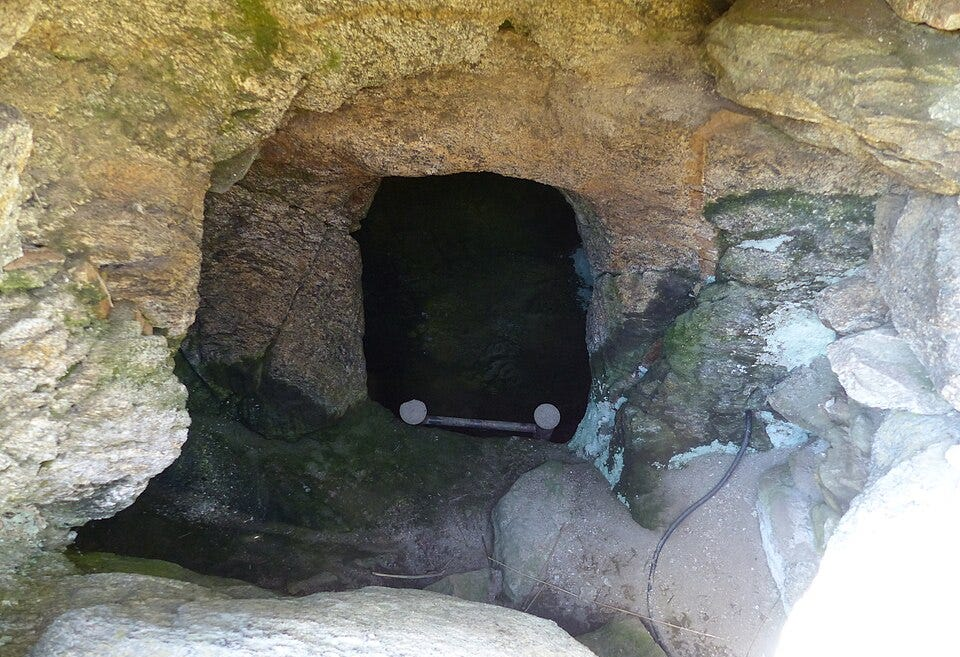
Around 2,000 strange tunnels have been found around central Europe. These aren’t like the well-known catacombs of Paris or Rome. Known as the erdstall, these passages are extremely narrow, never more than two feet wide nor high enough for an adult to walk in, and sometimes the passages become seemingly impossibly narrow, with some as small as 16 inches in diameter. Determining their age and purpose is made difficult by the fact that almost no archaeological evidence has been found inside any of them. A ploughshare was found in one, millstones in a couple others, but apart from that the erdstall are eerily empty. Carbon analyses of coal and pottery fragments found within point to construction dates of around 900 to 1200 AD, but no written records from the Middle Ages mention the erdstall’s existence. (via Weird Medieval Guys)

A Great Dane was awarded a medal in World War II for peeing on an explosive device

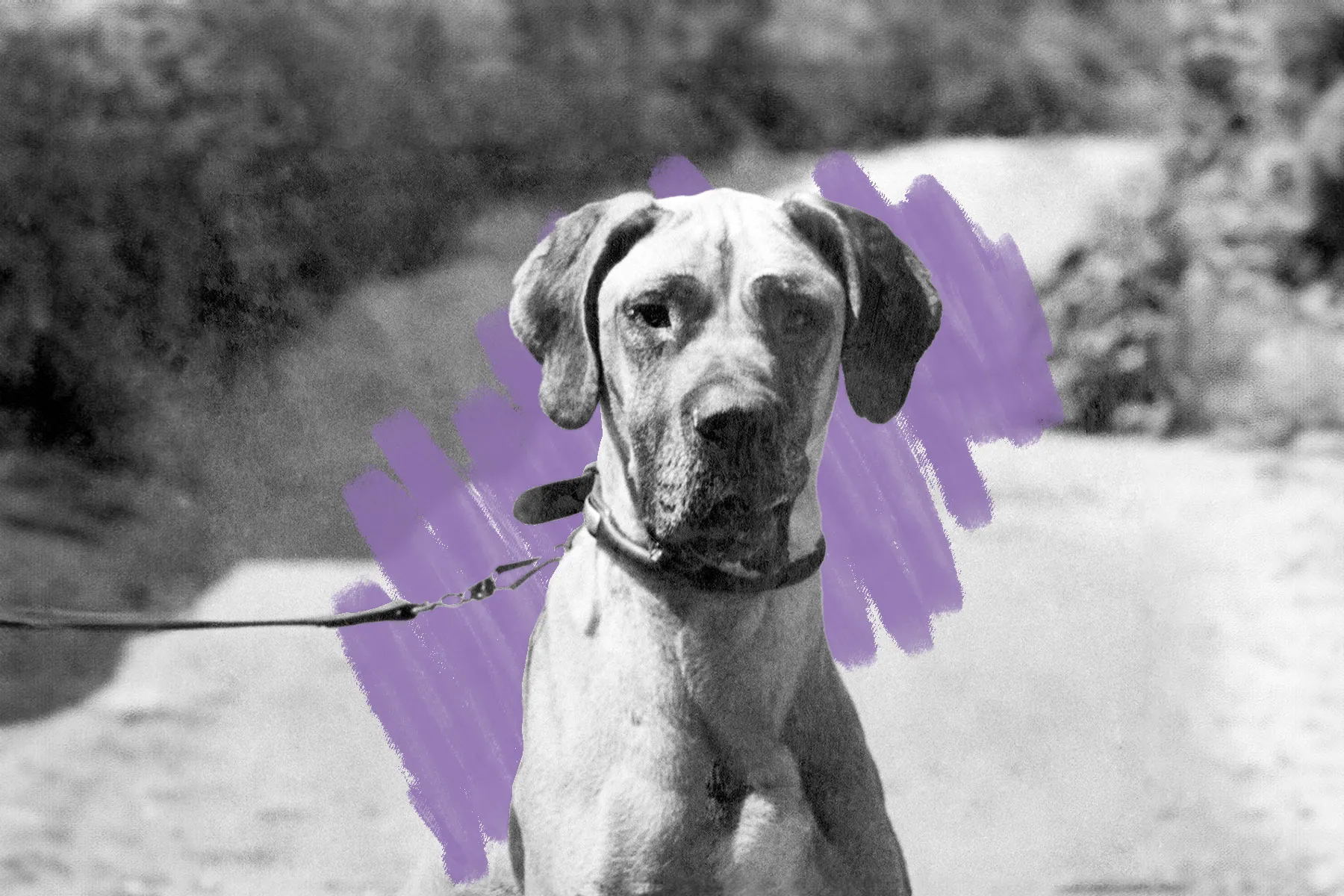
Animals have played pivotal roles on the front lines of many battles. Horses, elephants, and even dolphins have been employed for their strength, intelligence, and adaptability. During World War II, one brave animal stood out as a hero for using an unlikely defense tactic against the enemy: her urine. Juliana was the name of a Great Dane who had even greater instincts. In April 1941, amid the ongoing German bombing campaign known as the Blitz, explosives rained down across the U.K. When a bomb fell through the roof of the house where Juliana lived with her owner, the fast-acting pooch made her way over to the incendiary device and extinguished its flame by urinating on it. Juliana’s bravery earned her a medal from the Blue Cross. (via History Facts)

Note: This is a version of my When The Going Gets Weird newsletter, which I send out via Ghost, the open-source publishing platform. You can see other issues and sign up here.

Continue reading “There are thousands of secret tunnels throughout Europe”

Is it bad that Anthropic doesn’t know if Claude is conscious?

It’s the kind of headline that might seem either like a hypothetical philosophical concern, or a deeply worrying revelation, depending on how you feel about AI: Anthropic CEO Dario Amodei recently said the company is “no longer sure whether Claude is conscious.” On the one hand, whether an AI is or is not “conscious” could be seen as a question for the philosophically inclined, or for psychologists and other academics who specialize in such things. Does it really matter? What do we even mean when we say something is conscious? It’s a grey area (literally, as in grey matter). At the same time, however, it’s at least mildly concerning that a company that has been building and releasing sophisticated AI doesn’t really know what it has created. Do we need to be worried about Claude or any other significantly developed artificial intelligence achieving human-like consciousness and then doing something we might not like? Anthropic says it doesn’t think so, but also admits that it doesn’t really know.

Like it or not, this is where we are when it comes to AI. And if we’re looking for things to be optimistic about, I think Anthropic at least deserves some credit for being so forthcoming about the risks and rewards of its AI engines, and for providing a vast amount of detail about the machinery underneath Claude’s hood (which is more than other AI companies are doing). The company’s so-called “system cards,” which might sound like flash cards handed out at press conferences, are 300-page documents that list the tests and challenges Claude has either passed or failed, along with any concerns about things like “deceptive behavior,” where the AI says one thing and does another.

Anthropic also employs a number of risk-oriented and ethics-focused staffers who pay attention to such things, along with an in-house philosopher named Amanda Askell, whose job is to train Claude to be a decent artificial person, whatever that means. Presumably exterminating the human race is off the table! All that said, however, there are definitely some elements of what is happening at Anthropic (and presumably elsewhere, since Claude isn’t dramatically different than ChatGPT or Gemini or any of the other AI engines) that are… worth considering. As Futurism noted in its piece about whether Claude is conscious:

Note: This is a version of my Torment Nexus newsletter, which I send out via Ghost, the open-source publishing platform. You can see other issues and sign up here.

Continue reading “Is it bad that Anthropic doesn’t know if Claude is conscious?”

This tiny island had a coup almost every year for 24 years

“You know that island between Mozambique and Madagascar that you visited,” she said. “Was it called Anjouan? Well, there’s been a coup.” Actually, there had been 24 coups in as many years, the pace accelerating after 1997 and culminating with two in 2001. On an island no bigger than the Isle of Wight, this means that a significant proportion of the adult population has indulged in some storming of the presidential palace, albeit usually short-lived. To be honest, any able-bodied person with some pluck and peripheral vision stands a good chance: the Maoist revolutionary, Ali Soilih, took over in 1975 armed with little more than the spokes from a bicycle wheel; the French mercenary, Bob Denard, succeeded 20 years later with a dozen soldiers all aged over 60. When I left to sail to Anjouan, an ex-Foreign Legion man warned me that, despite being an unarmed lone traveller, I would be viewed as an invasion force. (via The Guardian)

Evolutionary scientists say the human chin is a biological accident

Absent from other primates — and even Denisovans and Neanderthals — the bony, protruding chin is a uniquely human characteristic. As such, it’s tempting to indulge in another uniquely human trait and come up with a reason it was honed by natural selection. Supporting the lower jaw to facilitate chewing or acting as a secondary sexual characteristic to advertise maturity to mates, are two such stories. To investigate theories of the evolution of the chin, researchers examined gene sequences involved in the development of the head and jaw for evidence of evolution. Specifically, the team looked at whether sequences involved in producing the chin itself were subject to direct selection, whether they arose neutrally due to genetic drift, or whether they were merely a byproduct of evolution acting upon other traits (a spandrel). They found that the evidence pointed toward the chin being an accident. (via Nautilus)

Note: This is a version of my When The Going Gets Weird newsletter, which I send out via Ghost, the open-source publishing platform. You can see other issues and sign up here.

Continue reading “This tiny island had a coup almost every year for 24 years”

ALS stole his voice but AI let him sing again one more time

There are tears in the audience as Patrick Darling’s song begins to play. It’s a heartfelt song written for his great-grandfather, whom he never got the chance to meet. But this performance is emotional for another reason: It’s Darling’s first time on stage with his bandmates since he lost the ability to sing two years ago. The 32-year-old musician was diagnosed with amyotrophic lateral sclerosis (ALS) when he was 29 years old, which affects the nerves that supply the body’s muscles. People with ALS eventually lose the ability to control their muscles, including those that allow them to move, speak, and breathe. Darling’s last stage performance was over two years ago. By that point, he had already lost the ability to stand and play his instruments and was struggling to sing or speak. But recently, he was able to re-create his lost voice using an AI tool trained on snippets of old audio recordings. (via MIT Tech Review)

A woman lived undetected inside the sign on top of a Michigan store for more than a year

A woman who had been living in a sign of a Michigan grocery store for about a year was captured on police body cam footage telling police it was a “safe spot” for her to live. The saga began about a month ago when a contractor working on the roof of the Family Fare store in Midland noticed an extension cord running into a door on the back of the sign. When he opened the door, he was greeted by the 34-year-old woman. Officer Brennon Warren of the Midland Police Department told The Associated Press that the woman had made herself quite comfortable in the sign’s approximate 40-square feet. “There was some flooring that was laid down. A mini desk,” he said. “Her clothing. A Keurig coffee maker. A printer and a computer — things you’d have in your home.” Police did not name the woman, but said she was cooperative and agreed to leave. She was not charged with any crimes. the woman told officers she’d been living in the sign for about a year, but officers never learned how she was accessing the roof every day. (via Global News)

Note: This is a version of my When The Going Gets Weird newsletter, which I send out via Ghost, the open-source publishing platform. You can see other issues and sign up here.

Continue reading “ALS stole his voice but AI let him sing again one more time”