
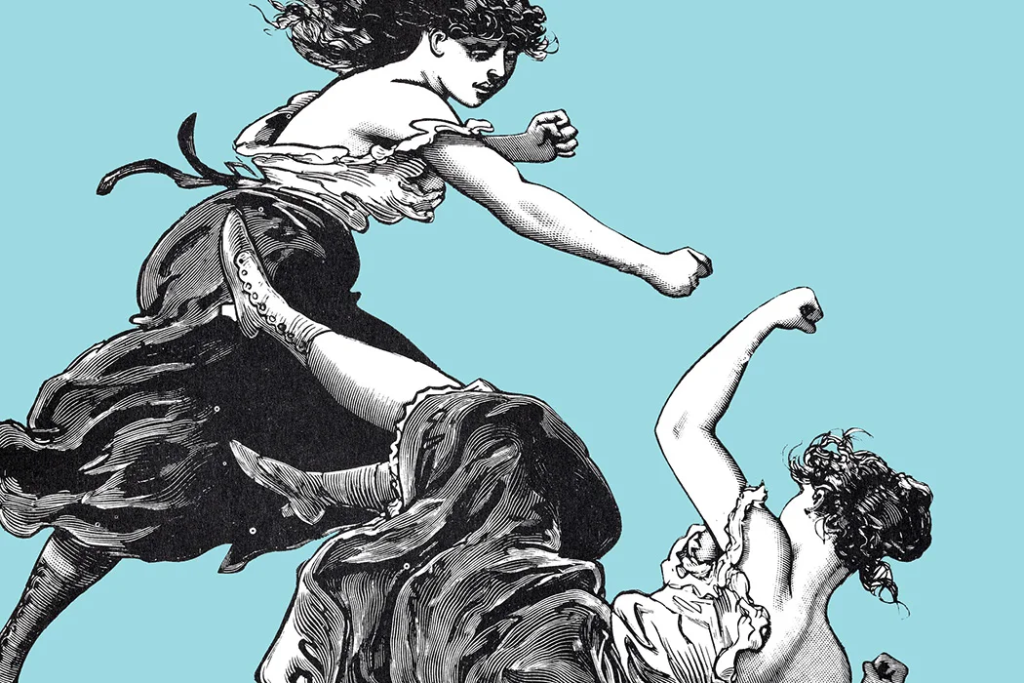
Ashawnta Jackson writes for JSTOR Daily: “Elizabeth Wilkinson had a score to settle. Writing to the London Journal in 1722, she informs its readers that she and Hannah Highfield ‘had some words.’ And though words might have started it, they weren’t going to end it. Wilkinson challenged Highfield to a fight: “I do invite her to meet me on the stage and box with me for three guineas,” she wrote, “each woman holding half-a-crown in each hand, and the first woman that drops her money to lose the battle.” Highfield accepted that invitation, promising “that she will not fail…to give her more blows than words, desiring home blows, and of her no favor. She may expect a good thrumping.” Though calling out your enemy in a newspaper ad might be unusual, the fight certainly wasn’t. Randy Roberts writes, “female pugilism was so popular that the women crowned their first champion at approximately the same time as the males.”
This mom didn’t know she was in a $250K Candy Crush tournament, but she’s winning

From Sisi Jiang at Kotaku: “Erryn Rhoden is an ordinary person who works at her family’s roofing company in Columbus, Ohio. She’s also the top-ranked player in her semifinal bracket for the Candy Crush Saga All Stars Tournament, the biggest Candy Crush tournament in history, which she entered by accident. That makes her one of the most successful esports athletes in the entire country right now. Candy Crush is the most popular match-3 game of all time. Players eliminate blocks by matching three or more candies by swapping their positions until they’re next to each other. Overall Candy Crush progress is measured by the number of levels that you’ve completed. You complete levels by fulfilling their level’s objectives, such as breaking particularly sturdy blocks or accumulating a certain number of special candies that you can create by matching regular candy tiles in a certain way. If you finish a level with time remaining on the timer or in fewer moves, you get bonus points at the end.”
Note: This is a version of my personal newsletter, which I send out via Ghost, the open-source publishing platform. You can see other issues and sign up here.
Continue reading “Women have been fist-fighting since the early 1700’s”