
This massive pine tree somehow missed the cottage

Links that interest me and maybe you

From Sidney Perkowitz at Physics World: “Hydrogen, the simplest atom, is a basic building block of the universe. We know that it existed soon after the universe was born and that it still appears as a large part of the interstellar medium in which stars form. It is also the nuclear fuel that keeps stars radiating immense amounts of energy as they evolve over eons to create the chemical elements. But how did we learn that hydrogen is a widespread and fundamental component of the universe? Not enough people know that the cosmic importance of hydrogen was first grasped by a young PhD student, Cecilia Payne (Payne-Gaposchkin after she married), who in 1925 discovered hydrogen in the stars. Indeed, she earned a PhD at a time when it was still extremely difficult for women to do so.”

From Danika Ellis at Book Riot: “On Saturday, Twitter user bigolas dickolas wolfwood (@maskofbun) tweeted: read this. DO NOT look up anything about it. just read it. it’s only like 200 pages u can download it on audible it’s only like four hours. do it right now i’m very extremely serious. The follow up tweet says “*grabs you personally by the throat* you will do this. for me. you will go to the counter at barnes and noble. you will buy this. i will be greatly rewarded” This is an account that tweets mostly about the anime Trigun to about 14,000 followers. But within days, this tweet would explode in popularity, now with more than 100,000 likes and 10,000 retweets. As the tweet exploded, so did the book. It rose up the charts on Amazon, becoming the #6 bestselling book overall. It took up three of the top four Sci-Fi Bestseller spots.”
Note: This is a version of my personal newsletter, which I send out via Ghost, the open-source publishing platform. You can see other issues and sign up here.
Continue reading “The woman who found hydrogen in the stars”
Dan Lewis writes: “In 2015, a team of marketing researchers were looking at the buying habits of customers who frequented an unnamed chain of convenience stores, likely to help the store better understand its customers. And as one researcher, Professor Catherine Tucker of MIT, told the New York Times, they made a discovery that “was really an accident” — there were a handful of customers “who were really good at picking out failures,” so good that “a newly introduced product was less likely to survive if it attracted these buyers. (And if they bought it repeatedly, its chances of survival were even worse.) Professor Tucker called these people harbingers of failure because, statistically speaking, their fondness for a product heralded its demise.”

From Ben Marks at Collector’s Weekly: “Many places deserve to be called the birthplace of rock ’n’ roll. Memphis often gets the nod because that’s where Sam Phillips recorded Elvis Presley belting out an impromptu, uptempo cover of “That’s All Right” in 1954. For author Ian Port, whose new book, The Birth of Loud, has just been published by Scribner, the birthplace of rock ’n’ roll could also be the former farming community of Fullerton in Orange County, California. That’s where an electronics autodidact named Clarence Leonidas “Leo” Fender and a friend named Clayton “Doc” Kaufman took a solid plank of oak, painted it glossy black, attached a pickup at one end, and strung its length with steel strings.”
Note: This is a version of my personal newsletter, which I send out via Ghost, the open-source publishing platform. You can see other issues and sign up here.
Continue reading “If these people buy your new product, it is doomed to fail”
From Rebecca Morelle for the BBC: “At the Metropolitan Police forensic lab in south London, audio specialists have been continuously recording the sound of mains electricity. It is an all pervasive hum that we normally cannot hear. But boost it a little, and a metallic and not very pleasant buzz fills the air. “The power is sent out over the national grid to factories, shops and of course our homes. Normally this frequency, known as the mains frequency, is about 50Hz,” explains Dr Alan Cooper, a senior digital forensic practitioner at the Met Police. This buzz is an annoyance for sound engineers. But for forensic experts, it has turned out to be an invaluable tool in the fight against crime.”
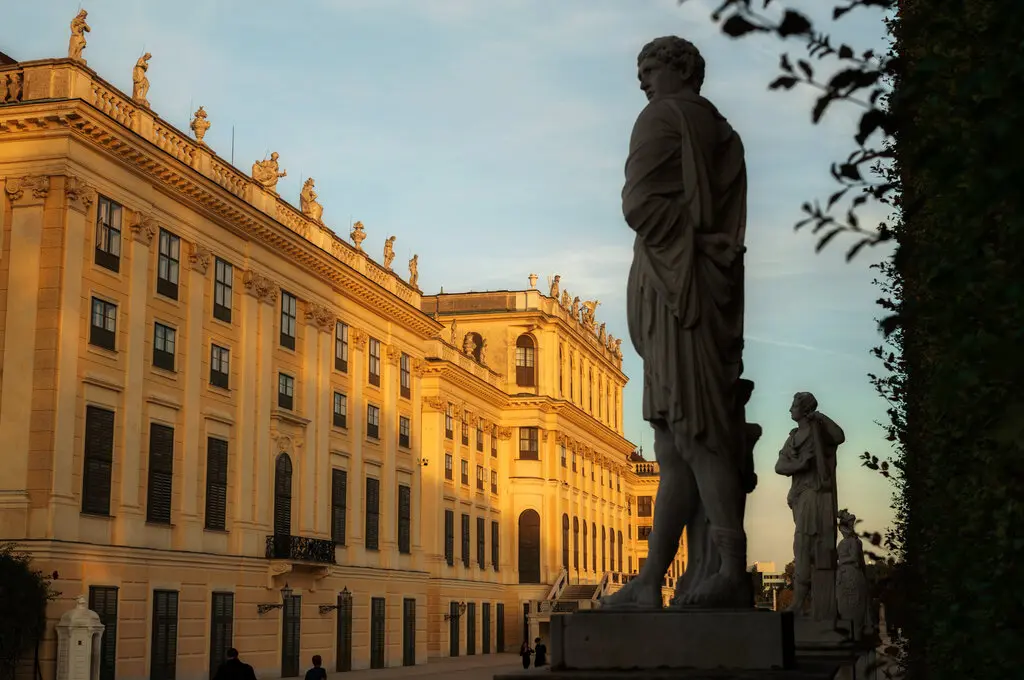
If the Austro-Hungarian Empire still existed, 25-year-old Ferdinand Habsburg would eventually be its ruler. Instead he’s a racecar driver. Alyson Krueger writes in the New York Times: “Ferdinand Habsburg-Lothringen sometimes goes for runs around the 1,441-room Schönbrunn Palace, the former summer residence of the Habsburg rulers of the Austro-Hungarian Empire. He loves taking in the manicured gardens, the mazes, one of the world’s oldest zoos still in existence, and one of the largest Baroque orangeries in the world. “I go there to wander around the beauty,” he said. But once in a while things can feel a little weird in a way that is unique to Mr. Habsburg.”
Note: This is a version of my personal newsletter, which I send out via Ghost, the open-source publishing platform. You can see other issues and sign up here.
Continue reading “The electrical hum that helps to fight crime”

Claire McNear writes: “For decades, whispers have circulated among game show aficionados about a mysterious Jeopardy! contestant from 1986. She went by Barbara Lowe and won five games in a row, which at the time was the upper limit for returning champions. Later that year, when the show aired its Tournament of Champions contest with the best recent players, for which five-day champs automatically qualified, Lowe was nowhere to be found. Then, bizarrely, her episodes seemed to be wiped from the face of the earth. In the 1990s, Game Show Network re-aired Season 2 of Jeopardy!; eagle-eyedfans noticed that the five episodes featuring Lowe were unceremoniously skipped.”

Alex Webber writes: “For years left to rot, hopes that a stunning palace in the Opole region would regain its former splendour have been put on hold after legal issues were raised concerning its recent purchase. Regarded as one of the area’s finest architectural jewels, the palace in Kopice began life in the 18th century when the architect Hans Rudolph designed a classicist mansion to be built on the ancient seat of the van Borsnitz clan. A century later, the property was purchased by Count Hans Ulrich Schaffgotsch for his seventeen-year-old wife Joanna Gryzik von Schomberg-Godulla. In 1863, the couple commissioned Karol Lüdecke to oversee its complete reconstruction. Of its many standout features, it contained a spectacular rib-vaulted chapel, hand-carved furnishings and priceless works of art. Equally impressive was its sprawling 60-hectare garden.”
Note: This is a version of my personal newsletter, which I send out via Ghost, the open-source publishing platform. You can see other issues and sign up here.
Continue reading “Solving the mystery of the missing Jeopardy tapes”Note: This was originally published as the daily newsletter for the Columbia Journalism Review, where I am the chief digital writer
The past few weeks have not been kind to the giants of digital news. On April 20, Insider—which is owned by the German publishing company Axel Springer—said that it was laying off ten percent of its staff in the US. On April 27, Vice Media initiated a restructuring that was expected to lead to over a hundred job losses and the end of its Vice News Tonight broadcast; on May 1, the New York Times reported that Vice was preparing to file for bankruptcy protection. Since then, there have been reports that a private equity deal could rescue the company, though it may value it as low as three-hundred million dollars—a relatively large amount by everyday standards, but still a far cry from the near six billion dollars the company was said to be worth in 2017. Elsewhere, Disney slashed staff at FiveThirtyEight, the data-driven news site that it owned as part of ABC News. Numerous more traditional media outlets have also made cuts this year, from the Washington Post to Gannett.
More than any of these, however, one recent announcement stood out as a sign of something important dying, at least on the digital-media side of the equation: namely, the closing of BuzzFeed News and the loss of its more than sixty staffers. (BuzzFeed will stay in the news business via HuffPost, which it owns.) “This moment is part of the end of a whole era of media,” Ben Smith, the founding editor of BuzzFeed News, told the Times (where he later worked as a media columnist). “It’s the end of the marriage between social media and news.” As is the case with many marriages, the end of this one was hardly a surprise to anyone who had been paying attention. Layoffs at BuzzFeed News had become the norm in recent few years, including two hundred job cuts in early 2019. BuzzFeed went public in 2021, which some hoped would bring prosperity, but its stock soon slid. The company was worth a billion dollars shortly after its initial public offering. At time of writing, its share price implied that it was worth less than eighty million dollars.
Back in the halcyon days of 2015, Jonah Peretti, BuzzFeed’s CEO, told Recode’s Peter Kafka that he planned to “fish for eyeballs in other people’s streams”—in particular, Facebook’s. The site’s content, consisting of quizzes and short videos in addition to hard-hitting news stories, seemed perfectly suited for that platform, and, for a time, Peretti’s plan seemed to be working well. But by 2017, BuzzFeed’s revenue growth had reportedly started to slow. Then, in 2018, Facebook made a series of changes to its algorithm that were designed to show users more “personal” content, such as photos and posts from friends, ahead of articles from external publishers. For some news outlets, including Mashable and Mic, the changes meant hardship, and even death. BuzzFeed was not hit quite as hard, but it was hit: according to one estimate from a former BuzzFeed staffer, stories that once racked up as many as two hundred thousand visits were now getting a tenth of that amount. As I wrote in 2019, “Editors at BuzzFeed (and many other places) yoked themselves so tightly to Facebook’s wagon, even after the Zuckerberg empire provided ample evidence it would move the goalposts.”
Continue reading “Does the end of BuzzFeed News mean the death of social journalism?”


From Mike Baker in the New York Times: “As he navigated one day last fall through a crowded grid of beds at one of Oregon’s largest homeless shelters, Steve Martin, a longtime rancher and community volunteer, was brought to a halt by a familiar voice that called out from an unfamiliar face. “Aren’t you going to say, ‘Hi,’ Steve?” said the man, with eyes peering through curtains of white hair and a beard that flared in neglected disarray. Mr. Martin, who spent many of his days working among the shelter’s residents, considered the man’s gaunt frame. Then the man spoke again: “It’s Craig.” The words jolted Mr. Martin with a mix of recognition and disbelief. He had known Craig Coyner for more than 50 years, watching with admiration as the man from one of the most prominent families in Bend, Ore., rose through an acclaimed career — as a prosecutor, a defense lawyer and then a mayor who helped turn the town into one of the nation’s fastest-growing cities.”

Jeff Maysh writes: “Donna settled into Robert’s apartment and her new life in a chilly new city. Portland was two hundred times more populous than her small hometown, and overwhelmed by people living on the streets. She was nervous around strangers, even the pumpjackers who filled her car (Oregon law prohibits people from pumping their own gas). Robert was her savior. When he drove Donna through the city he pointed out the dangerous spots where drug deals go down. He wore regular clothes, but his silver Dodge Charger had blue and red lights concealed in the grilles. When traffic snarled in Old Town, he gave his siren a whup, and the sea of cars magically parted. Robert was a gentleman who always held open the car door, the polar opposite of her husband. His gold D.E.A. badge glistened on his hip. Soon, she was falling in love.”
Note: This is a version of my personal newsletter, which I send out via Ghost, the open-source publishing platform. You can see other issues and sign up here.
Continue reading “Homeless in the city where he was once the mayor”
If you’ve spent any time on social media in the past few weeks, you’ve probably heard about BlueSky, a new social platform that was jump-started by Jack Dorsey in 2019, when he was the CEO of Twitter. The service recently opened up to a larger number of invitation-only beta testers, and some prominent Twitter users have set up accounts there, including Senator Ron Wyden, Congresswoman Alexandria Ocasio-Cortez, billionaire Mark Cuban, and popular accounts such as Dril. Some BlueSky fans believe the social network has the best chance of replacing Twitter, which has been lurching from crisis to crisis under new owner Elon Musk. But do we really need a replacement for Twitter? And if so, will this new platform somehow be able to reproduce just the positive aspects of Twitter, or will it wind up recreating all of the negative aspects too?
Dorsey first mentioned BlueSky in 2019, with a tweet saying that Twitter planned to fund “a small independent team of up to five open source architects, engineers, and designers to develop an open and decentralized standard for social media.” Dorsey noted that in the early days of Twitter, the network allowed external developers and services to plug in to its systems easily and extend them, to the point where “many saw its potential to be a decentralized internet standard,” much like email. For a variety of reasons, Dorsey added, “we took a different path and increasingly centralized Twitter.” That process has continued since Musk took control, and Twitter now charges anyone who wants to plug in to the network thousands of dollars (although Musk recently announced that emergency services will not have to pay).
Dorsey said he was inspired to take an open-source, distributed approach to a social network in part by reading a piece that Mike Masnick of Techdirt wrote for the Knight First Amendment Institute. In that essay, entitled “Protocols, Not Platforms: A Technological Approach to Free Speech,” Masnick argued that in response to concerns about hate speech and other forms of harassment online, many social networks focused on increased moderation and other attempted solutions, but many of these “will make the initial problems worse or will have other effects that are equally pernicious.” Masnick suggested that instead of being closed platforms owned by single entity such as Twitter or Facebook, social networks should be open protocols, allowing users to choose, just as they can choose a different email client or web browser.
Note: This was originally published as the daily newsletter for the Columbia Journalism Review, where I am the chief digital writer
Continue reading “Is BlueSky the next Twitter, and if so would that be a good thing?”
Lesley Kennedy writes for History.com: “Following the Apollo 11 historic July 20, 1969, moonwalk, Aldrin and Neil Armstrong were preparing to return to command from their lunar module when they discovered that a 1-inch engine arm circuit breaker switch had broken off the instrument panel. “Regardless of how the circuit breaker switch had broken off, the circuit breaker had to be pushed back in again for the ascent engine to ignite to get us back home,” Aldrin wrote. “since it was electrical, I decided not to put my finger in, or use anything that had metal on the end. I had a felt-tipped pen in the shoulder pocket of my suit that might do the job. I inserted the pen into the small opening where the circuit breaker switch should have been, and pushed it in; sure enough, the circuit breaker held. We were going to get off the moon, after all.”

Lydia Denworth writes for Scientific American: “The concept of taking 10,000 steps a day to maintain health is rooted not in science but in a marketing gimmick. In the 1960s a company in Japan invented an early pedometer. Because the Japanese character for “10,000” looks like a person walking, the company called its device the 10,000-step meter. “It was just sort of a catchy phrase,” says I-Min Lee, an epidemiologist at Harvard Medical School and Brigham and Women’s Hospital in Boston. Taking that many steps daily is challenging but doable for many people. “Sure, if you get 10,000 steps, it seems like a good goal. But there was not really any basis to it.” In 2019 Lee published one of the first studies specifically investigating the actual effects of meeting the 10,000-step goal. Several other large studies followed. The result? Some movement is good, and more is better, but the benefits taper at some point.”
Note: This is a version of my personal newsletter, which I send out via Ghost, the open-source publishing platform. You can see other issues and sign up here.
Continue reading “Neil Armstrong and Buzz Aldrin were almost stranded on the moon”

Brynn Holland writes for The History Channel: “James Barry began his military career on July 6, 1813, as a Hospital Assistant in the British Army, and was soon promoted to Assistant Staff Surgeon, equivalent to lieutenant. He then served in Cape Town, South Africa, for 10 years where he befriended the governor, Lord Charles Somerset. Barry was known for his short, hot temper. Patients, superiors, army captains and even Florence Nightingale herself were on the receiving end of his anger. He threw medicine bottles and even participated in a duel. But his medical skills were unprecedented. He was the first to perform a successful caesarean section in the British Empire where both the mother and child survived. Dr. Barry died from dysentery on July 25, 1865. His last wishes were to be buried in the clothes he died in, without his body being washed—wishes that were not followed. When the nurse undressed the body, she discovered female anatomy and tell-tale stretch marks from pregnancy.”

Stephen Wolfram, who published his first scientific paper at 15 and got a PhD in theoretical physics at the age of 20, writes about the man known as Ramanujan: “I have for many years received a steady trickle of messages that make bold claims but give little or no backup for what they say. But in the end I try to at least skim them—in large part because I remember the story of Ramanujan. On about January 31, 1913 a mathematician named G. H. Hardy in Cambridge received a package of papers with a cover letter that began: “Dear Sir, I beg to introduce myself to you as a clerk in the Accounts Department of the Port Trust Office at Madras on a salary of only £20 per annum. I am now about 23 years of age….” and went on to say that its author had made “startling” progress on a theory of divergent series in mathematics, and had all but solved the longstanding problem of the distribution of prime numbers.”
Note: This is a version of my personal newsletter, which I send out via Ghost, the open-source publishing platform. You can see other issues and sign up here.
Continue reading “The extraordinary secret life of Dr. James Barry”
Clive Thompson writes: “By now, we all know the problems of greenhouse gases. Burning fossil fuels creates CO2 — with methane sometimes as side product as well — and it traps the sun’s heat. The result: Global warming, and all the weirding of climate that comes with it. We moderns have known this since the 80s. But the basic idea behind greenhouse gases was discovered over a century earlier — by a female suffragette who, in 1856, did some ingenious scientific experiments. When she wrote up her work, she neatly and pithily predicted the possibility that we’d one day cook the planet. Eunice Foote was born in 1819 on a farm in Connecticut, and raised in Bloomfield, New York. In that period of history, few women received good technical educations, but Foote was an exception: Her parents sent her to the Troy Female Seminary, where she learned advanced math and science.”

Sheehan Quirke, also known as The Cultural Tutor, writes: “Johanna is the least famous of the van Goghs. Vincent might just be the world’s best-known artist. Then there’s Theo, his devoted brother, without whose support Vincent could never have done what he did. And, finally, we have Jo. She was born Johanna Gezina Bonger in 1862, the daughter of an insurance broker. She studied English and became a teacher at a girls’ school in the Netherlands. In 1884 she was introduced to Theo van Gogh by her brother. Theo was immediately taken, but it was five years later that he proposed. Jo said yes and they were married in early 1889. That same year, Vincent died, and Theo also died just six months later. What did Jo do? She inherited all of Vincent’s (then valueless) paintings and took them with her to the Netherlands. Although Vincent had sold only one painting in his lifetime and died a nobody, Jo was committed to sharing Vincent’s artistic genius with the world.”
Note: This is a version of my personal newsletter, which I send out via Ghost, the open-source publishing platform. You can see other issues and sign up here.
Continue reading “This 19th-century woman predicted global warming”