
I don’t care, I love her

Links that interest me and maybe you

“Maybe from my own point of view, I’m like: ‘Yes! Break up with that person! Run as fast as you can!’ But from a therapy perspective, I have to empower them to make that choice. I’m only seeing a person for one hour a week, and I might not have the full picture, so I shouldn’t make decisions for someone else. It comes with practice. Honestly, sometimes you do really just want to jump out and be like ‘Do not do this.’” (via)

Note to readers: In yesterday’s newsletter, in a post about how Dr. Seuss wrote ‘Green Eggs and Ham’ on a bet with his publisher, Bennett Cerf, I mentioned parenthetically that Vinton Cerf, one of the inventors of the Ethernet communication standard, was Bennett’s nephew. I remembered reading this somewhere, but I should have checked further: Vint debunked this rumor in a reply on Quora. My apologies for the error, which was 100 percent my fault! We now return you to your regularly scheduled programming, which is already in progress:
From Betsy Golden Kellem for The JSTOR Daily: “The so-called Jersey Jumper, a millworker named Sam Patch, became blindingly famous between 1827 and 1829, and for an unusual reason: he liked to jump off high waterfalls for paying crowds. Jumping off river dams or high cliffs was common entertainment for bored New England mill workers, and Patch was determined to make a name for himself taking this sport, as it were, to a new extreme. He survived many jumps, including one from a tall wooden platform into the Niagara River below the famous falls. He died in 1829 at the age of thirty, in an attempt to jump the Genesee Falls in Rochester, New York. He’d made the same jump successfully before, but he didn’t feel it had drawn enough crowds or revenue.”

Caitlin Dempsey writes for GISLounge: “In the 1920s, the Plus Fours Routefinder made its debut. Worn like a watch, a small map was embedded where the watch dial would normally be found. The maps were wound around small wooden pegs like scrolls and could be switched out of the wristband depending on the route needed. The knobs would be turned to advance the map and directions as needed. The maps were unidirectional. The Baldwin Auto Guide was a scrolled map that attached to the steering wheel. Similar to how film is wound inside a canister, the Auto Guide contained custom map directions which the driver would scroll through by hand. The device even came with a battery operated light for night map reading. An Italian company took this a step further.”
Note: This is a version of my personal newsletter, which I send out via Ghost, the open-source publishing platform. You can see other issues and sign up here.
Continue reading “The 19th century fascination with daredevils”
Oliver Whang writes for the New York Times: “Gert-Jan Oskam was living in China in 2011 when he was in a motorcycle accident that left him paralyzed from the hips down. In a study published on Wednesday in the journal Nature, researchers in Switzerland described implants that provided a “digital bridge” between Mr. Oskam’s brain and his spinal cord, bypassing injured sections. The discovery allowed Mr. Oskam, 40, to stand, walk and ascend a steep ramp using a walker. The brain-spine interface, as the researchers called it, takes advantage of an artificial intelligence thought decoder to read Oskam’s intentions as electrical signals in his brain and match them to muscle movements.”

From Carla Estefania: “The National Security Agency in the US declassified a document which points to what is likely to be the worst translation mistake in history. In July 1945, when the allied countries meeting in Potsdam submitted a declaration of surrender terms, the Japanese Prime Minister stated that he had no comment, using the term ‘mokusatsu,’ which has several interpretations. Media agencies and translators interpreted his use of the term as ‘treating with silent contempt,’ suggesting that the ultimatum was ‘not worthy of comment.’ The Hiroshima bomb was dropped ten days later.”
Note: This is a version of my personal newsletter, which I send out via Ghost, the open-source publishing platform. You can see other issues and sign up here.
Continue reading “Mind-reading AI allows paralyzed man to walk again”
Gilbert King writes for Smithsonian magazine: “In the last days of America’s Gilded Age, Nikola Tesla made a dramatic attempt to change the future of communications and power transmission around the world. He managed to convince J.P. Morgan that he was on the verge of a breakthrough, and the financier gave Tesla more than $150,000 to fund what would become a gigantic, futuristic and startling tower in the middle of Long Island, New York. In 1898, as Tesla’s plans to create a worldwide wireless-power transmission system became known, Wardenclyffe Tower would be Tesla’s last chance to claim the recognition and wealth that had always escaped him.”

From Janelle Nanos for Boston magazine, originally published in 2013: “It’s hard to remember life without Matt and Ben. But there was a time—before Jason Bourne, before Bennifer, and, yes, before Gigli—when they were just two struggling actors from Cambridge. Then came their script about a bunch of kids from Southie scraping their way through life. The hook: One of them, Will Hunting, is a genius, a guy who wows MIT, humiliates Harvard grad students, and turns down job offers from the National Security Agency. Upon its wide release in January 1998, Good Will Hunting became a sleeper hit, eventually grossing $226 million worldwide and garnering nine Academy Award nominations. Robin Williams won the Oscar for best supporting actor, and Matt and Ben walked away with the award for best screenplay. How did we get here?”
Note: This is a version of my personal newsletter, which I send out via Ghost, the open-source publishing platform. You can see other issues and sign up here.
Continue reading “Nikola Tesla’s doomed attempt at wireless power”
On Monday, Ireland’s Data Protection Commission fined Meta, Facebook’s parent company, more than a billion dollars for breaching the European Union’s data-privacy rules, and ordered the social network to stop sending data that it has collected from European Facebook users to the United States. The fine is one of the largest to have been levied since the EU adopted the General Data Protection Regulation, a data-privacy law more commonly known by the initials GDPR, in 2016. The Irish decision calls into question not just Facebook’s data-collection apparatus—and the multibillion-dollar business model that it supports—but the similar data-handling and monetization practices of almost every other global social network and online service. Nick Clegg, the head of global affairs for Meta and a former deputy prime minister of the UK, said that the ruling risks carving the internet “into national and regional silos.”
Despite the apocalyptic tone of its response, Meta’s data-handling practices won’t have to change any time soon. The ruling offers a grace period of five months before the company has to take action; Meta has also said that it plans to appeal the decision and ask for the order to be stayed in the meantime, a process that could drag on. In part, that’s because the ruling is just the latest salvo in a longer-running battle over how data should be handled by global businesses like Meta—one that dates back to when the GDPR was first being developed.
As part of the negotiations over the regulation, the US and the EU came up with a bilateral agreement known as the Privacy Shield, also known as the “adequacy decision,” which required that the transfer of personal data could only take place if the receiving country “ensures an adequate level of protection.” What this entails has been the subject of much debate, not least because the EU’s Charter of Fundamental Rights enshrines the right to both a “private life” and the “protection of personal data.” In the summer of 2020, after several years of cooperation under the Privacy Shield arrangement, the EU’s Court of Justice—or ECJ which is based in Luxembourg—ruled that the framework of the agreement was “no longer a valid mechanism to comply with EU data protection requirements when transferring personal data from the European Union to the United States.” At the time of the ECJ’s decision, more than five thousand companies relied on the Privacy Shield agreement to do business with the EU, including Google and a number of other large technology providers.
Note: This was originally published as the daily newsletter for the Columbia Journalism Review, where I am the chief digital writer
Continue reading “Facebook, the EU and the future of data privacy”
We all know that fashions were different in earlier times, but who knew something as simple as when someone chose to wear a hat could cause a massive riot, leading to dozens of arrests and injuries? That’s what happened in New York City in 1922, during the infamous “Straw Hat” riots, which started when gangs of hooligans began attacking anyone wearing a straw hat, and lasted for more than a week. Why did they start attacking people wearing these hats? Because at the time, it was considered unseemly or even ridiculous to wear such a hat after September 15th. For some reason that year, the ridicule turned to violence. The New York Times reported: “Gangs of young hoodlums ran riot in various parts of the city last night, smashing unseasonable straw hats and trampling them in the street. In some cases, mobs of hundreds of boys and young men terrorized whole blocks.”
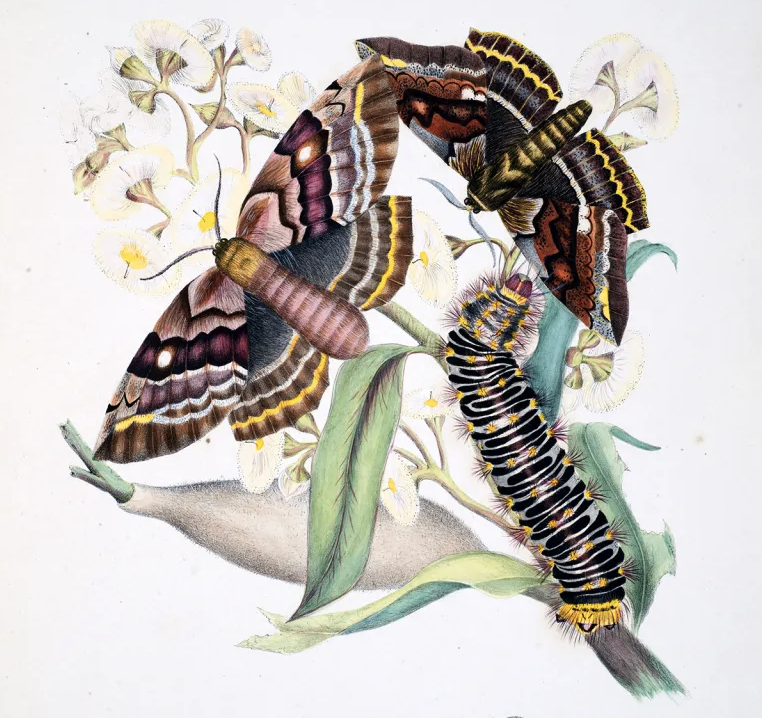
From Maria Popova in The Marginalian: “Daughters of the Bombay-born Australian entomologist Alexander Walker Scott, Helena and Harriet were barely out of childhood when they started harmonizing their father’s scientific studies with their shared artistic gift. When the girls were in their teens, the family moved from Sydney to Ash Island, where they filled their days and their minds with activities. The sisters spent twenty years adventuring into nature and documenting their curiosity, in field notebooks and collecting boxes and elaborate paintings. They stayed up at night to observe and illustrate in real time the metamorphoses unfolding in creatures with life-cycles of days — transformations so subtle that the sisters often used the single hair of a paintbrush to render the details.”
Note: This is a version of my personal newsletter, which I send out via Ghost, the open-source publishing platform. You can see other issues and sign up here.
Continue reading “When wearing a straw hat after September caused a riot”

From Richard Collett for Atlas Obscura: “In the summer of 1348, the Black Death appeared on the southern shores of England. By the end of 1349, millions lay dead. According to historian Robert Tombs, author of The English and Their History, one of the many repercussions was the rise of pub culture in England. Drinking pre-Black Death was comparably amateurish. Anyone could brew up a batch of ale in their home, and standards and strengths varied wildly. Homebrewed ale was advertised with “an ale stake,” which consisted of a pole covered with some kind of foliage above the door. By the 1370s, though, the Black Death had caused a critical labor shortage. Eventually, this proved a boon for the peasantry of England, who could command higher wages for their work. As a result, households selling leftover ale were replaced by more commercialized, permanent establishments.”

From Dan Lewis: “As of 2019, David Whitlock hadn’t taken a bath or a shower in over 15 years. And, apparently, he doesn’t smell. Whitlock, a chemist, got his start as a never-showerer in 2003 or so when he was on a date with his future girlfriend. She — connecting with his science background — asked him what she probably thought was an innocent question: why do horses roll around in the dirt? Humans tend to avoid doing that; do horses know something we don’t? Whitlock found out that horses rub living bacteria into their skin to protect the flora living there. So he started to collect bacteria from the soil of barns, pigsties, and chicken coops, and separated out the good bacteria from the bad. Then he gathered some of these good bacteria, which neutralize dangerous organisms and hazardous substances on the skin, and made them into a spray that he uses for his daily hygiene.”
Note: This is a version of my personal newsletter, which I send out via Ghost, the open-source publishing platform. You can see other issues and sign up here.
Continue reading “How the Black Death gave rise to British pub culture”

Josh Wilbur writes for The Guardian: “Jake Haendel was a hard-partying chef from a sleepy region of Massachusetts. When he was 28, his heroin addiction resulted in catastrophic brain damage and very nearly killed him. In a matter of months, Jake’s existence became reduced to a voice in his head. To outside observers, Jake exhibited no signs of awareness or cognition. “Is he in there?” his wife and father would ask the doctors. No one knew for sure. An electroencephalogram (EEG) of his brain showed disrupted patterns of neural activity, indicating severe cerebral dysfunction. “Jake was pretty much like a houseplant,” his father told me. They had no way of knowing Jake was conscious. In medical terms, he was “locked in”: his senses were intact, but he had no way of communicating.”

From Marco Silva at the BBC: “For more than a decade, a prankster spun a web of deception about the inventor of the electric toaster. His lies fooled newspapers, teachers and officials. Then a teenager flagged up something that everyone else had missed. “I read through Wikipedia a lot when I’m bored in class,” says Adam, aged 15, who studies photography and ICT at a school in Kent. One day last July, one of his teachers mentioned the online encyclopaedia’s entry about Alan MacMasters, who it said was a Scottish scientist from the late 1800s and had invented “the first electric bread toaster”. At the top of the page was a picture of a man with a pronounced quiff and long sideburns, gazing contemplatively into the distance – apparently a relic of the 19th Century, the photograph appeared to have been torn at the bottom. But Adam was suspicious. “It didn’t look like a normal photo,” he tells me. “It looked like it was edited.”
Note: This is a version of my personal newsletter, which I send out via Ghost, the open-source publishing platform. You can see other issues and sign up here.
Continue reading “What life is like on the inside as a locked-in patient”via Ryan Broderick’s Garbage Day newsletter:
“The way I see it, the jaw-dropping speed of generative AI’s embrace is essentially a large-scale acknowledgement that modern life is sort of miserable and that most people don’t actually care if anything works anymore. Which is, honestly, fair. Our lives are full of tasks that no one wants to do that offer little reward for doing them well. The systems we live, work, and create inside of are simply too large to comprehend or really care about. I mean, at this point, pretty much everyone I know in an office job that isn’t in media is using ChatGPT at work basically all of the time. But as more companies push to integrate themselves into AI platforms, it’s also revealing that they don’t really care either. The institutions and industries responsible for these systems we all hate don’t want to maintain them either. And we know this because there is simply no way you can say you care about something if you replace it with AI. You can’t say you care about audio production if you replace voice actors. You can’t say you care about food service if you replace drive-thru workers. You can’t say you care about advertising if you replace copywriters. What you care about is speed, scale, and, if this stuff works correctly, money.”

