Black journalists face challenges that stem from systemic racism

Note: I originally wrote this for the daily newsletter at the Columbia Journalism Review, where I am the chief digital writer

The fallout from recent protests over the killings of George Floyd, Ahmaud Arbery, and Breonna Taylor have reignited long-standing concerns on the part of many Black journalists about their roles in the newsrooms they work in, and the value they are given (or not given) by the media companies they work for, how their voices are marginalized and/or silenced, etc. In one particularly egregious case, Alexis Johnson, a Black journalist at the Pittsburgh Post-Gazette, was prevented from covering the protests because of a single innocuous, joking tweet. Others have also been silenced in a variety of ways, or had their work tokenized by largely white newsrooms. Journalists at the New York Times, the Washington Post, the Los Angeles Times and many other leading publications have taken to Twitter and elsewhere to talk about their experiences of systemic racism in those companies.

We brought together a group of Black journalists this week using CJR’s Galley discussion platform to talk about their experiences with systemic racism in the industry, a group that included CBS News reporter and former Washington Post correspondent Wesley Lowery, author of a recent essay in the New York Times entitled “A Reckoning Over Objectivity, Led by Black Journalists” (which sparked a related discussion series on Galley about whether objectivity has outlived its usefulness). Others who have taken part include Errin Haines, editor-at-large for The 19th, a nonprofit focusing on gender-related issues, and a former national correspondent on race for Associated Press; Karen Attiah, global opinion editor for the Washington Post; Danielle Belton, editor-in-chief of The Root; Alissa Richardson, an assistant professor of journalism at USC Annenberg and author of the recent book Bearing Witness While Black: African Americans, Smartphones and the New Protest #Journalismand Adriana Lacy and Erin Logan, who both work at the Los Angeles Times.

One theme that ran through many of the discussions was the additional work that Black journalists often have to do in newsrooms. On top of often covering stories that involve violence against other Black people, with the associated emotional trauma that can produce, many Black journalists are also called on to give advice about stories written by non-Black reporters, and to educate their colleagues about racism and its effects. “In one of my group texts, this one with two other black male reporters, we recently were all talking about how there’s been a noticeable uptick in ‘Hey – could you give this a glance?’ notes that we’ve gotten from colleagues in recent weeks,” said Lowery. “And, to be clear, almost every black reporter I’ve ever encountered is eager and happy to help, but… there is very little appreciation of the real labor involved in being every person in the newsroom’s ‘black friend.'”

Continue reading “Black journalists face challenges that stem from systemic racism”

How we spent our quarantine: Teaching a lamb how to walk again

Lots of people have probably taken on projects or learned new things while quarantined with COVID0-19 — how to play the piano, how to paint, finished a novel, etc. But we had a pretty special experience, and it was special in part because we didn’t plan it at all, it just happened. It started in mid-March, when my wife Becky and I headed to the Farm (where we live now, near Buckhorn, about two hours north of Toronto) after coming back from vacation in Florida. Along with our youngest daughter Zoe, who joined us there during quarantine, we helped raise a little lamb who lost the ability to walk for some reason. Over the next couple of months, we helped teach him how to use his legs again and he wound up returning to his flock and becoming just a regular sheep. It was a lot of work at times, but it was definitely worth it. It was like living one of those Netflix specials or a Hallmark movie of the week!

Primo has a nap in Zoe’s arms

It all started because a neighbour who lives across the road near Buckhorn asked if he could use one of the fields at the Farm to raise some sheep. So he put up a little pen and put some sheep in there, and then — as they do — the ewes had lambs (this tends to happen when you put a ram in with the ewes). First it was the twins we called Pebbles and Bam Bam, whose mother we naturally named Wilma. And then one morning when we went up to the pen, there was a little voice bleating: a new little lamb, wandering around the pen looking for his mom. But his mom — Bella — was still in labour with what would eventually be two other lambs, and so she didn’t have time to pay attention to the one we called Primo. So the poor little guy wandered around trying to nurse off just about everything, including the ram — who didn’t like that much, and head-butted poor Primo a bunch of times. And then finally, Bella gave birth to Big Red, and the one we called Dopey.

This is Primo when he was about an hour old
Continue reading “How we spent our quarantine: Teaching a lamb how to walk again”

Fukushima: swallowed by nature

In 2011, two photographers entered the so-called “No go zone” that extends for about 20 kilometres around the site of the Fukushima nuclear power plant in Japan, which flooded during the tsunami in March of 2011, shutting down the power and cooling systems for three of the plant’s reactors, which leaked radioactive fuel. About 150,000 people had to be evacuated, and they left everything behind, including farm animals, personal belongings and cars — all of which was quickly overgrown with vines and other vegetation.

© Carlos Ayesta - Guillaume Bression

The photographers also too pictures of some former townspeople in their shops and places of work, all of which have been more or less destroyed by shoplifters and vandals.

What comes after we get rid of objectivity in journalism?

Note: I originally wrote this for the daily newsletter at the Columbia Journalism Review, where I am the chief digital writer

The killings of George Floyd, Ahmaud Arbery, and Breonna Taylor and the protests that followed helped spark a debate in many newsrooms and journalism schools around the country about the time-honored principle of objectivity in journalism, and whether it serves any useful purpose or is just a dusty artifact of an earlier time. Former Washington Post reporter Wesley Lowery wrote in the New York Times that what we call objective journalism “is constructed atop a pyramid of subjective decision-making,” and has been defined “almost exclusively by white reporters and their mostly white bosses.” Since then, journalists at the Los Angeles Times and other newsrooms have spoken out about their longstanding experiences of racism and a lack of diversity, and the impact that has had on the journalism they and their employers do. So is objectivity a relic? And if so, what should we replace it with? We got a group of journalists and other experts together on CJR”s Galley platform this week for a virtual panel discussion on those and other related questions.

Lewis Raven Wallace is a transgender writer, journalist, and author of the recent book “A View From Somewhere,” as well as the host of a podcast of the same name. He is also a co-founder of Press On, a Southern collective of journalists, storytellers, and organizers that uses journalism in the service of liberation. Wallace’s book is based in part on his personal experience as a former reporter for Marketplace who was fired in 2017 after he wrote a blog post questioning the idea of objective journalism. “As a transgender journalist, it was a scary time,” he said during our interview. “I didn’t feel I could or should have to be silent about the Trump administration’s attacks on trans people, people of color, and freedom of the press.” Wallace said in his view, it’s not an either/or debate between personal journalism versus objective journalism. “I believe objectivity itself is a myth that’s been perpetuated based on a normative white male cisgender perspective in journalism,” he said. “The journalism we call objective is generally just biased towards acceptable social and political norms.”

Wallace said in his view, the media need to think about “the relationship between journalism, identity, community, and truth” and that focusing on that can offer a path forward for journalism that rebuilds trust with audiences, trust that has been lost after decades of supposed objectivity. Morgan Givens also argued that a complete reframing of what journalism is and how it operates is necessary to move forward. Givens is a writer, performer, and audio producer based in Washington, DC who works with NPR and WAMU and is also a former police officer who worked in prisons to eliminate sexual violence. “Black Americans have always lived in a United States where police killed us and still do with impunity, but this was an America that white journalistic institutions and those who allow them to function ignored,” he said. “Is ignoring these communities an example of being objective or ignoring the truth because the reality makes white journalists uncomfortable?”

Continue reading “What comes after we get rid of objectivity in journalism?”

Google bows to pressure, says it will pay publishers for news

Note: I originally wrote this for the daily newsletter at the Columbia Journalism Review, where I’m the chief digital writer

News publishers have been begging and/or threatening Google for the better part of a decade now, trying to convince the company to compensate them for the news that it carries in its search products. And for all of those years, Google has been adamantly refusing to do so — until now, that is. On Thursday, the search giant announced that it is launching a new product later this year focused on “high quality” news, and as part of that, it will be paying a select group of publishers in a number of countries for access to their content, including access to news stories that sit behind paywalls. According to a number of news reports, the company has already signed deals with leading media outlets in Germany, Australia, and Brazil, including Schwartz Media, Diarios Associados, and Der Spiegel. Google hasn’t said whether it is negotiating with or has signed agreements with any US-based publishers.

Google’s blog post on the announcement, and tweets by chief executive Sundar Pichai, tried to make it sound as though this is just another in a long line of helping hands the company has offered to the media industry. Google News vice-president Brad Bender said it would “build on the value we already provide through search and our ongoing efforts with the Google News Initiative,” and Pichai said “for decades we have worked with publishers to grow audiences and build value [and] we continue that progress today.” And it’s true that the Google News Initiative has given journalists, media companies, and industry groups tens of millions of dollars. But it’s also true that Google has never paid publishers directly for news, and has vowed repeatedly it would never do so (its argument has always been that it sends publishers traffic, and that this should be as good as money). When Spain tried to force it to pay, Google removed the country from its News service, and during the European Union’s discussion of new copyright legislation, hinted it might do the same for the EU.

As CJR pointed out in a feature on the more than $500 million in funding that Google and Facebook have provided to the media industry, what eventually became the Google News Initiative started as a way of placating news publishers in Belgium and France who were upset at having their content “stolen” by the search company. After being targeted by lawsuits and regulatory pressure, Google promised to help publishers figure out how to use the internet to monetize their content through ads and subscriptions, as opposed to having Google pay them, and it created a fund in both countries to help finance such efforts via grants and fellowship programs. The funding was rolled into the Digital News Initiative in 2015, and then it and the Google News Lab were combined and renamed the Google News Initiative in 2018.

Continue reading “Google bows to pressure, says it will pay publishers for news”

Objectivity isn’t a magic wand

Note: I originally wrote this for the daily newsletter at the Columbia Journalism Review, where I am the chief digital writer

The protests over the death of George Floyd and the way they have been covered (or not covered) by newsrooms around the country has widened existing stress fractures in journalism around the topic of race. One of the things that is being called into question is the concept of objectivity. Wesley Lowery, a reporter with 60 Minutes, put some of this into words with a recent essay in the New York Times entitled “A Reckoning Over Objectivity, Led by Black Journalists.” Whatever the ideals behind objectivity might be, Lowery wrote, in practice it translates into an industry in which “the mainstream has allowed what it considers objective truth to be decided almost exclusively by white reporters and their mostly white bosses.” And it’s important to note that this not only leaves Black journalists—and other journalists of color—on the outside looking in, but also makes for worse journalism, if by journalism we mean representing the truth about the world as accurately as possible.

What qualifies as objective journalism, Lowery says, “is constructed atop a pyramid of subjective decision-making: which stories to cover, how intensely to cover those stories, which sources to seek out and include, which pieces of information are highlighted and which are downplayed.” The piece sparked a conversation on Twitter, including a response from Tom Rosenstiel, a veteran journalist and executive director of the American Press Institute, and the co-author of a classic journalism textbook called The Elements of Journalism (a book that Lowery cites approvingly in his essay). In a multi-tweet thread, Rosenstiel tried to clarify what he said were some of the historic aspects of how objectivity became an industry standard principle. The practice began as a way of injecting more scientific rigor into the practice of journalism, he says, but instead it has turned into a devotion to false balance and other elements of what journalism professor Jay Rosen calls “the view from nowhere.”

Rosenstiel is quite right that objectivity started as an attempt to make journalism more rigorous by applying the scientific method, a structure and process designed to arrive at an objective truth. But the industry probably shouldn’t congratulate itself too much on the purity of the intentions behind this change: it wasn’t just that journalists or publishers suddenly decided that objectivity would be a good thing. It was also seen as a way to make journalism more palatable to advertisers, as the consumer-focused ad industry was becoming more national in scope. Over the next 50 years or so, objectivity came to be seen as a bedrock principle of journalism, to the point where some newspaper journalists— and journalism teachers—still argue that dismantling it will kill journalism. But as Lowery points out, what qualifies as objectivity is in the eye of the beholder, and that eye is still predominantly male and white.

Continue reading “Objectivity isn’t a magic wand”

Are digital giants like Facebook destructive by design?

Note: I originally wrote this for the daily newsletter at the Columbia Journalism Review, where I am the chief digital writer

The most benign view of Google, Facebook, and Amazon is that any social or political disruption and turmoil these behemoths have caused is a side-effect of the beneficial services they provide, and any over-sized market power they have is the result of good old-fashioned hard work or an accident of economics and technology. But what if that’s not the case? Dipayan Ghosh is a former Facebook staffer and a former policy advisor to the Obama White House who now runs the Digital Platforms and Democracy Project at Harvard, and the author of a new book called Terms of Disservice: How Silicon Valley is Destructive by Design. Ghosh argues that these companies are monopolists, and that they engage in a wide variety of disturbing conduct — much of it involving the data of their users — not accidentally but very deliberately. “I believe that Facebook, Google, and Amazon should be seen as out-and-out monopolists that have harmed the American economy in various ways, and have the potential to do much greater harm should their implicit power go uncurbed,” Ghosh writes.

All this week, we’ve been discussing some of the themes in Ghosh’s book — including privacy, competition, algorithmic accountability, and the idea of a new social contract — in a series of roundtables hosted on Galley, CJR’s discussion platform. The Tuesday roundtable, for example, started with a one-on-one conversation about privacy with Ghosh, followed by a day-long open discussion that included Ed Felten, a professor of computer science and public affairs at Princeton and a former Deputy Chief Technology Officer with the White House; Jennifer King, the director of privacy at Stanford Law School’s Center for Internet and Society; Olivier Sylvain, a professor of law at Fordham University and director of the McGannon Center for Information Research; and Jules Polonetsky, who is CEO of the Future of Privacy Forum. The question before the panel was: “Is online privacy broken, and if so what should we do about it?”

Ghosh argued that not only is online privacy broken, but the digital giants have played a key role in breaking it to their advantage, with personal data at the heart of their business model. “These firms increasingly and perpetually violate consumer privacy to serve this consistent business model by collecting personal information in an uninhibited manner,” Ghosh says. “And relatively little of that activity is properly scrutinized, resulting in the radical corporate violation of individual privacy.” One question that came up in the roundtable was why, after two decades of this digital platform model, there isn’t a federal privacy law? Ghosh says this is a result of what he calls the “privacy paradox.” Most users don’t see the privacy harm when they sign up for a free service — they get immediate gratification from connecting with friends, and only much later to do see the downsides in the form of data breaches, etc.

Continue reading “Are digital giants like Facebook destructive by design?”

Mental illness as a social and cultural artifact

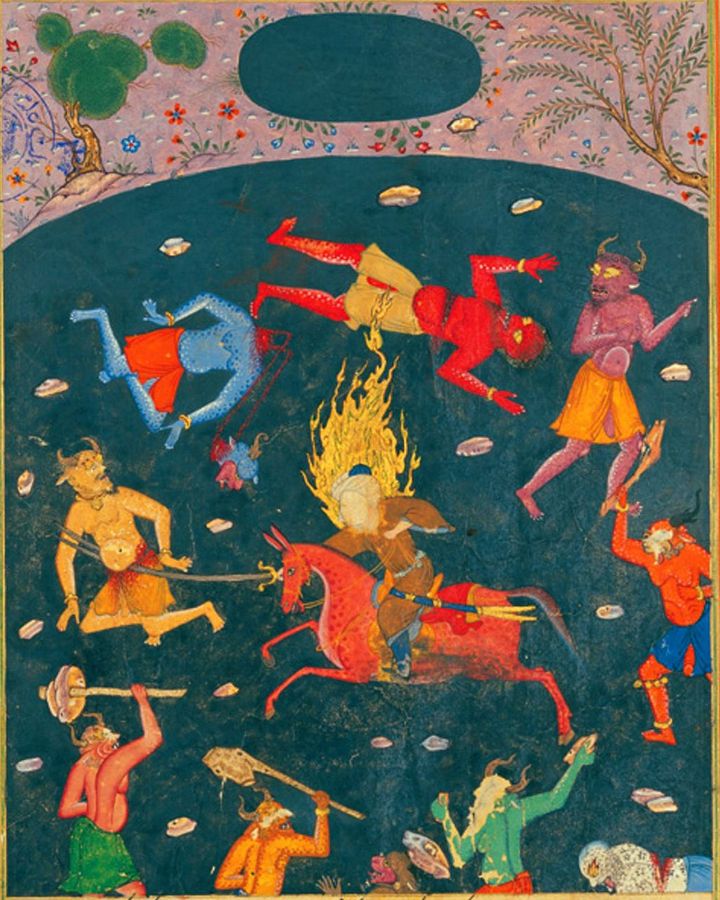
In the Islamic world, mental illnesses are often attributed to evil spirits, or “jinns” (Credit: Alamy)

This article is a fascinating look at the connection between certain kinds of mental illness and the different social or cultural circumstances that lead to them: “In Cambodia, for example, it’s commonly believed that the body is riddled with channels that contain a wind-like substance – and if these become blocked, the resulting wind overdose will cause the sufferer to permanently lose the use of a limb or die. Out of 100 Khmer patients at one psychiatric clinic in the US, one study found that 36% had experienced an episode of the illness at some point. Bouts usually proceed slowly, starting with a general feeling of malaise. Then, one day, the victim will stand up and notice that they feel dizzy – and this is how they know that the attack is starting. Eventually they’ll fall to the ground, unable to move or speak until their relatives have administered the appropriate first aid, which usually consists of massaging their limbs or biting their ankles.”

“In the central plateau region of Haiti, people regularly fall sick with “reflechi twòp”, or “thinking too much”, which involves ruminating on your troubles until you can barely leave the house. In South Korea, meanwhile, there’s “Hwa-byung” – loosely translated as “rage virus” – which is caused by bottling up your feelings about things you see as unfair, until you succumb to some alarming physical symptoms, like a burning sensation in the body. Dealing with exasperating family members is a major risk factor – it’s common during divorces and conflicts with in-laws.”

“in the Islamic world, it’s widely believed that it’s possible to become possessed by “jinns”, or evil spirits. They can be good, bad, or neutral, but they’re generally blamed for erratic behaviour. The concept is so mainstream, it’s even in the Muslim holy book, the Koran. “A lot of my patients do hold these beliefs quite strongly,” says Shahzada Nawaz, a consultant psychiatrist at North Manchester General Hospital in the UK.  Nawaz explains that the ability to invoke jinns is particularly useful in Islamic cultures, because of the stigma that tends to accompany Western mental illnesses. One study of 30 Bangladeshi patients attending a mental health service in an east London borough found that their family members often felt that jinn possession was responsible.”