The life and death of the Nagakin Capsule Tower

Kyle Chayka writes in the New Yorker about the life and death of the Nakagin Capsule Tower, an iconic building designed by Kisho Kurokawa and completed, in 1972, as part of the Japanese architectural movement Metabolism. It looks like something from a dystopian science-fiction movie — tiny little cubes with just enough space for a bed, desk, and a tiny porthole window — but Chayka argues it was a symbol of an imagined future in which cities would grow and change over time, and in which artists and others would have multiple places to live, including their own pied a terre in the city.

Like many other utopian dreams, the Capsule Tower fell victim to reality: the capsules proved to be leaky and difficult to repair and/or replace, and the tower soon fell into disrepair and is being dismantled. Some hope to save a few of the capsules as a testament to the original architects’ vision.

The Nakagin capsules suggest a kind of utopian urban life style. Their paucity of space and equipment meant that activities typically done at home, like eating and socializing, would instead be conducted out on the street. The Nakagin capsules were not full-time residences but pieds-à-terre for suburban businessmen or miniature studios for artists and designers. The individual capsules were pre-assembled, then transported to the site and plugged in to the towers’ central cores. Each unit—two and a half metres by four metres by two and a half metres, dimensions that, Kurokawa noted, are the same as those of a traditional teahouse—contained a corner bathroom fit for an airplane, a fold-down desk, integrated lamps, and a bed stretching from wall to wall. Televisions, stereos, and tape decks could also be included at the buyer’s discretion.

The New Yorker

Palm-sized drone takes pictures and video

Pixy Lifestyle Still 4

I don’t usually do product stuff here, but this is pretty amazing. It wasn’t that long ago that drones cost thousands of dollars and were the size of your microwave. Snap is launching something called Pixy, a palm-sized yellow drone that will hover near and/or follow you, taking photos or video. When you are done, you put your hand underneath it and the drone lands. It sends the photos and video to your phone, where they are stored (of course) in your Snapchat. And it’s $230. According to Snap, it captures 2.7k videos and 12MP photos, and it weighs only 101g, with a replaceable battery that lasts for five to eight flights.

Twitter plus China could equal pressure for Elon Musk

Note: This was originally published as the daily newsletter for the Columbia Journalism Review, where I am the chief digital writer. On Monday April 25, Twitter accepted Musk’s $44 billion takeover offer

Elon Musk’s attempt to acquire Twitter for $44 billion has caused some concern among regular Twitter users, including a fear that right-wing trolls may see some of Musk’s remarks promoting unrestrained freedom of speech as an excuse to engage in harassment, and his promise to “authenticate all humans” as a sign that anonymity will no longer be allowed. But some believe the biggest challenge Musk will face if he is successful in acquiring Twitter could come from China, where his interest in protecting free speech could run headfirst into the Chinese government’s desire to control the information that gets distributed about the country. And China has a significant point of leverage over Musk in Tesla, his electric-car manufacturing company.

Tesla and Musk have benefited from some unique concessions in China. Tesla was the first foreign carmaker to own its auto-assembly plant outright (other carmakers were required to partner with local companies, who then owned a majority stake in the factories.) The funding for Tesla’s “Giga Shanghai” plant reportedly included $1.3 billion in loans from Chinese banks, and the plant is the company’s largest, producing almost half a million cars last year, almost half Tesla’s production. China accounted for $14 billion worth of the company’s revenue, a quarter of the total in 2021. Musk has responded by “lavishing praise” on the country in the past, according to the Journal, and has refrained from criticism—including remaining silent on the draconian measures China has taken to halt COVID, after calling milder US restrictions “fascist.”

Twitter under Musk “will need to confront China’s leverage,” the Wall Street Journal wrote. Fergus Ryan, an analyst at the Australian Strategic Policy Institute, told the Journal that China has a record of pressuring businesses to extract political concessions. “There will be lots of opportunities for Beijing to put the squeeze on Musk,” Ryan said. Nina Xiang, founder of the China Money Network, wrote that investors should “expect high drama” between Musk and China. “As the owner of Twitter, which is banned in China, Beijing may feel that it is able to pressure Musk to take down content that it does not like,” she wrote. “If Musk refuses, Beijing could start squeezing Tesla.”

Continue reading “Twitter plus China could equal pressure for Elon Musk”

Fool’s spring, or the spring of deception

None of it looked good. That’s the secret about that first big horny spring day: It isn’t beautiful. Spring’s guts were out, parts spread haphazard around the driveway. Bare branches and cold ground left over from winter showed uglier with flowers trying to make inroads against them, and the paltry patches of green on the lawns only emphasized the dull muddy browns. The myths and the stories tell us that spring turns beautiful all at once, but that’s not really how it works. First, we have to lie to ourselves about it. To believe in resurrection, we have to talk ourselves into it.

Helena Fitzgerald, Griefbacon

The lost thread

“There are so many ways people might relate to one another online, so many ways exchange and conviviality might be organized. Look at these screens, this wash of pixels, the liquid potential! What a colossal bummer that Twitter eked out a local maximum; that its network effect still (!) consumes the fuel for other possibilities, other explorations. The amount that Twitter omits is breathtaking; more than any other social platform, it is indifferent to huge swaths of human experience and endeavor. I invite you to imagine this omitted content as a vast, bustling city. Scratching at your timeline, you are huddled in a single small tavern with the journalists, the nihilists, and the chaotic neutrals.”

https://www.robinsloan.com/lab/lost-thread/

What are days for?

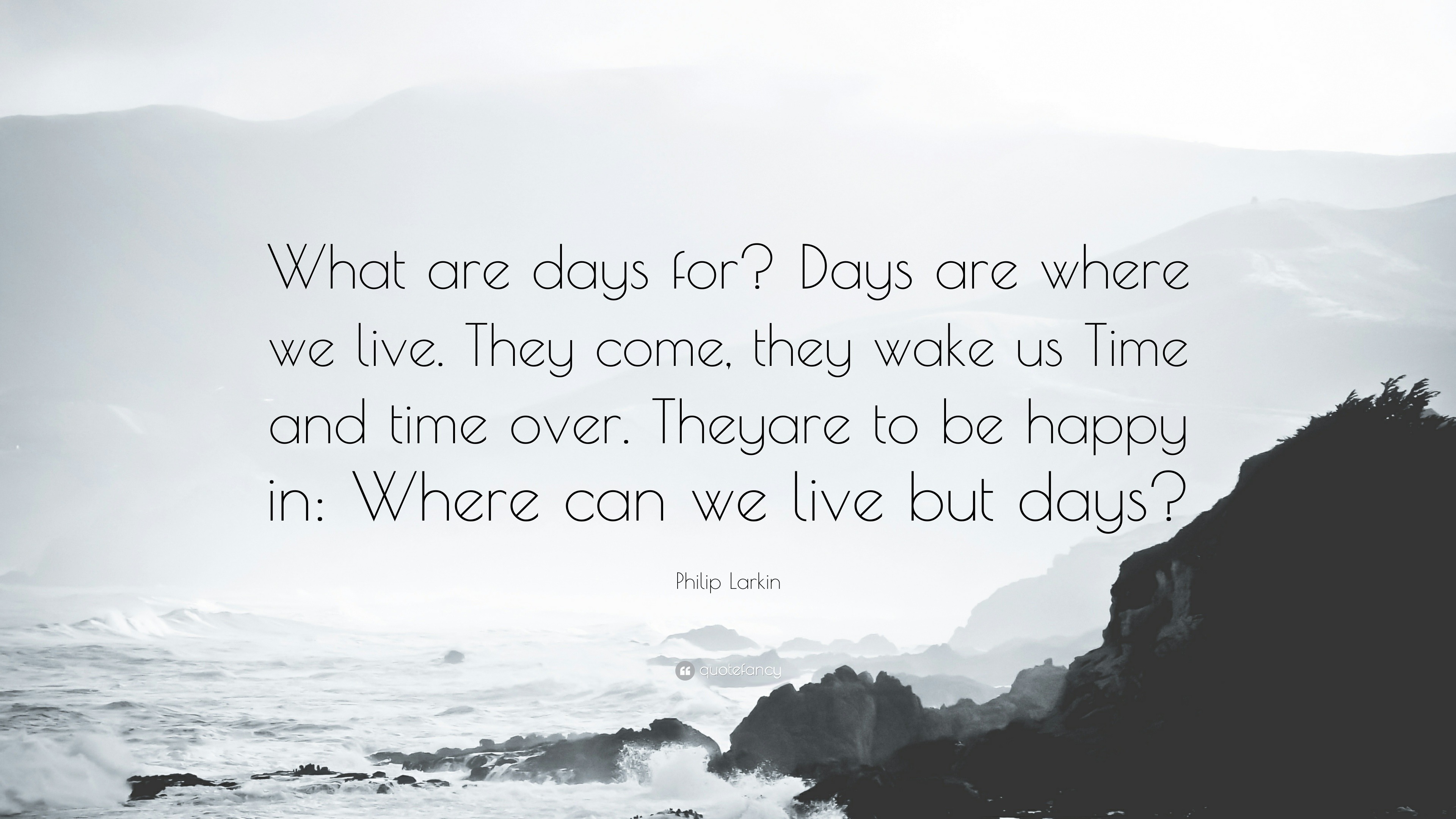
Philip Larkin Quote: “What are days for? Days are where we live. They come,  they wake us Time and time over. Theyare to be happy in: Where can...”

“What are days for?
Days are where we live. 
They come, they wake us 
Time and time over.
They are to be happy in: 
Where can we live but days?

Ah, solving that question
Brings the priest and the doctor 
In their long coats
Running over the fields.”

 Philip Larkin, “Days

from Whitsun Weddings. Copyright © Estate of Philip Larkin

A trip to Puglia and Matera, the city of caves

Thanks to a novel coronavirus that I’m sure many of you have heard of, we haven’t been able to make our annual pilgrimage to Italy for two years now. Obviously, other people have had much bigger problems, so I don’t want anyone to cry me a river because I haven’t been able to go to Italy (which is like a duke complaining that the Black Plague has made it difficult to go stag hunting). But I have definitely missed it a lot. So this year, we decided to throw caution to the winds and head to Perugia for the journalism conference we’ve been going to since about 2012. We’ll take N95 masks and be really cautious, we thought. 🙂 We wound up getting COVID, of course, but luckily it was relatively mild (click the photos for a larger version).

A big part of the reason we wanted to go — apart from seeing all of our international friends again, and enjoying Perugia’s ancient Etruscan architecture and amazing food — was to take a break after the conference and head south to Puglia, to stay at a BnB run by the daughter of our Italian friend Anna, a trip that we had all booked in 2020 before the conference was cancelled and everyone went into lockdown. So we dusted off our passports and luggage and flew off to Italy — after getting a COVID test first, since we had to connect in Washington, and the US still required a negative test to enter.

Continue reading “A trip to Puglia and Matera, the city of caves”

Elon Musk puts his money where his mouth is

Note: This was originally published as the daily newsletter for the Columbia Journalism Review, where I am the chief digital writer. On Monday April 25, Twitter accepted Musk’s $44 billion takeover offer

On April 4, Elon Musk filed a notice with the Securities and Exchange Commission stating that he had acquired enough shares in Twitter to give him a 9.2 percent stake in the company (“Oh hi lol,” he tweeted.) What followed was a somewhat bewildering series of announcements. Musk’s initial filing implied that he likely wouldn’t be an activist investor or push to join the company’s board, but that filing was later amended, at which point Twitter said he was joining the board (Musk also filed his documents late, which some said enabled him to acquire shares more cheaply). Then, just as suddenly, Twitter said Musk wouldn’t be joining the board after all. This led to rumors that he might be planning to acquire the company, and on April 14, Musk sent a letter to Twitter and filed a statement with the SEC detailing his plans to do exactly that.

The hostile nature of Musk’s bid soon became obvious, when Twitter filed a shareholders’ rights plan, often called a “poison pill.” Under the terms of the plan, if anyone acquires more than 15 percent of Twitter’s shares without the approval of the board, other shareholders will be allowed to purchase more shares at a discount. Musk responded by taking to the platform itself in an attempt to win support for his bid, asking users whether shareholders should decide on his takeover offer rather than the board (close to three million people voted, with almost 84 percent agreeing that shareholders should be able to choose.) Yesterday, Musk put even more money where his mouth is, by telling the SEC he has $46.5 billion in financing lined up for his bid, and that he is considering a tender offer that would be open to all Twitter shareholders.

In classic Musk fashion, all of these machinations have been accompanied by a series of joking tweets, in what appears to be an attempt to troll either the board or all of Twitter, or both. On the same day he filed a statement that he owned nine percent of the company, Musk polled his followers to see if anyone wanted Twitter to add an edit button; almost 4.5 million people answered, with about 74 percent of them saying they did (Twitter said it was already working on an edit function). On April 7, when it still appeared that he might join Twitter’s board, Musk posted a photo of himself smoking marijuana during an interview on Joe Rogan’s podcast, with the caption: “Twitter’s next board meeting is going to be lit.” On April 9, he posted a list of celebrity users he said hadn’t posted any tweets in months, and asked: “Is Twitter dying?”

Continue reading “Elon Musk puts his money where his mouth is”

New editor at the Times faces the same old questions

Note: This was originally published as the daily newsletter for the Columbia Journalism Review, where I am the chief digital writer

On Tuesday, the New York Times named a new executive editor. A.G. Sulzberger, the newspaper’s publisher (the fourth member of the Sulzberger family to hold that title) said Joseph F. Kahn has been given the role, and will replace Dean Baquet, who held the position for eight years. Kahn, 57, is a former international and managing editor of the paper, and also a Pulitzer Prize-winning former China correspondent. He starts his new job in June. A profile in New York magazine describes Kahn as “the ultimate inside man” at the Times, someone for whom being named to the top job was almost a foregone conclusion. But some believe his status as a long-time company man could make it difficult for him to navigate the political and cultural challenges the paper faces.

Kyle Pope, editor and publisher of CJR, wrote in a piece about Kahn’s appointment that the choice of a new executive editor has drawn even more scrutiny than it usually would, because “the residue of the Trump years, and fears that the former president will return for another campaign, have put the Times in the bull’s-eye of the journalistic debates over objectivity and both-sides coverage.” In picking Kahn, Pope argues that the paper has sent a clear message that it “has no plans to rethink its approach.” Sulzberger tried to describe the paper’s approach to its coverage of Trump and other related topics in 2018, saying: “We won’t be baited into becoming ‘the opposition.’ And we won’t be applauded into becoming ‘the opposition.'”

What those within the paper see as a commitment to independence is seen by some outside the Times as a failure to address reality. Jay Rosen, a journalism professor at NYU, wrote in 2018 that some “want Times journalists to see what they see—an assault on democratic institutions, the corruption of the American Republic.” Inside the Times, however, Rosen says these kinds of people “are perceived as a threat.” The paper’s piece on Kahn’s appointment says the Times is “grappling with shifting views about the role of independent journalism in a society divided by harsh debates over political ideology and cultural identity.” But Rosen said this should read: “The Times is struggling with a model of political coverage that assumes a rough symmetry between the two parties at a time when one of the two has turned anti-democratic.”

Continue reading “New editor at the Times faces the same old questions”

In the Shadow of the Star Wars Kid

Andy Baio, who has been blogging under the name “Waxpancake” for the past couple of decades or so, writes about meeting with Ghyslain Raza, who gained internet fame — none of which he wanted — as the “Star Wars Kid” in 2003, after some students at his school uploaded a video clip of him pretending to be a Star Wars character in a light-sabre battle.

Baio talks about his role in helping the video go viral — one of the first to do so — and how bad he felt about the whole affair once he realized how Raza had been ridiculed (he left his school and eventually ended up in therapy, and more or less stopped using the internet for years).

I’ve never talked about it publicly, but I regret ever posting it. From the start, it was obvious it was never meant to be seen, and mirroring it on my site without consent was wrong in a way that I couldn’t see when I was in my 20s, one year into blogging. I removed the videos once it was clear how it was affecting him, but I never should have posted them in the first place.

Meeting Ghyslain gave me the opportunity to tell him all of that in person, as well as in my interviews, some of which made it into the finished film.As a side note, it was fascinating to get answers to questions I’ve wondered about for 20 years. Yes, Ghyslain actually received the iPod we sent him from the fundraiser, and used the gift cards we sent him to buy an iMac G4, both of which he kept to this day. He managed to avoid most of the remixes and media coverage, except for Arrested Development, which he watched live as it aired.

But more than anything, it was great to finally talk to him in person and see that he’s doing well. By all accounts, he handled everything that happened back then with a profound emotional maturity, despite how painful it was, and emerged on the other side with a uniquely interesting perspective that’s worth listening to.

Source: In the Shadow of the Star Wars Kid – Waxy.org

In the Shadow of the Star Wars Kid

Andy Baio, who has been blogging under the name “Waxpancake” for the past couple of decades or so, writes about meeting with Ghyslain Raza, who gained internet fame — none of which he wanted — as the “Star Wars Kid” in 2003, after some students at his school uploaded a video clip of him pretending to be a Star Wars character in a light-sabre battle.

Baio talks about his role in helping the video go viral — one of the first to do so — and how bad he felt about the whole affair once he realized how Raza had been ridiculed (he left his school and eventually ended up in therapy, and more or less stopped using the internet for years).

I’ve never talked about it publicly, but I regret ever posting it. From the start, it was obvious it was never meant to be seen, and mirroring it on my site without consent was wrong in a way that I couldn’t see when I was in my 20s, one year into blogging. I removed the videos once it was clear how it was affecting him, but I never should have posted them in the first place.

Meeting Ghyslain gave me the opportunity to tell him all of that in person, as well as in my interviews, some of which made it into the finished film.As a side note, it was fascinating to get answers to questions I’ve wondered about for 20 years. Yes, Ghyslain actually received the iPod we sent him from the fundraiser, and used the gift cards we sent him to buy an iMac G4, both of which he kept to this day. He managed to avoid most of the remixes and media coverage, except for Arrested Development, which he watched live as it aired.

But more than anything, it was great to finally talk to him in person and see that he’s doing well. By all accounts, he handled everything that happened back then with a profound emotional maturity, despite how painful it was, and emerged on the other side with a uniquely interesting perspective that’s worth listening to.

Source: In the Shadow of the Star Wars Kid – Waxy.org

War in Ukraine is the latest platform moderation challenge

Note: This was originally published as the daily newsletter for the Columbia Journalism Review, where I am the chief digital writer

On March 10, a Reuters headline announced that Facebook would temporarily allow users to post calls for the death of Vladimir Putin, Russia’s president, and also “calls for violence against Russians” (Reuters later modified its headline to clarify that only posts calling for “violence against invading Russians” would be allowed under the new rules). These kinds of posts would normally fall into what Meta calls “T1 violent speech,” which is automatically removed, without exception. A few days later, Nick Clegg, head of global affairs for Meta, the parent company of Facebook, said the new rules would not allow users to call for the death of Putin or Alexander Lukashenko, the president of Belarus. Clegg also said that calling for violence against Russians would only be allowed for users in Ukraine, and only when “the context is the Russian invasion.”

Ryan Mac, Mike Isaac, and Sheera Frenkel pointed out in a New York Times story on Wednesday that the rules about allowing calls for violence against Putin and Lukashenko were actually changed on February 26, two days after Russian troops first entered Ukraine, according to documents that the newspaper had access to. “After reports suggesting the policy reversal would allow users to call for violence against all Russians—which Russian authorities called “extremist”—Meta reversed itself,” the Times reported. According to an internal memo seen by Bloomberg, Clegg told staff “circumstances in Ukraine are fast moving. We try to think through all the consequences, and we keep our guidance under constant review because the context is always evolving.”

Allowing users to post calls for violence isn’t the only example of normally forbidden content that platforms like Facebook now allow because there is a war in Ukraine. As Will Oremus noted in a Washington Post piece, if you posted content praising a neo-Nazi militia before the Russian army invaded Ukraine, Facebook would probably have blocked your post, or even suspended your account. But not now: the company changed the rules so that supporters of Ukraine could post about that country’s Azov battalion, a unit of the Ukrainian army that has a history of being associated with neo-Nazis (which has helped fuel Putin’s claim that his aim is to de-Nazify Ukraine).

Continue reading “War in Ukraine is the latest platform moderation challenge”

War in Ukraine is the latest platform moderation challenge

Note: This was originally published as the daily newsletter for the Columbia Journalism Review, where I am the chief digital writer

On March 10, a Reuters headline announced that Facebook would temporarily allow users to post calls for the death of Vladimir Putin, Russia’s president, and also “calls for violence against Russians” (Reuters later modified its headline to clarify that only posts calling for “violence against invading Russians” would be allowed under the new rules). These kinds of posts would normally fall into what Meta calls “T1 violent speech,” which is automatically removed, without exception. A few days later, Nick Clegg, head of global affairs for Meta, the parent company of Facebook, said the new rules would not allow users to call for the death of Putin or Alexander Lukashenko, the president of Belarus. Clegg also said that calling for violence against Russians would only be allowed for users in Ukraine, and only when “the context is the Russian invasion.”

Ryan Mac, Mike Isaac, and Sheera Frenkel pointed out in a New York Times story on Wednesday that the rules about allowing calls for violence against Putin and Lukashenko were actually changed on February 26, two days after Russian troops first entered Ukraine, according to documents that the newspaper had access to. “After reports suggesting the policy reversal would allow users to call for violence against all Russians—which Russian authorities called “extremist”—Meta reversed itself,” the Times reported. According to an internal memo seen by Bloomberg, Clegg told staff “circumstances in Ukraine are fast moving. We try to think through all the consequences, and we keep our guidance under constant review because the context is always evolving.”

Allowing users to post calls for violence isn’t the only example of normally forbidden content that platforms like Facebook now allow because there is a war in Ukraine. As Will Oremus noted in a Washington Post piece, if you posted content praising a neo-Nazi militia before the Russian army invaded Ukraine, Facebook would probably have blocked your post, or even suspended your account. But not now: the company changed the rules so that supporters of Ukraine could post about that country’s Azov battalion, a unit of the Ukrainian army that has a history of being associated with neo-Nazis (which has helped fuel Putin’s claim that his aim is to de-Nazify Ukraine).

Continue reading “War in Ukraine is the latest platform moderation challenge”

BuzzFeed and the demands of being public

Note: This was originally published as the daily newsletter for the Columbia Journalism Review, where I am the chief digital writer

On Tuesday, Mark Schoofs, the editor-in-chief of BuzzFeed News, told staff that he and two other senior editors—Tom Namako, deputy editor-in-chief, and Ariel Kaminer, the executive editor of the investigations unit—are leaving the company, and the news division is being downsized via buyouts and/or layoffs, with most of the reductions coming in investigations, science, politics, and inequality. Schoofs said that BuzzFeed, the parent company, had “subsidized BuzzFeed News for many years,” and that the newsroom needed to “accelerate the timeline to profitability.” Jonah Peretti, CEO of BuzzFeed, said in a separate staff email that jobs would also be lost on the video team and the editorial team at Complex Networks, a company BuzzFeed acquired last year just after going public via a merger with a special purpose acquisition company or SPAC. Peretti said the newsroom needed to “prioritize the areas of coverage our audience connects with the most.”

During an all-hands meeting on Tuesday, following the resignations of Schoofs and the two other top editors, Peretti talked about leadership changes and said BuzzFeed was looking at “the addition of a dedicated business development group,” Laura Wagner of Defector reported. However, Peretti left the meeting abruptly and took no questions from staff, which seemed to irritate more than a few of those present. Julia Reinstein, a senior reporter at BuzzFeed News, said on Twitter: “I have worked at this company for nearly 7 years and I’ve never felt so disrespected than seeing my CEO log off without answering a single question about why he wants to gut my newsroom.” A staffer who was at the all-hands meeting described the atmosphere as “acrimonious.”

The cuts announced on Tuesday are nothing new for BuzzFeed. Last year, the company laid off 70 employees, including 47 HuffPost staffers based in the US, as part of what Peretti said was an attempt to “drive longterm sustainability” (BuzzFeed acquired HuffPost from Verizon in 2020). In 2019, BuzzFeed laid off more than 200 reporters, editors, and other editorial staff, including entire teams and large chunks of its international bureaus in the UK and Australia. Some wondered whether Facebook had helped cause the reductions by changing its news recommendation algorithms. But as I wrote for CJR then: “If the giant social network is partly to blame, it is mostly because editors at BuzzFeed yoked themselves so tightly to Facebook’s wagon, even after the Zuckerberg empire provided ample evidence it would move the goalposts at a moment’s notice.”

Continue reading “BuzzFeed and the demands of being public”