
From The Sunday Times: “Somewhere in Boston there is a doctor who treats disorders of the brain: a brilliant woman, a Harvard graduate, a mother of two. But she has a dark secret. Unbeknown to her colleagues or her patients, she is also a writer of thrillers, churning them out at a terrific rate, nearly all of them bestsellers. Four were on the Sunday Times list of top-selling books of 2024. One, The Housemaid, is being turned into a film starring Sydney Sweeney and Amanda Seyfried; another is set to be a film too, while a third is to be a television series. Across all formats, and including translations, she has sold 17 million books. Do the hospital receptionists have any idea? Apparently not. To them she is just a common brain doctor. She writes under the pen name Freida McFadden and avoids book tours and signings. Some people have wondered if she is in fact AI or a team of writers. “She has published 15 books in the last four years!?” someone wrote on Reddit. “Something super fishy about her.”
The tallest building in North Korea is a thousand-foot-tall hotel that has been empty for decades
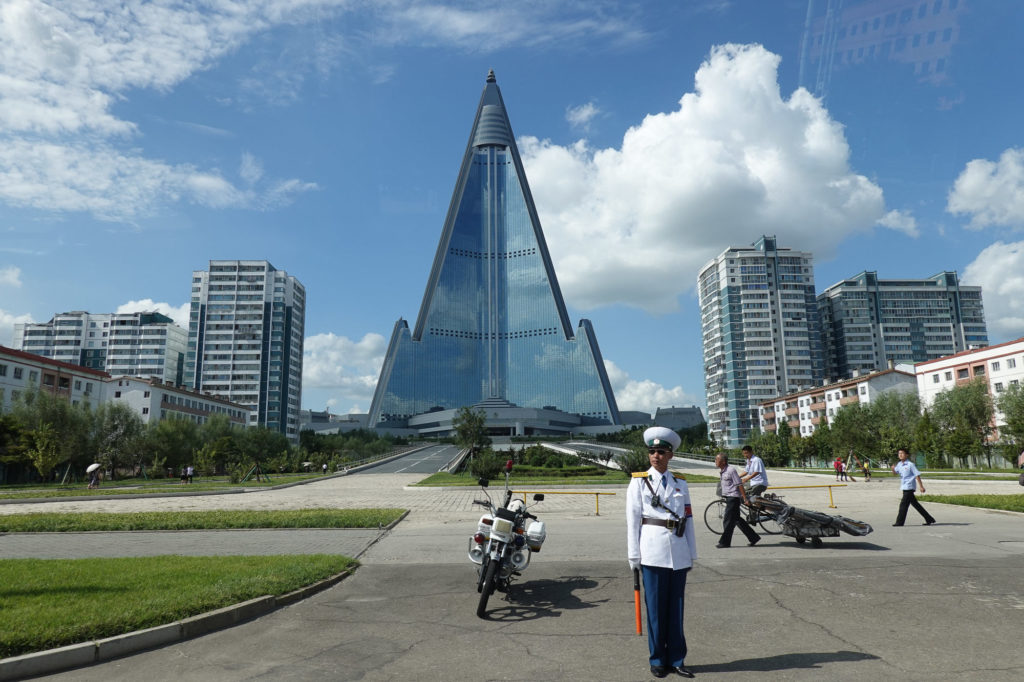
From Wikipedia: “The Ryugyong Hotel is a 330 m (1,080 ft) tall unfinished pyramid-shaped skyscraper in Pyongyang, North Korea — it is the most prominent feature of Pyongyang’s skyline and also the tallest building in North Korea. Its name (which means “capital of willows”) is also one of the historical names for Pyongyang. The building has been planned as a mixed-use development, which would include a hotel. Construction began in 1987 but was halted in 1992 as North Korea entered a period of economic crisis after the dissolution of the Soviet Union. After 1992, the building stood topped out, but without any windows or interior fittings. In 2008, construction resumed, and the exterior was completed in 2011. The hotel was planned to open in 2012, for the centenary of founding leader Kim Il Sung’s birth. A partial opening was announced for 2013, but this was later cancelled. In 2018, an LED display was fitted to one side, which is used to show propaganda animations and film scenes.”
Note: This is a version of my When The Going Gets Weird newsletter, which I send out via Ghost, the open-source publishing platform. You can see other issues and sign up here.
Continue reading “This bestselling author lives a secret life as a brain doctor”