
Making March 2nd a holiday for no reason
Links that interest me and maybe you


From Texas Monthly: “Erik Maund had always lived the high life, as you might expect of a man whose surname had been blasted on TV ads for decades. By the time he was in his forties, he was an executive at Maund Automotive Group, a car sales business whose first dealership was opened by his grandfather Charles Maund. He and his wife, Sheri, a former dealership office worker, lived in a seven-thousand-square-foot white brick mansion next to the Austin Country Club, where he teed off regularly with a close-knit group of friends. He owned a boat and a lake house. On Sundays he often enjoyed brunch at the club with his family. But on March 1, 2020, as the world was rattled by reports of a highly contagious virus turning up in nation after nation, Erik received a text that demanded his attention. It came from a stranger who knew about a night Erik had spent with an escort in Nashville a few weeks earlier and wanted money to keep quiet.”

From Wikipedia: “The Cadaver Synod is the name commonly given to the ecclesiastical trial of Pope Formosus, who had been dead for about seven months, in the Basilica of St. John Lateran in Rome during January 897. The trial was conducted by Pope Stephen VI, the successor to Formosus’ successor, Pope Boniface VI. Stephen had Formosus’ corpse exhumed and brought to the papal court for judgment. He accused Formosus of perjury, of having acceded to the papacy illegally, and illegally presiding over more than one diocese at the same time. At the end of the trial, Formosus was pronounced guilty, and his papacy retroactively declared null. This period, which lasted from the middle of the 9th century to the middle of the 10th century, was marked by a rapid succession of pontiffs. Between 872 and 965, two dozen popes were appointed, and between 896 and 904 there was a new pope every year.”
Note: This is a version of my personal newsletter, which I send out via Ghost, the open-source publishing platform. You can see other issues and sign up here.
Continue reading “Privilege, blackmail, and murder for hire in Austin”
A year ago, Meta—the parent company of Facebook and Instagram—launched a new social app called Threads. (I wrote about the launch and also did a Q&A with my CJR colleague Jon Allsop about my early experiences with the service.) More than a hundred million users signed up in a matter of days, making it one of the fastest-growing new apps in history. The meteoric growth rate eventually slowed; some users no doubt moved on after the initial flurry of interest subsided. But the app soon started to grow again. Last Wednesday, with Threads’ first birthday approaching, Mark Zuckerberg, Meta’s co-founder and CEO, announced that the service now has more than a hundred and seventy five million monthly users, up twenty five million from April. Adam Mosseri, who runs Threads, said in an interview with Platformer’s Casey Newton last week that whatever the numbers might be, “all the key metrics that I care about most are growing,” including daily impressions and time spent on the app per day.
That, it would seem, is more than can be said for X, formerly known as Twitter: NBC reported in March that data from two research firms, along with figures published by X, suggest that its numbers are heading in the opposite direction. In February, X had 27 million daily active users of its mobile app in the US, down 18 percent from a year earlier according to the market intelligence firm Sensor Tower; indeed, the app’s US user base has been either flat or down every month since November 2022, when Elon Musk acquired it. Per Sensor Tower, usage of the app has fallen by almost 25 percent since the acquisition went through. X says it has 250 million daily active users in total, a figure which would put the service roughly back where it was before Musk bought the company (though it hasn’t been confirmed by a third party).
While it may be approaching X in terms of user numbers, however, some observers believe that Threads still has a way to go before it can assume the position that Twitter used to have in the social media marketplace. Taylor Lorenz of the Washington Post, for example, argued in a recent piece that while Threads may have many users, it is missing one crucial component of a successful social media platform: influencers. A number of content creators told Lorenz that they aren’t convinced they need to be on the platform and that they “don’t consider it important.” One management company told Lorenz that the creators they represent don’t post on Threads, adding that most would “forget it’s there if it wasn’t for the automatic notifications.” Lia Haberman, a digital strategist who writes a newsletter on the creator economy, told Lorenz that Threads “still seems like a platform in search of a mission. The focus isn’t news. It’s not about visual creativity or video, like Instagram or TikTok. So what is it?”
Note: this post was originally published as the daily newsletter for the Columbia Journalism Review, where I am the chief digital writer
Continue reading “One year in, is Threads winning the battle to take over from Twitter?”
From NPR: “The modern idea of stress began on a rooftop in Canada, with a handful of rats freezing in the winter wind. This was 1936 and by that point the owner of the rats, an endocrinologist named Hans Selye, had become expert at making rats suffer for science. He would subject them to extreme temperatures, make them go hungry for long periods, or make them exercise a lot, then kill the rats and look at their organs. What was interesting to Selye was that no matter how different the tortures he devised for the rats were, the physical effects of his different tortures were always the same. There would be changes particularly in the adrenal gland. So Selye began to suggest that subjecting an animal to prolonged stress led to tissue changes and physiological changes with the release of certain hormones, that would then cause disease and ultimately the death of the animal. And so the idea of stress as a medical problem was born.”

From Outside: “The accidents made international news: two American women and their Sherpas had perished in a pair of avalanches on Shishapangma, an 8,027-meter peak in Tibet. The climbers, it was reported, had been racing to become the first American woman to scale all 14 of the world’s 8,000-meter peaks, a feat widely popularized by 40-year-old Nepali mountaineer Nirmal “Nims” Purja, who in 2019 proved that the mountains—all of them located in the Himalayan and Karakoram ranges of South Asia—could be climbed in just months. Purja himself had been on the mountain that day; Anna Gutu was a client of his climbing company, Elite Exped, and had been led by one of its Sherpas, 27-year-old Mingmar Sherpa. Gina Rzucidlo, 45, had been led by a 35-year-old Sherpa named Tenjen “Lama” Sherpa, who earlier that year guided Norway’s Kristin Harila, a former professional skier, in a successful attempt to beat Purja’s record. Both Mingmar and Tenjen died roped to their clients.”
Note: This is a version of my personal newsletter, which I send out via Ghost, the open-source publishing platform. You can see other issues and sign up here.
Continue reading “The secret history behind the science of stress”
From New York magazine: “Vlad Artamonov told prospective investors, many of them his former classmates from Harvard Business School, that he’d discovered a hidden way to learn which stocks Warren Buffett was buying early, an edge that would make him a lot of money. It involved, he said, combing through esoteric state financial disclosures and then trading on the information — essentially, a way to obtain insider tips legally. “Have an insane idea,” he told one investor in the fall of 2022. But it seemed plausible coming from Artamonov, who, in addition to his Ivy League credentials, had spent more than five years at Greenlight Capital, the highly regarded hedge fund run by David Einhorn, a self-described admirer of Buffett. He told investors he aimed for returns of as much as 1,000 percent.”
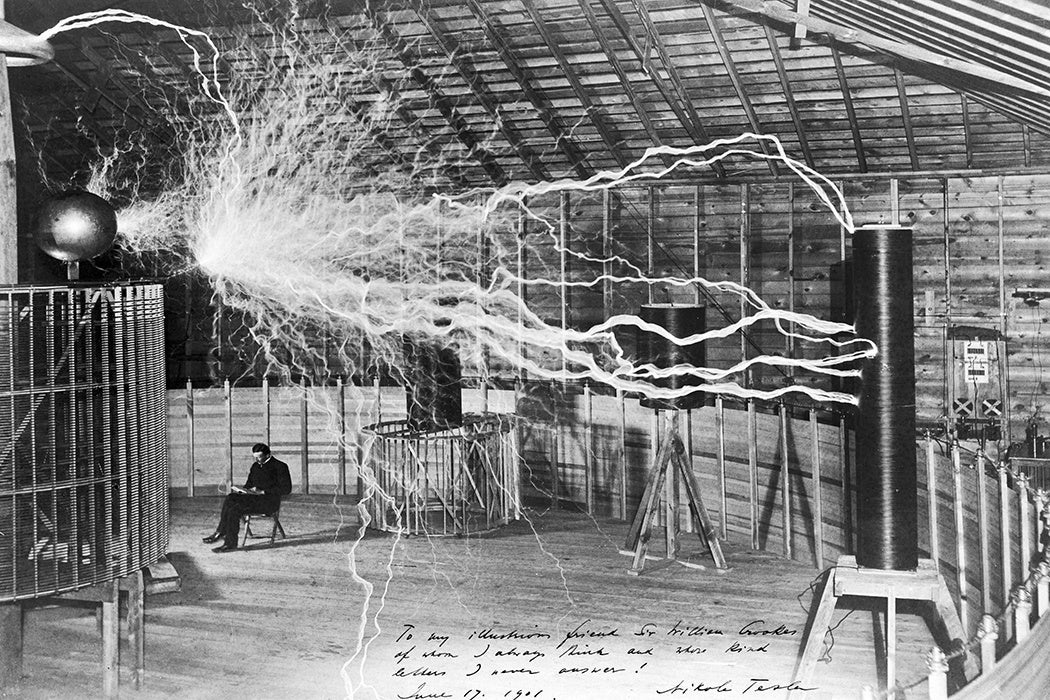
From JSTOR Daily: “Nikola Tesla, the audacious futurist and groundbreaking inventor, is best known for his advances in electricity, circuits, and mechanical design. Fewer people remember that in the 1930s, he announced the invention of a beam so powerful, it could make war obsolete. Tesla’s concept—a concentrated energy beam capable of bringing down aircraft and killing thousands—was not new. In fact, writes Fanning, it was just one of a long line of proposed death rays that took the world by storm during the 1920s and 1930s. Though H.G. Wells wrote about a deadly heat ray in 1898, talk about death rays really heated up after World War I. In July 1934, Tesla announced that he had invented a way to send concentrated particles through the air. The “death beam” would be a defensive weapon that could kill an army of one million in an instant and “make every nation safe against any attack by a would-be invader.”
Note: This is a version of my personal newsletter, which I send out via Ghost, the open-source publishing platform. You can see other issues and sign up here.
Continue reading “Inside the Harvard Business School Ponzi scheme”


From Alta magazine: “After moving to Los Angeles, Dee Ann found her guru: the famous writer Carlos Castaneda. She joined his cult and became a witch—as his female followers called themselves—or a chacmool, a word from ancient Mexico for revered statues depicting guardians of the gods. As part of her initiation, she changed her name. She became Kylie Lundahl. Then she disappeared. Days after Castaneda died, in the spring of 1998, Dee Ann and five other chacmools mysteriously vanished. More than 25 years later, they are still missing. Castaneda was among the top-selling authors of the ’70s. The Teachings of Don Juan: A Yaqui Way of Knowledge had started as a thesis project in the early ’60s and became a New Age franchise. The Don Juan series—12 titles in all—is estimated to have sold more than 28 million copies.”

From NPR: “The highest camp on the world’s tallest mountain is littered with garbage that is going to take years to clean up, according to a Sherpa who led a team that worked to clear trash and dig up dead bodies frozen for years near Mount Everest’s peak. The Nepal government-funded team of soldiers and Sherpas removed 11 tons of garbage, four dead bodies and a skeleton from Everest during this year’s climbing season. Ang Babu Sherpa, who led the team of Sherpas, said there could be as much as 40-50 tons of garbage still at South Col, the last camp before climbers make their attempt on the summit. It took two days to dig out one body near the South Col which was frozen in a standing position deep in the ice, he said. Part way through, the team had to retreat to lower camps because of the deteriorating weather, and then resume after it improved. Another body was much higher up at 8,400 meters (27,720 feet) and it took 18 hours to drag it to Camp 2, where a helicopter picked it up.”

From JSTOR Daily: “In the 1930s, a prison football team was so successful that New York State legislation was enacted to curtail their appeal to fans outside the prison, a concept that may have percolated into other states. On November 15, 1931, the Sing Sing Black Sheep drew a crowd of over 2,000 incarcerated individuals and 500 spectators in their debut win (33-0) over the Ossining Naval Militia. The Black Sheep football team was active from 1931 to 1936 and posted winning seasons every year. Tim Mara, the founder and then-owner of the New York Giants, coached and partially funded the 1931 inaugural team. The Black Sheep were not only unique as one of the nation’s first prison football teams, but also because the team was racially integrated during a time when there were to be no Black players in organized professional football.”
(Editor’s note: If you like this newsletter, please share it with someone else. And if you really like it, perhaps you could subscribe, or contribute something via my Patreon. Thanks for being a reader!)

From Vox: “When Priscilla Frankson thinks about home, she thinks about ice — thick sea ice stretching out toward the horizon. Frankson, an Iñupiaq masters student in Tribal Leadership and Governance at Arizona State University, is from Point Hope (Tikiġaq), Alaska, a small city about 125 miles above the Arctic Circle and one of the northernmost communities in the United States.hen Priscilla Frankson thinks about home, she thinks about ice — thick sea ice stretching out toward the horizon. In Point Hope, where summer temperatures rarely break 60 degrees, ice and cold are a part of life. Thick, reliable sea ice is essential for harvesting whales, a key part of the subsistence diets, a lifestyle built around harvesting wild foods for personal and community use, of Point Hope’s Iñupiaq residents. But climate change is threatening all of this.”

From Scientific American: “Most of us have an “inner voice,” and we tend to assume everybody does, but recent evidence suggests that people vary widely in the extent to which they experience inner speech, from an almost constant patter to a virtual absence of self-talk. A new study shows that not only are these differences real but they also have consequences for our cognition. Participants with weak inner voices did worse at psychological tasks that measure, say, verbal memory than did those with strong inner voices. Psychologists think we use inner speech to assist in various mental functions. Past research suggests inner speech is key in self-regulation and executive functioning, like task-switching, memory and decision-making. Some researchers have even suggested that not having an inner voice may impact areas important for a sense of self. In both experiments the group with less inner speech was less accurate in their responses.”
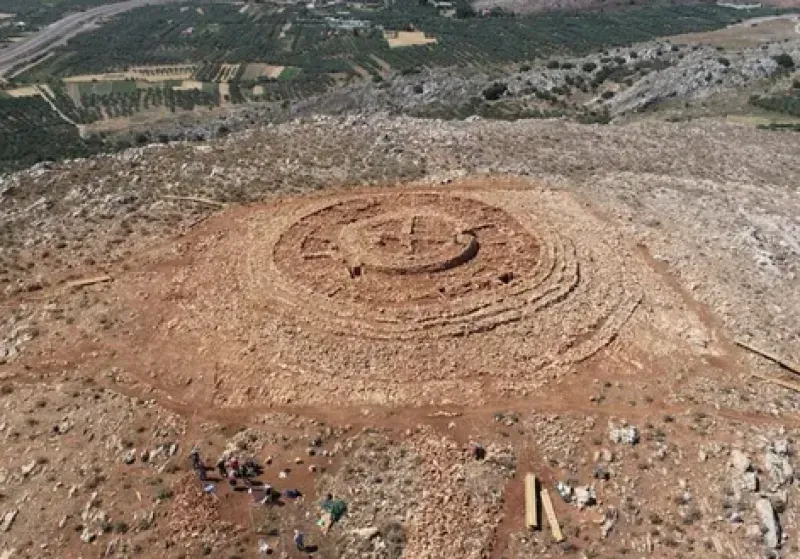
From Live Science: “A 4,000-year-old circular structure discovered on a hilltop in Greece may have been used for ancient Minoan rituals, archaeologists report. Consisting of eight superimposed stone rings with small walls intersecting them to form rooms, the building is almost labyrinthine, representatives from the Greek Ministry of Culture said. The unique structure, which measures 157 feet in diameter, was discovered about 32 miles southeast of Heraklion, the capital of Crete, while construction workers were installing a surveillance radar system for a new airport. Located on the very top of a hill near the town of Kastelli, the ancient building appears to have had two main zones: a circular building with a diameter of 49 feet at the very center and an area radiating out from it. Based on the style of pottery fragments, archaeologists have tentatively dated the building to 2000 to 1700 B.C., in the middle of the Minoan civilization.”
Acknowledgements: I find a lot of these links myself, but I also get some from other newsletters that I rely on as “serendipity engines,” such as The Morning News from Rosecrans Baldwin and Andrew Womack, Jodi Ettenberg’s Curious About Everything, Dan Lewis’s Now I Know, Robert Cottrell and Caroline Crampton’s The Browser, Clive Thompson’s Linkfest, Noah Brier and Colin Nagy’s Why Is This Interesting, Maria Popova’s The Marginalian, Sheehan Quirke AKA The Cultural Tutor, the Smithsonian magazine, and JSTOR Daily. If you come across something interesting that you think should be included here, please feel free to email me at mathew @ mathewingram dot com


From Historic Flix: “Mauro Prosperi, a former police officer from Italy, is a seasoned ultramarathon runner. His hobby saw him enter the Marathon des Sables in 1994, an annual six-day ultramarathon that takes participants through over 150 miles of scorching Moroccan desert. For their whole week in the desert, competitors have to carry all their own equipment and food and are penalized for exceeding their designated rations. They also have a minimum pace of 3 kilometers per hour. Mauro’s passion for adventure would end up taking him on an unexpected journey for survival – during this time, he had no food, water, or any idea of which way to head for help. He wandered the vast and inhospitable desert alone for more than a week, was forced to drink his own urine to stay alive, and was eventually found 180 miles from the race course.”

From Mental Floss: “For the Native Americans of the Northern Plains, the Battle of Little Bighorn was a glorious victory against U.S. government forces intent on claiming their land. Fought on June 25, 1876, in Montana Territory, the battle saw Lakota Sioux, Northern Cheyenne, and Arapaho warriors quickly overwhelm and kill some 260 U.S. troops. George Armstrong Custer, the Civil War hero sent to remove the Native Americans to their reservations, was among them. Though the exact circumstances surrounding Custer’s death have long been the subject of debate, a new and intriguing account of his final moments surfaced in June 2005 when members of the Northern Cheyenne broke more than a century of silence to recount their tribe’s oral history of the battle. According to their account, it was a female fighter named Buffalo Calf Road Woman who knocked Custer off his horse that day, leaving him vulnerable, and who may have killed him.”
Note: This is a version of my personal newsletter, which I send out via Ghost, the open-source publishing platform. You can see other issues and sign up here.
Continue reading “The extraordinary survival story of ultra runner Mauro Prosperi”

From Literary Hub: “It was a fine early summer afternoon in England, and the port at Chelsea was just slipping out of sight when Benjamin Franklin—at the urging of his fellow passengers—kicked off his buckled shoes and tossed aside his heavy jacket. John Wygate, a fellow printer whom Franklin had taught to swim, had been regaling the gentlemen aboard the ferry with stories of Franklin’s fishlike agility in the water and the peculiar aquatic tricks he could perform. They had spent the morning viewing taxidermied crocodiles and rattlesnakes at Don Saltero’s curiosities shop and weren’t ready for the day’s amusements to end, even as they headed back to Blackfriars. Franklin likely put on a good show of modesty, demurring at first to the group’s excited requests for a demonstration, but was no doubt secretly pleased as he undressed for his dip in the Thames—he loved both an audience and any excuse to get in the water.”
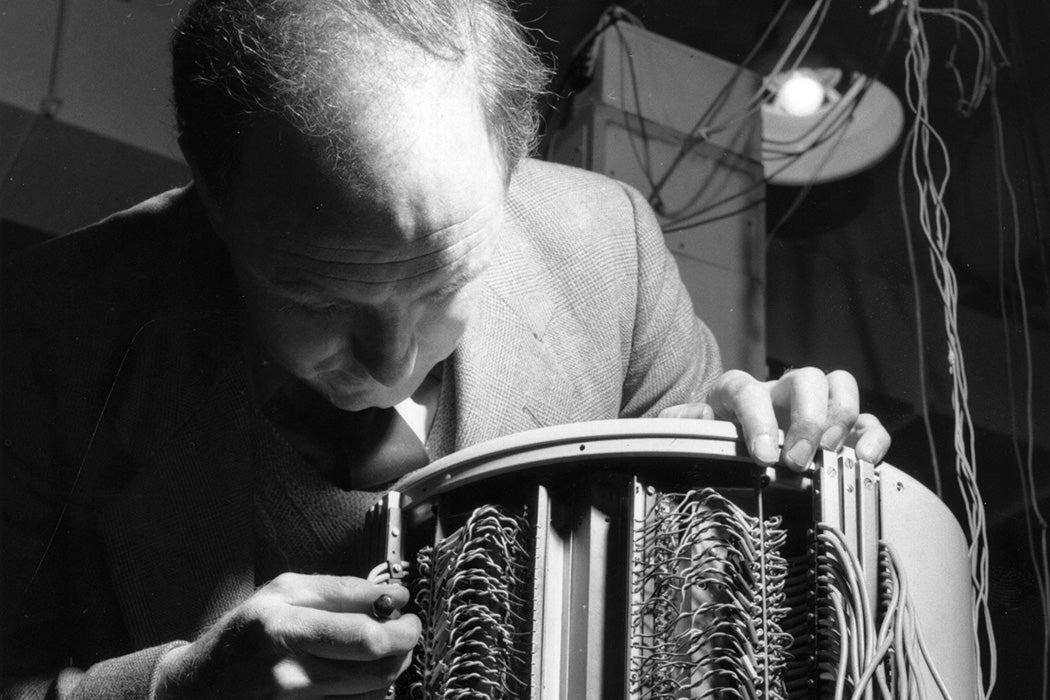
From JSTOR Daily: “In the early 1950s, small, peculiar love letters were pinned up on the walls of the computing lab at the University of Manchester. The history behind them is even stranger; examples of the world’s first computer-generated writing, they’re signed by MUC, the acronym for the Manchester University Computer. In 1952, decades before ChatGPT’s computer generated writing was integrated into mainstream media outlets, two gay men—Alan Turing and Christopher Strachey—essentially invented AI writing. Alongside Turing, Strachey worked on several experiments with Artificial Intelligence: a computer that could sing songs, one of the world’s first computer games, and an algorithm to write gender-neutral mash notes that screamed with longing.”
Note: This is a version of my personal newsletter, which I send out via Ghost, the open-source publishing platform. You can see other issues and sign up here.
Continue reading “That time Ben Franklin jumped naked into the Thames river”