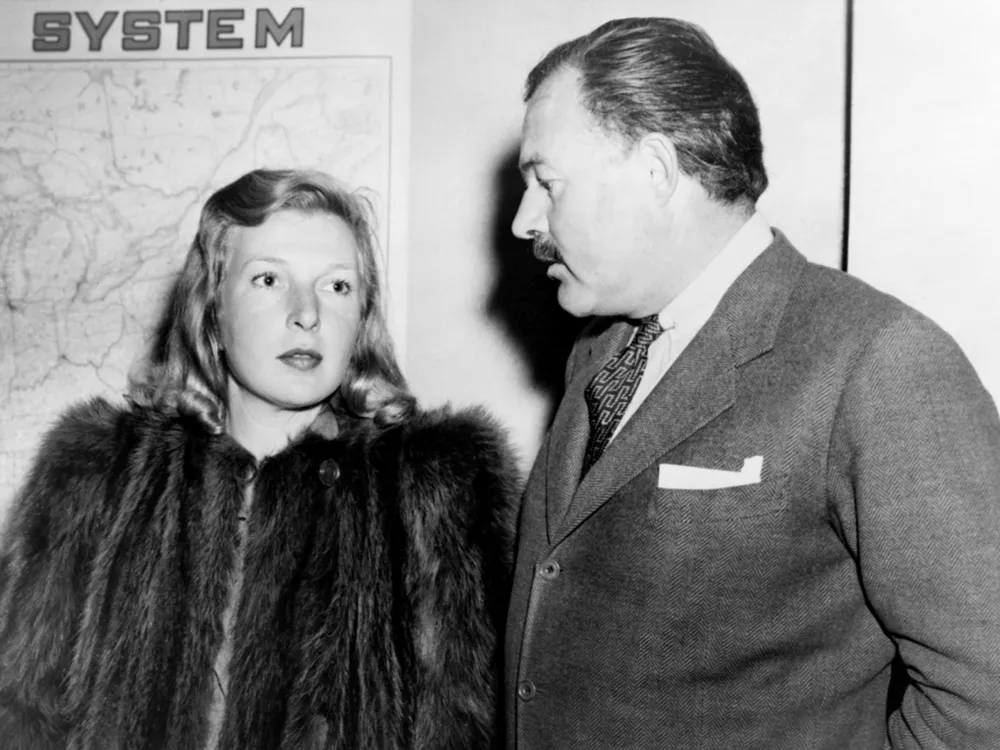
Time Inc. colluded with the CIA says one researcher

From Oxford University Press: “This article provides evidence for the first time of a systematic policy of direct collusion between the Time Inc. media empire and the U.S. Central Intelligence Agency. For the first two decades of the Cold War, both Time and Life magazines established policies that provided the CIA with access to their foreign correspondents, their dispatches and research files, and their vast photographic archive that the magazines had accumulated to accompany their stories. These were significant resources for a fledgling intelligence agency. Photographs of foreign dignitaries, rebel groups, protestors, and topography were vital pieces of intelligence, helping the Agency to map and visualize its targets. Depending upon the story, direct access to dispatches returned by foreign correspondents might provide the Agency with important clues to local political, social, and economic conditions, as well as insights into the intentions and capabilities of ruling elites in countries of concern.”

Sigmund Freud started using a couch because he didn’t want to look at his patients

From The Atlantic: “A person who is “on the couch” is known to be in therapy, but most therapists these days don’t ask their clients to lie down. The first time mine did, I resisted. I didn’t want to be on display or unable to see her reactions. Plus, the idea seemed antiquated. Sigmund Freud was inspired to use the couch more than a century ago after observing dramatic hypnotherapy demonstrations by his teacher Jean-Martin Charcot. In psychoanalysis, Freud thought a therapist being out of view would help people access emotions or memories that might be repressed. (He also said that he could not “put up with being stared at by other people for eight hours a day.”) Many of Freud’s ideas about the unconscious haven’t held up, but he may have been onto something with the couch, as I discovered when I eventually followed my therapist’s suggestion. The couch might not be for everyone, but it could be worth a try.”

Note: This is a version of my When The Going Gets Weird newsletter, which I send out via Ghost, the open-source publishing platform. You can see other issues and sign up here.

Continue reading “Time Inc. colluded with the CIA says one researcher”

The secret reason that the US beat Russia to the moon

From Big Think: “Back in the 1950s and early 1960s, the Soviet Union was far ahead of the USA in the space race, launching the first satellite, the first human into space, and many other spaceflight firsts. This dominance continued for several years, and by the mid-1960s, they were planning a 1967 Moon landing: years ahead of even the most ambitious schedule for the United States. After the disastrous Apollo 1 fire, it seemed like a foregone conclusion that the Soviets would be the first to walk on the Moon. Yet they never even came close. The unexpected illness and death of one supremely competent but unsung Soviet figure, Sergei Korolev, changed everything. Without Korolev as the chief designer, everything went downhill quickly for the Soviets.”

A mysterious nerve disease in a mountain town might be a result of poisonous mushrooms

From Knowable: “Well known to skiers, the French mountain town of Montchavin has grabbed the attention of medical researchers as the site of a highly unusual cluster of a devastating neurological disease, amyotrophic lateral sclerosis. ALS is both rare and rather evenly distributed across the globe: It afflicts two to three new people out of 100,000 per year. Montchavin’s year-round resident population is only a couple hundred, and neighboring villages aren’t much bigger, so the odds are strongly against finding more than just a few ALS patients in the immediate area. Yet physicians have reported 14. he notion that something in food might cause ALS does not come out of the blue. It comes from Guam, where US medical researchers, near the end of World War II, documented an epidemic of neurological disease among the island’s native Chamorro people.”

Note: This is a version of my When The Going Gets Weird newsletter, which I send out via Ghost, the open-source publishing platform. You can see other issues and sign up here.

Continue reading “The secret reason that the US beat Russia to the moon”

The hot new psychotherapy involves… demons

According to Scott Alexander of Astral Codex Ten, who is a practicing psychiatrist, the hot new psychotherapy is something called “Internal Family Systems.” The name sounds pretty innocuous, but it quickly takes a turn for the weird. As Alexander described it in a recent edition of his newsletter, which is mostly a book review of The Others Within Us by Robert Falconer:

What I gather from the manuals: IFS is about working with “parts”. You treat your mind as containing a Self – a sort of perfect angelic intellect without any flaws or mental illnesses – and various Parts – little sub-minds with their own agendas who can sometimes occlude or overwhelm the Self. During therapy, you talk to the Parts, learn their motives, and bargain with them.

You might identify a Part of you that wants to sabotage your relationships. You will visualize and name it – maybe you call her Sabby, and she looks like a snake. You talk to Sabby, and learn that after your first break-up, when you decided you never wanted to feel that level of pain again, you unconsciously created her and ordered her to make sure you never got close enough to anyone else to get hurt. Then you and the therapist come up with some plan to satisfy Sabby – maybe you convince her that you’re older now, and better able to deal with pain.

Continue reading “The hot new psychotherapy involves… demons”

Don’t fall to your knees

I’ve written about Heather Havrilesky’s great newsletter Ask Molly before, and here’s another example of her writing:

Don’t fall to your knees. Rest and mourning sound good but don’t believe the hype. Even your body wants to trick you into stopping. When you stop, you crumble, fall to pieces, decompose into the ground. Don’t let that death drive win. Get up and run instead. Put on some headphones and crank up the fucked up club music and hurtle into the day, leaves falling around you like a shower of blessings from the demon god himself, briefly anointing you with his lust for life, just for fun, just to see how it hits, the motherfucker.

Stumble forward, into this wicked autumn hour, almost defeated, every awkward footfall a resolution, every inch of progress a clumsy victory. You are an ugly catastrophe, an old house collapsing, a fury of limbs and longing, rage and regrets, windowpanes and doorknobs, nails and splinters, whipped up into a tornado and carried into the future, ass over ankles, fridge over floorboards, daydreams over despair.

Feel yourself break into pieces but keep moving. Feel your heart collapse but keep going. Feel your breath quicken, deepen, lengthen, shorten, and keep trudging through the leaves, keep staggering hotly over the crust of the earth, keep feeling the insults of the catbird and the cardinal, the trunk and the limbs, the scornful blue sky and the sullen sun and the nasty moon hiding like a thief beneath the horizon, all chuckling in chorus over your bad form. And behind the haughty sky looms the dark vacuum of space.

You know who I mean

Heather Havrilesky’s writing in her newsletter Ask Molly is always great — it often reminds me of Helena Fitzgerald, who unfortunately put her great newsletter Griefbacon on hiatus awhile back (griefbacon is the literal translation of the German term for stress eating). This one from Heather was especially good:

Every now and then, I get comments on my advice column on social media, from people who say things should be easy, and if things get difficult, the problem is probably you. You need to look at yourself. You need to self-reflect. Ask yourself if you’re the problem. Ask yourself if things would be way easier if you were different — more easygoing, less difficult, less direct, less challenging to others, less vulnerable, less honest. But it never stops there, does it? It’s not just about shaping yourself into a more pleasing form, it’s also about powering down your unique urges and odd desires, noticing less, saying less, doing less, engaging less, sanding off your edges, getting by on less.

You know who I mean: those queen bees who rule with an iron fist but make it look chill, who keep it super fucking simple, who turn on you whenever you take your time to make a point, whenever you’re honest, whenever you’re vulnerable, whenever you admit your flaws. You know who I mean: those helper bees who feed the queen at all costs, helpful helpers with helpful suggestions on how to say less, how to smooth and brighten and lift and bleach, how to disappear in plain sight, how to ignore your soul and become a whisper-quiet appliance.

You know who I fucking mean. The chill dudes who respond to each tiny conflict or issue or bump in the road with the same “calm down and do it my way,” and then you realize that their perfectly engineered road-smoothing hydraulic system is just a consistent denial of difference, an erasure of the slightest aberration, an ignorance of tiny anomalies of elevation, of texture, of tone, of temperature, of color, of experience, no gravel in the road, no nails, no grit, no tire shreds, no potholes, no bad days, no sadness, no rage.

The Ingram Christmas Letter for 2024

Note: Every year at Christmas I like to send friends and family a newsletter to catch them up on what the Ingrams have been up to. This is the 2024 edition:

Yes, it’s that time of the year again! That heart-warming (for me, at least) annual tradition where I send out an email filled with trivia and bad puns about our lives this year, and everyone skims it and never clicks on any of the links and then tells me how much they love it! But seriously, I know everyone clicks on the links, despite what my email tracking software says 🙂 As usual, if everything works properly, the links below should open in a new window — and if you want to see the photos afterwards, they’re in a shared album at Google Photos. You can also find larger versions of all of them, along with a whole bunch more pictures dating back to the Pleistocene Era, at the Ingram Family Photo Library (unless my server is down, in which case I apologize — sometimes Zoe’s cats kick the plug out).

You can also find a more old-fashioned web version of this letter, complete with old-timey Santa images, at https://mathewingram.com/christmas. If you have any questions about the letter or just about the Ingram family in general, you can reach me at  [email protected] — unless of course you have a criticism, in which case please feel free to use the special email I have set aside for that: [email protected].

I’ve had a lot of time on my hands recently (bit of dramatic foreshadowing there) so I was going through the archives on my website — which I’ve had in one form or another since the late 1990s — and I’ve been sending out and/or posting a Christmas Ingram family round-up for almost a quarter of a century. This is the first one I could find, and the main thing you’ll probably notice if you click on that link is how short it is, proof that either a) A lot more stuff happened as the kids got older or b) I got more wordy over time (or a little of both). To be honest, I think this whole genre probably peaked with Caitlin and Wade’s wedding on New Year’s in 2017, or maybe with the birth in 2022 of The Mighty Quinn, our first grandchild.

Continue reading “The Ingram Christmas Letter for 2024”

WordPress needs more democracy

The quote below is from Joost de Valk, a Dutch entrepreneur who created Yoast, a popular suite of plugins for WordPress. He’s been involved in WordPress development for decades now, so his opinion matters:

We, the WordPress community, need to decide if we’re ok being led by a single person who controls everything, and might do things we disagree with, or if we want something else. For a project whose tagline is “Democratizing publishing”, we’ve been very low on exactly that: democracy.

Matt Mullenweg has joked in the past (and in this Inc. article, which he responded to here) about being a “benevolent dictator for life,” but Joost says the benevolent part is no longer accurate. So he — and others — are calling for a new board and a new structure in which the WordPress trademark is owned by the community or is in the public domain. I wrote about what’s been happening at WordPress in a piece for my newsletter The Torment Nexus.

The short and tragic lives of Violet and Daisy Hilton

From Danny Dutch: “In 1934, Violet Hilton walked into a New York marriage licence bureau hand-in-hand with her fiancé, Maurice Lambert. On her left stood her ever-present conjoined twin sister, Daisy. Their entry caused a commotion, drawing typists and clerks out of their offices to gawk at this unusual trio. However, the stir quickly turned to rejection when a city official refused Violet’s request to marry. The reason? The official deemed the union akin to bigamy. For Violet and Daisy Hilton, this public denial was only one of many challenges they faced in a life that veered between the extraordinary and the deeply tragic. Conjoined twins, vaudeville stars, and societal outcasts, their story is a testament to both human resilience and the cruelty of exploitation.”

He taught rats how to trade in foreign exchange markets

From The Atlantic: “Mr. Lehman could predict the prices of foreign-exchange futures more accurately than he could call a coin flip. But, being a rat, he needed the right bonus package to do so: a food pellet for when he was right, and a small shock when he was wrong. (Also, being a rat, he was not very good at flipping coins.) Mr. Lehman was part of “Rat Traders,” a project overseen by the Austrian conceptual artist Michael Marcovici, whose work often comments on business and the economy. For the project, Marcovici trained dozens of rats to detect patterns in the foreign-exchange futures market. To do this, he converted price fluctuations into a series of notes played on a piano and then left it up to the rat to predict the tone of the note that followed.”

Note: This is a version of my When The Going Gets Weird newsletter, which I send out via Ghost, the open-source publishing platform. You can see other issues and sign up here.

Continue reading “The short and tragic lives of Violet and Daisy Hilton”

They missed their cruise ship but that was just the beginning

From Curbed: “As the Coast Guard sped toward the cruise ship, Pam was still on the phone with the Norwegian employee in Miami, begging her to tell the ship to wait. As they approached the looming 14 white decks, she got an update: The captain was refusing their request. They would not be allowed to board. They were able to watch as the ship that held their clothes, their medication, their luggage, and their phone chargers started her mighty engines and sailed away. Cruisers of all stripes are familiar with the concept of force majeure, an arcane clause in maritime law. Force majeure, an “act of God” — it’s the acknowledgment that on the high seas, a ship is vulnerable to significant events beyond its control. Cruise ships are not responsible for acts of God. In fact, as the passengers were about to learn, they are not responsible for much of anything.”

Google Street View captured a man loading a body into the trunk of a car

From the New York Times: “It was a routine image picked up by Google Street View: a man loading a white bag into the trunk of a car. But that unexceptional picture, the authorities in Spain said on Wednesday, was among the clues that helped lead them to two people whom they recently arrested in the case of a man who disappeared last year. In a news release, the National Police said that officers had detained a woman described as the partner of the man who disappeared in the province of Soria, in the country’s north, along with a man who they said was also the woman’s partner. The two were detained last month at two locations in Soria, which is about 100 miles north of Madrid, police said. Investigators later located human remains that they believe could belong to the missing man. The police did not identify the people who had been detained or the victim.”

Note: This is a version of my When The Going Gets Weird newsletter, which I send out via Ghost, the open-source publishing platform. You can see other issues and sign up here.

Continue reading “They missed their cruise ship but that was just the beginning”

Why AI content scraping should qualify as fair use

Back in October, I wrote about artificial intelligence, and specifically about one of the crucial questions experts still can’t seem to agree on, which is whether it is going to destroy us or not. In that piece, I also mentioned the debate over whether the indexing or “ingesting” that AI large-language models do is — or at least should be — covered by the fair-use exception in copyright law. I didn’t spend a lot of time on it because it wasn’t directly relevant to the danger issue, but I wanted to expand on some of the points I made then, and also in a Columbia Journalism Review piece that I wrote last year. I am not a cheerleader for giant technology companies by any means, but I think there is an important principle at stake. And at the heart of it are some key questions: What (or who) is copyright law for? What was it originally designed to do? And does AI scraping or indexing of copyrighted content fit into that, and if so, how?

The case against AI indexing of content is relatively straightforward: by hoovering up content online and then using it to create a massive database for training large-language models, AI engines copy that content without asking and without paying for it (unless the publisher or owner has signed a deal with the AI company, as some news outlets have). This pretty clearly qualifies as de facto copyright infringement, as the Authors Guild and the New York Times and a number of others have argued and continue to argue. In a similar way, one could imagine that if a company were to copy millions of books and use them to create a massive index of content, that would pretty clearly qualify as infringement as well — copying without permission or payment.

The major difference between these two cases is that the second hypothetical one actually happened, when Google scanned millions of books as part of its Google Books project between 2002 and 2005, and created an index that allowed users to search for content from those books. After years of back-and-forth negotiations over payment for the infringement, this led to a lawsuit in which the Authors Guild and others argued that Google was guilty of copyright infringement on a massive scale. In the early days of that case, Judge Denny Chin of the Southern District of New York seemed to agree, but then at some point he changed his mind, and ruled that Google’s book-scanning activity was covered by the fair-use exception under US copyright law.

Continue reading “Why AI content scraping should qualify as fair use”

Mirror life is possible but it could destroy the world

From the New York Times: “On Thursday, 38 prominent biologists issued a dire warning: Within a few decades, scientists will be able create a microbe that could cause an unstoppable pandemic, devastating crop losses or the collapse of entire ecosystems. The scientists called for a ban on research that could lead to synthesis of such an organism. The molecules that serve as the building blocks of DNA and proteins typically exist in one of two mirror-image forms. While sugar molecules can exist in left- and right-handed forms, DNA only uses the right-handed molecules. That’s the reason DNA’s double helix has a right-handed twist. Our proteins, by contrast, are made of left-handed amino acids. In theory, a mirror cell — with left-handed DNA and right-handed proteins — could carry out all the biochemical reactions required to stay alive.”

A British nurse found guilty of being an “angel of death” may be innocent

From The New Yorker: “Last August, Lucy Letby, a thirty-three-year-old British nurse, was convicted of killing seven newborn babies and attempting to kill six others. Her murder trial, one of the longest in English history, lasted more than ten months and captivated the United Kingdom. The Guardian, which published more than a hundred stories about the case, called her “one of the most notorious female murderers of the last century.” The case against her gathered force on the basis of a single diagram shared by the police, which circulated widely in the media. On the vertical axis were twenty-four “suspicious events,” which included the deaths of the seven newborns and seventeen other instances of babies suddenly deteriorating. On the horizontal axis were the names of thirty-eight nurses who had worked on the unit during that time.”

Note: This is a version of my When The Going Gets Weird newsletter, which I send out via Ghost, the open-source publishing platform. You can see other issues and sign up here.

Continue reading “Mirror life is possible but it could destroy the world”