
No, Craigslist is not responsible for the death of newspapers

Maybe it’s the rash of newspaper sales recently — including the acquisition of the Washington Post by Amazon CEO Jeff Bezos and the sale of the Boston Globe to local businessman John Henry — but there seems to be a renewed interest in assigning blame for the rapid decline of the newspaper business, and one name tends to get the majority of the criticism: namely, Craigslist, the free classified-advertising service that some say killed newspapers.

In a recent piece for The New Republic, for example, Alec MacGillis accuses Craigslist founder Craig Newmark of hypocrisy for helping to put together an ethics guide for journalists, a project that Newmark has been working on — and also helping to fund personally — for some time now, along with the Poynter Institute. The New Republic writer argues that this kind of commitment is pretty rich coming from the guy whose service allegedly killed newspapers by sucking the lifeblood out of the print advertising market.

The internet killed newspapers, not Craigslist

Classified local newspaper advertisement and computer mouse

MacGillis seems even more incensed by the fact that Craigslist used to make money by charging for the posting of adult services, although what that has to do with anything isn’t really clear (the company shut down its adult listings section in 2010). Perhaps the point is that the site took money away from entities who produce valuable journalism and other beneficial pursuits — which would make sense if it wasn’t for the fact that most newspapers produce plenty of their own disposable and low-brow content, and have since before the internet came along.

“Ethics for journalists! How wonderful. Are those ethics different than the ones that allow one to make $36 million per year on prostitution ads, thereby making it easier to give away for free the classified listings that were a major source of newspaper revenue? Just checking.”

Leaving that part of his case aside, MacGillis’s argument that Craigslist killed newspapers is absurd, and always has been: as anyone who has followed the industry knows — and as Dan Mitchell points out in a piece at SF Weekly — the printed newspaper business has been decimated by the disruptive effects of the internet itself, and the unbundling of the tasks that a newspaper traditionally performed, something Clay Shirky, Emily Bell and Chris Anderson did a good job of outlining in their “post-industrial journalism” report last year, and something disruption guru Clay Christensen has also described.

Was Craigslist a part of this phenomenon? Of course it was. Newmark’s site, which he set up to make it easy for his friends and neighbors to post items they wanted to sell, took advantage of the internet and the social web to become a huge force in classified advertising, and there’s no question that had an effect on the advertising that went to newspapers. But Craigslist wasn’t the only online provider of free ads, by any means, nor was it the only disruptive force that ate into newspaper ad revenue — the entire internet arguably falls into that category, including a little company called Google.

Craigslist is just a scapegoat

The same problem appears in a new study from NYU’s Stern School of Business, which looks at Craigslist’s impact on the newspaper industry and concludes that it siphoned more than $5 billion from the classified advertising market over a period of years — which, according to the study, caused newspapers to implement a range of steps including boosting their subscription prices and putting up paywalls. But just as MacGillis does, the study looks at Craigslist in a vacuum, as though it was the only site on the internet that had any kind of disruptive effect on newspapers, which clearly isn’t the case.

Screen Shot 2013-08-14 at 6.45.09 PM

The reality is that the decline of print advertising rates and the resulting effect on newspaper revenue would likely have occurred with or without Craigslist, driven by the explosion of webpages and ad providers and the advertising industry’s increasing desire to focus on digital markets, not print-based ones. And those factors were arguably compounded by the newspaper industry’s focus on dumping commodity news content onto the web without approaching it as a separate market, the way web-native providers did.

Blaming Craigslist for the death of newspapers is like blaming Napster for the decline of the record industry: it makes for a convenient scapegoat, especially when the members of the market that has been disrupted don’t want to focus on how their own mistakes and ignorance helped push them off the cliff.

Screen Shot 2013-08-14 at 6.51.51 PM

This post was updated on Thursday to reflect the fact that Craigslist used to charge for adult services but has since shut down that section of the service.

Post and thumbnail images courtesy of Flickr user Zarko Drincic and Shutterstock / Feng Yu

Snooping on your kids: How I felt about my father’s online surveillance of me

(This was written by my middle daughter Meaghan, about the online surveillance of my three children I engaged in when they were younger)

This post is the final entry in a series of four stories about my experiences snooping on my kids and their online behavior over a period of years — in this post, my daughter Meaghan writes about her reaction to my surveillance. Part one in the series is here, part two is here and part three is here.

Last week, my dad wrote here about his experiences keeping an eye on me and my sisters while we were online, using keystroke-recording software, what amounts to “Facebook stalking,” and also following all three of us on Twitter and Tumblr. As a result of it all, he’s received a lot of feedback, most of which seems to be split essentially down the middle. Some people think what my dad did was the right thing — that watching over us on the internet was the responsible thing to do as a parent in this day and age — but others haven’t been so supportive.

In response, my dad and I both thought it would be a worthwhile idea for me to provide an account of my feelings about him “spying” on me.

For one thing, I don’t think spying is really the right word for what he did. Dad never hid his surveillance from me; he asked for my usernames and urls on various websites, and talked to me about what he was seeing. Which — as is to be expected for a twelve-year-old girl speaking to her father — often led to some embarrassing conversations, and I admit the rebellious teenager in me resented it.

Privacy is a tricky thing to define

Conversations and resentment like that are hard to avoid for parents. But when I was a frequent user on GaiaOnline, and even as I discovered Tumblr, I was always aware that my dad was paying attention. He’d check up on my Tumblog every so often, and if my url had changed, he’d ask me, and I’d give it to him. I rarely felt that I needed to hide my online activity from him (though I suppose I never really tried).

That said, however, I do understand where some of the backlash is coming from. Some parents are very strict about keeping an eye on their kids in regard to cellphone usage, visiting with friends, and dating, which can sometimes backfire on them. Alternately, some parents are not nearly as diligent, and they believe that freedom will keep their children on the straight and narrow of their own volition, which can also have unforeseen repercussions.

The concept of online privacy is a difficult one — even governments are still debating it and trying to pin it down, and it’s no different when it’s in the home. It’s understandable to see what my dad did with my sisters and I as a huge breach of trust, and as an invasion of our privacy. Definitely, there are facets of my online life and experiences I’ve had — or wanted to have — that I would have preferred to experience without my father’s supervision. And there have been times where I lamented that “my life is over,” and “you’re the worst, I hate you, get out of my life,” when my dad came to talk to me about what I was doing.

On the other hand, I think having him supervise — and knowing that he was supervising — helped me not only to stay out of trouble and behave appropriately for my age, but also fostered a certain amount of critical thinking about why my dad worried about some of the things I did.

A Panopticon phenomenon

It became something of a Panopticon surveillance phenomenon: by not knowing when my dad was watching, I policed my own behaviour and came to better understand what was good or bad, and why. It left me feeling much better about my experiences online knowing that my dad was there not only keeping me out of trouble, but also keeping an eye out for trouble that might be targeting me. I know that I never added any strangers on MSN or AIM or anything like that, but if I had, there would have been no worry in my mind that any predators or strangers could have taken advantage of me.

Having my dad watching me online never left me feeling like I was unable to do anything, and certainly nothing was ever blocked or password-protected. It wasn’t that I had my dad looking over my shoulder physically as I surfed the internet. The intent behind it was clear, at least to me: “Make mistakes and learn from them.”

I was invited to create my own borders on the internet, and it led me to make a lot of better choices than I might have otherwise. I found a community of writers that fostered my talent and put me on the path to cultivating a hobby I enjoyed. Through that, I found another community of fans that take part in the appreciation of books, movies and television shows that helped me to further my writing hobby. Being able to write my own rules when it came to the internet while still having the guiding hand of my father behind me allowed me the space to find what I was really looking for online: companionship.

All in all, my dad’s surveillance of my internet activities has not impacted me negatively in the slightest. I don’t know what my online experiences would have been like if my dad had been completely missing, or too involved in them — I do know that I appreciate what he’s done for me and my sisters. In a way, it almost feels like it’s a specific kind of affection: that my dad cares enough to find out what I’m doing online, but also cares enough that he trusts me to make the right decisions without hurting myself. I think that shows a level of parenting most children would be happy to have.

Images courtesy of Shutterstock users LightspringDenis Vrublev and Sergey Nivens

Snooping on your kids: Sometimes surveillance defeats the purpose

This post is the third of four stories about my experiences snooping on my kids and their online behavior over a period of years. Part one is here, part two is here and the final instalment is here.

In the first two installments of this series, I talked about how I started eavesdropping on our two younger daughters’ behavior online — out of a somewhat misplaced desire to protect them from a variety of imagined dangers — and how I learned something about them along the way, despite misgivings about my surveillance activities.

Our youngest daughter proved to be even more of a revelation in some ways, both because of the way the social web has evolved since I started my family spying program about a decade ago, and because of how her reaction to my monitoring made me rethink what I was doing.

In many ways, the evolution of our daughters’ use of the web has been a kind of microcosm of the broader changes in the internet over the past decade: When I started paying close attention to what our oldest was doing online as a teenager (she is 24 now), it was primarily instant messaging — which now seems like an ancient relic of the web, thanks to the rise of texting and apps like SnapChat or Instagram — as well as some websites where you could play rudimentary games or do puzzles. So a simple keystroke-logging program allowed me to eavesdrop quite easily on most of her activity.

The rise of Facebook and the social web

Facebook

By the time I started monitoring our second-oldest daughter and her online behavior as a teenager (she is now 19), she spent some time on websites with games or jokes, but she also started to spend a lot more of her time with sites and services that were more like prototypical social networks: virtual worlds like Habbo Hotel, where the engagement with other users was far more important than the actual surroundings or the simplistic games that were played — and sites, like Gaia Online, that offered the ability to write interactive fiction with others who were passionate about the same topics.

In much the same way, we’ve seen the internet evolve from being just a series of static websites through the dawn of what used to be called “Web 2.0” or the interactive web, to the rise of full-fledged — and globe-spanning — social networks like Facebook and Twitter.

Interestingly, all three of our daughters have used Facebook (which started to become popular just as our oldest reached teenager-hood), but their usage waned substantially as they grew older — and it is also a much smaller focus for our youngest daughter than it was for our other two at the same age.

In some ways, they seem to see Facebook as almost a necessary evil, like email is to an older generation, rather than something they want to spend a lot of time on for their own purposes. My colleague Eliza Kern has written about this phenomenon, which I think is fairly widespread with younger users.

Facebook gives way to Tumblr and Twitter

Tumblr

If our middle daughter started the trend in our family of being more interested in sites with a social element rather than just games or other activities, our youngest continued it — beginning with sites like Club Penguin as a child, and then moving on to Facebook and others as she became a teenager. What was interesting about her use of the web, however (as opposed to the usual teenager behavior like texting) was how quickly it started to center around Tumblr and Twitter, and how that more or less stymied my attempts to monitor her online activity the same way I had with her older sisters.

While keystroke-logging software worked with a one-on-one IM conversation, it was of no real use for texting (I didn’t really investigate whether there were similar tools for phones, because that seemed a little too draconian even for me) and it didn’t help much with trying to keep an eye on what she and her older sister were doing on Tumblr or Twitter either. All I got was a mess of text without any kind of reference point for who or what they were talking to or about, which didn’t help much.

And so I did what I’m sure plenty of other parents have done in a similar situation: I more or less gave up on the automated snooping and turned to stalking, by friending them on Facebook and following them on Tumblr and Twitter. The difficulty there, of course, is that following someone is a very difficult thing to keep hidden from the person you are following — it becomes obvious as soon as you do it, unless you create a secret account under a pseudonym just for the purpose, which seemed like a lot of effort to go to.

I decide to stop stalking my kids

Teen_Wolf

My daughter’s response to this was fairly predictable: She hated the idea that I was somehow looking over her shoulder while she interacted with her friends and other fans of the TV shows she talked about on Tumblr and Twitter, and I’m sure she felt much like I did when my parents would sit in the dining room and watch my friends and me trying to have a party in the living room — like a giant wet blanket had been dropped on her online life, smothering any chance of spontaneity. When I asked her to change her online name because it seemed a little offensive, she rolled her eyes and complied, but I could tell I had crossed a line.

Both her response and that of her older sister — who also spent most of her time on Tumblr, live-blogging Teen Wolf and Doctor Who and other favorite shows with an online community of fans — somehow made me feel worse than I had felt before, when I was just anonymously snooping on my daughter’s IM conversations. The idea that even my virtual presence on Tumblr or Twitter might prevent them from being able to express themselves or interact with their friends (some of whom they have never met) in an authentic way made me feel like I was robbing them of one of the most powerful features of the social web.

I had become increasingly concerned over the years about the broader invasion of privacy that my monitoring represented, and had also come to the conclusion that all of my surveillance was achieving very little — since it didn’t actually help me understand what they were going through or where potential trouble spots might lie.

But it was the interference with their development as fully functioning social human beings (whatever that means in an online context) that really gave me pause, and finally made me step back from all of my monitoring.

Now I am back to crossing my fingers and hoping for the best, like most parents have done since the beginning of time.

Monday: One of my daughers talks about what it was like to have a snooping parent.

Images courtesy of Shutterstock / Lightspring and Flickr user Gabrielle Colletti and Shutterstock / ollyy

Jack Dorsey on Twitter’s turning point as a news entity: The day a plane landed in the Hudson

After seven years with Twitter as a part of the social-media ecosystem, we’ve become pretty accustomed by now to the idea that the service functions as a real-time news platform — a cross between a social network and a news-wire staffed by millions of volunteer journalists, reporting on everything from a revolution in Egypt to the killing of Osama bin Laden. Was there a turning point when Twitter stopped being just a plaything for nerds and started becoming a journalistic entity? Co-founder Jack Dorsey says there was: the day an airplane crash-landed in the middle of the Hudson river in 2009.

Dorsey, who famously sketched out the idea for Twitter in 2000, talked to CNBC as part of the network’s recent documentary entitled “The Twitter Revolution,” and described it as the moment when the world started looking at the service as a potential news source rather than just a tech startup with a funny name. “It just changed everything,” he said. “Suddenly the world turned its attention (to us), because we were the source of news — but it wasn’t us, it was this person in the boat, using the service, which was even more amazing.” You can hear more from Dorsey about creating the experience of Twitter at our RoadMap conference in November in San Francisco.

[protected-iframe id=”4953b393c35381e203ba3766df4c8758-14960843-8890″ info=”http://plus.cnbc.com/rssvideosearch/action/player/id/3000185240/code/cnbcplayershare” width=”400″ height=”380″]

A sea change in the way the news works

Those comments from Dorsey resonated with me personally, because the landing of US Airways Flight 1549 was definitely a turning point in the way that Twitter was perceived by the traditional newspaper journalists I was working with at the time. Some of us had already begun to see the service as a powerful way of connecting with readers around our work, but few had seen the potential for Twitter to become an actual source of news — a way for the “sources to go direct,” as blogging pioneer Dave Winer has put it.

Even before the Hudson landing, there had already been a few incidents where Twitter had shown a glimpse of that potential: a rash of fires in California, an earthquake in China, and so on. But for whatever reason, the airplane rescue captured the imagination of many more people — journalists and otherwise — perhaps in part because it was such a miraculous event. And the photographer who took the iconic photo, Janis Krums, inadvertently became the prototype of the Twitter-enabled “citizen journalist.”

Over the next two years, Twitter became a larger and larger force not just in the delivery of traditional news but the actual creation of news — in the sense of those “random acts of journalism” that Andy Carvin of National Public Radio has talked about, like the one in which a computer programmer in Pakistan live-tweeted the U.S. special forces attack on Osama bin Laden’s compound. And by 2011, Carvin would be using Twitter as a crowdsourced real-time newsroom to report on the uprisings in Egypt and elsewhere (he has given the Smithsonian the iPhone that he used to do a lot of his Twitter curation).

A megaphone for the world to use

To reinforce that point, in another clip from the CNBC special, Bahraini activist Maryam Al-Khawaja talks about how Twitter has changed the way that dissidents in her country and elsewhere in the Arab world get their message out and connect with others who can help them or who are fighting similar battles:

[protected-iframe id=”6810b625aece2bba5bae5afe5ab434f0-14960843-8890″ info=”http://plus.cnbc.com/rssvideosearch/action/player/id/3000187809/code/cnbcplayershare” width=”400″ height=”380″]

The CNBC documentary has other segments as well, including one that follows Twitter CEO Dick Costolo to the gym for his workout, and a look at how social media affected the environment around a high-profile rape case in Torrington, Conn. — but for me, the comments from Jack Dorsey about Twitter’s role in the media just reinforced how far we have come in such a short time.

In many ways, the transformation that was triggered by that photo of Flight 1549 is still underway. Twitter is struggling to figure out what that means for it as a company, and also how it will deal with the conflicts between its own interests in doing business around the world and the restrictions that some countries want to place on the freedom of speech that it allows. But there is no question that, for better or worse, it has changed the way the news works forever.

Images courtesy of Shutterstock / Lightspring and Shutterstock / Vlad Star

Snooping on your kids: what I learned about my daughter, and how it changed our relationship

This post is the second of four stories about my experiences snooping on my kids and their online behavior over a period of years. Part one is here, part three is here and the final instalment is here.

When parents stoop to spying on their children, it’s usually because they are afraid something terrible is happening that they don’t know about — and often they turn out to be right. In my case, I chose to do it partly as a way of learning how to use the tools and partly as a kind of research project into my own children and their online behavior. And I learned a lot.

In the first part of this series, I talked about how reviewing some keystroke-logging software in the early 2000s — designed primarily for businesses to monitor their employees at work — lured me into eavesdropping on my three kids over the course of a decade, using a variety of tools that at times made me feel like I worked for the National Security Agency.

Tracking the online behavior of our first daughter didn’t reveal all that much, apart from the usual teenager angst, but things were somewhat different with our second daughter — in part because she was a different person, obviously, but also because the way she used the internet was different.

As I tried to point out in my first post, I am well aware of the ethical quandary that I dove into when I started this monitoring process, and if I wasn’t already aware of it when I started, I was regularly reminded of it whenever I brought the topic up with friends and fellow parents. Many of them accused me of acting like the secret police, and of not trusting my daughters enough — and yet, at the same time, I thought I could see in some of them a secret jealousy of my abilities, since they all felt the same parental desire I did: namely, to watch over our children in every way possible.

The dawn of the social web

weed joint

Our first daughter was kind of an experiment, since I was new to the tools available, and the social web was also relatively new: there was no Facebook yet, and no Twitter, and blogs were only just becoming popular with a small group of hardcore nerds. LiveJournal was fairly prominent — although my daughter didn’t really use it — but the really big deal, especially for teenagers, was instant messaging via AOL and MSN Messenger and ICQ (anyone remember them?). As far as my oldest was concerned, that was the entire internet.

Apart from one brief mention of marijuana experimentation at a friend’s party, trolling through my daughter’s IM conversations and emails via the aforementioned keystroke-logging software didn’t produce much of interest. There were no secret messages to older men arranging to meet them at a shopping mall, or any of the other bogeymen that parents have been taught to fear when it comes to the internet. And of course, the fact that it was boring was very reassuring.

Our second daughter used instant messaging a fair bit, and I continued using the keystroke-logging program for that purpose, as well as some other tools that pulled in email, etc. But as she moved into her teenage years, she started to spend less time on instant messaging and on childish websites playing silly games, and more time on another category of sites that I had never heard of before: sites that when I look back on it were like early prototypes of social networks — but aimed exclusively at teenagers rather than broadly targeted ones like Facebook or MySpace.

Habbo Hotel and Gaia Online

nsa-logo-

Habbo Hotel was one example of this phenomenon: a site that used cheesy eight-bit graphics from some old handheld computer game to create a world where residents of a giant hotel could set up their own rooms for a variety of purposes — including music, games, or just chat — and then invite people into their rooms and interact with them. At one point, Habbo (which was owned by a Finnish company) was a huge internet traffic story, and my daughter and her friends spent hundreds of hours a month on it. In some ways it was the Facebook of its day.

The hard part for me and my NSA-style surveillance program was that Habbo also proved to be very difficult to effectively monitor using most of the tools I had — except maybe the one that took random screenshots at regular intervals, which used up a lot of resources (my brother-in-law actually blocked Habbo Hotel at the router level so that his teenaged children wouldn’t go there, and eventually had to shut the internet off at night because they still managed to find a way around his block).

The most interesting aspect of my daughter’s internet use was the amount of time she spent on a site called Gaia Online, which as far as I could tell was devoted to games and socializing primarily around Japanese anime TV shows. But my keystroke-logging program picked up something fascinating after awhile, which I admit I wasn’t expecting: My middle daughter, who hadn’t really shown any interest in writing for school purposes, was spending hours every day writing interactive fiction on Gaia Online — long and involved, emotionally complicated stories based around characters from anime shows.

An unexpected insight

gaia online

Gaia Online was one of the first sites I came across that engaged in this kind of interactive fiction, where one writer would start a story and then others would add to it or take it in a different direction — or suggest different plot twists for the original author. This is almost exactly what Wattpad does now — the Toronto-based startup financed by Khosla Ventures allows authors (including some prominent ones like Margaret Atwood) to upload unfinished work and get feedback from readers.

The upshot of all this was that my snooping revealed not so much the questionable behavior I had been afraid of finding, but a whole side of my daughter that I had never really expected to find — a side that voluntarily spent hundreds of hours writing fiction and interacting with friends around that fiction. And while my daughter hasn’t become a famous writer (yet), she still carries on this behavior today, only now it occurs on Tumblr and is based around TV shows like Doctor Who and Teen Wolf. In a sense, this has helped to shape how she interacts with media as an adult, which I find fascinating.

This revelation made me feel even more torn when it came to my surveillance of her: On the one hand, I still felt bad for invading her privacy — something we have talked about since she stopped being a teenager — but I was also grateful in a sense for being able to discover this other side of my daughter, one that was filled with talent and a love of language and creativity. Does that make it worth all the snooping? That’s hard to say. I wouldn’t really wrestle with that question directly until I started to apply the same surveillance approach to our third and youngest daughter.

Tomorrow: How — and why — I decided to stop snooping on my kids.

Images courtesy of Shutterstock / Lightspring and Shutterstock / Vlad Star and Shutterstock / noporn

Snooping on your kids: If the NSA’s tools were available, I probably would have used them

This post is the first of four stories about my experiences snooping on my kids and their online behavior over a period of years. Part two is here, part three is here and the final instalment is here.

This isn’t an easy thing to admit, but I felt a secret twinge of shame when I was reading the recent leaks about the National Security Agency’s surveillance program — the one that allows them to index all the phone calls of suspected threats, scoop up emails and other internet traffic, and even reportedly listen in on real-time voice and text chats. Why? Because I have either used or tried to use similar types of tools (on a much smaller scale, obviously) to snoop on, creep, stalk and otherwise digitally eavesdrop on the behavior of my children over the past decade or so.

While the tools may have changed over the years, and the websites and mobile apps and social networks they used have also evolved — from simple instant messaging and gaming through virtual worlds like Habbo Hotel and Club Penguin, all the way to Instagram, Snapchat and Tumblr — the ethical and social dilemma remains the same for many parents I think.

The NSA and its defenders have argued that what the agency does is justified — even though it may technically be against the Fourth Amendment — because it allows them to identify potential terrorist threats to the U.S. I made a similar argument to myself about the surreptitious monitoring of my daughters’ online activity: namely, that by doing so, I was helping to identify potential threats to them in the form of drug abuse, poor relationship decisions and other hazards of teenage life. Was I right to do so? To be honest, I’m not sure.

Invasion of privacy or parental right?

nsa-logo-copy

I do know one thing: when I casually mentioned to a friend and fellow parent several years ago that I was spying on my then-teenaged daughter while she was on the internet — capturing instant messaging logs, reading emails, even at one point using “keystroke logging” software to track what she typed — my friend was not supportive at all. Instead, she was horrified. How could I do this, she asked, when it was such an invasion of my childrens’ privacy?

At the time, I made the same argument that legions of parents before me have probably made, which is that my children really have no expectation of privacy while they are under my roof. In a sense, I figured they were subject to my laws rather than those of the Constitution — within reason, of course — and if I believed that invading their privacy was what was required in order to keep them safe, then I figured I should be entitled to engage in whatever behavior I saw fit. Shouldn’t I?

The hard part about all this, however, is that there’s a lot more involved than just reading your child’s diary or picking up the extension in the living room to try and eavesdrop on a call they are making from the basement. Although I have stopped snooping on my three daughters — since the oldest is now 24, our middle child is 19 and the youngest is almost 16 — I expect that there is so much technology out there that will allow you to track their every click and status update that you could (as I did) find yourself getting sucked far deeper into monitoring than you ever intended to go.

When I look back at it now, after almost a decade since I first began monitoring their online activity, I can see a number of lessons, some of which are more obvious than others. And I can see how in some ways it was a mistake, but in other ways it showed me things about my children — worthwhile, valuable things — that I would never have learned otherwise. And what’s also interesting is how different all three have been in a number of ways: in their use cases for the internet, in the technologies they chose, and in how all that affected my own approach to eavesdropping on them.

Keystroke capture meets teenager

Free keylogger software by IwantSoft

My interest in all this got triggered in the early 2000’s, when I decided to do a review of some software that allowed anyone with access to a computer to capture the keystrokes of a user and store them in a file for viewing later. The software was targeted at employers, but parents were also a potential market — as an alternative to earlier “gatekeeping” software such as Net Nanny, which could be used to block certain websites from young children.

At the time, my oldest daughter — who was then about 13 — had been spending a lot of time talking with friends using Microsoft’s Instant Messenger, and I thought the software would allow me to eavesdrop a little bit on her conversations while also reviewing the software. I installed it as directed (it was just a driver that loaded before the keyboard driver, and stored all the information sent via the keys) and soon I was reading all of my daughter’s chat conversations.

For the most part, this was incredibly boring, I’m happy to say. Our daughter wasn’t the kind of troubled child who cried out for internet monitoring, so there was nothing outlandish like plans to meet up with some 35-year-old in Detroit. There was a lot of talk about boys and homework, and TV shows or books she liked. There wasn’t even any sign of “cyber-bullying,” which had become a big topic of conversation in the media, and which a niece of mine had been subjected to during her teenage years (another reason I was curious to try out the software).

A permanent loss of trust?

father daughter

The only thing remotely interesting that turned up was a conversation about smoking pot one night at a friend’s party. Since 13 seemed a little young to be encouraging that kind of behavior, my wife and I had a little chat with our daughter about the wisdom of that kind of activity — without telling her how we found out about it — and that was pretty much the end of it. Eventually, I stopped looking at the emailed chat logs that the software forwarded me (it would send them based on certain word triggers as well) and went back to not paying much attention to what my daughter did online.

After the discussion with my friend and fellow parent who was shocked about my invasion of our daughter’s privacy, I did tell our kids that we had ways of looking over their shoulders online (without going into too much detail) and that we wouldn’t hesitate to use these powers if necessary. Better to be vague, I thought, so that they wouldn’t know what we were capable of — another echo of the NSA’s approach.

Obviously, my daughters’ emotional turmoil and fondness for certain bands isn’t even remotely comparable to the dangers of terrorism, but the parallels with what the NSA does (and what American citizens allow it to do in their name) still seem pretty strong to me. I believed that what I was doing was justified because I wanted to protect my daughters from themselves — but in the end, I decided that the loss of trust was actually much worse than anything I was theoretically saving them from. Is there a lesson for the NSA in there?

Thursday: My surveillance program continues with our middle daughter, and I discover something unexpected about her.

Images courtesy of Shutterstock / Lightspring and Shutterstock / Denis Vrublevski

The “barbell problem” in media: The ends are fine, but the middle is getting squeezed

While in New York this week for a GigaOM event, I had coffee and lunch with a number of media-industry insiders and observers, including Jay Rosen and Clay Shirky – two people I think are among the smartest media analysts in the business. And one thing that kept coming up is what I have chosen to call the “barbell problem” for media, and specifically for newspapers: in other words, the feeling that while both ends of the journalism spectrum are probably going to be fine, the middle is getting squeezed to the point where its future is uncertain at best.

So the New York Times, for example, is going through the same kind of uncertainty and upheaval as the rest of the industry – having to lay off staff, cutting costs, selling assets. But while the paper’s paywall and other measures may not totally fill the gap caused by erosion of advertising revenue, the NYT has enough resources to not only survive but do well. Likewise, the Financial Times and the Wall Street Journal will probably survive and prosper, along with some other large brands.

Some prominent journalism brands will likely be fine

This is exactly why Shirky and his coauthors on the recent “Post-Industrial Journalism” report from Columbia specifically excluded any discussion of the Times from their analysis of the future of journalism. As Shirky described it, it’s like the average driver measuring themselves by looking at someone who races on the Formula One circuit. Practically speaking, there are very few meaningful lessons other newspapers can learn from the New York Times.

Tribune

That’s one end of the barbell. The other end is the ultra-small, hyper-local newspaper – the daily or even weekly broadsheet that serves a small town or region, where the disruptive forces of the Web haven’t made themselves felt as strongly and local shopping flyers are probably still a pretty good business. This is the kind of newspaper that billionaire Warren Buffett is buying up – the kind that still has a lock on a local market. Paywalls may work well here because of the lack of compelling alternatives.

And what’s in the middle? Everything else – medium-sized papers like the Miami Herald or the San Francisco Chronicle or the Boston Globe, as well as most of the larger metro papers like the Chicago Tribune and the Los Angeles Times and the Philadelphia Inquirer. What does their future look like?

Many of these papers have been trying to make paywalls work, but for most the results appear to be fairly lackluster at best – even the Boston Globe, which is far from the worst newspaper in a medium sized market, has attracted just 28,000 subscribers after more than a year. Its owner the New York Times has put it up for sale and may get less than $100 million for it, and that’s after removing the single most damaging part of the business from the equation – namely, the paper’s $200 million or so in pension obligations.

What happens to the news that doesn’t pay?

Those pension obligations are one of the biggest mill-stones around the neck of traditional media entities. And the bottom line is that even with some reader support, as Rosen and I discussed, these papers are going to have to shrink dramatically or come up with new forms of revenue, which is why the Washington Post is experimenting with what has come to be known as “sponsored content” (something we’ll be talking about more at paidContent Live on April 17)

In a recent post at Slate, writer Matt Yglesias responded to the somewhat fatalistic tone of coverage around the recent Pew report on the state of the media by arguing that as news consumers, we are better off now than we have ever been, thanks to social media and other forces. And it is easy to see how that is the case for certain topics and certain parts of the world – but as Dan Mitchell pointed out in a rebuttal to Yglesias, it isn’t the case for much local coverage of things like municipal affairs and public-policy topics.

So what happens to that kind of coverage as newspapers shrink and even die? If all the things that have subsidized that kind of journalism have been removed – the car ads and travel writing and so on – all these papers are left with is the kind of content that advertisers aren’t interested in and readers don’t want to pay for. What then? ProPublica and the Texas Tribune are interesting publicly supported models, but how scalable are they? Is every state or region going to have one?

Will some form of “citizen journalism” be able to fill this gap – whether it’s local bloggers or some kind of automated Twitter feed etc.? Perhaps. Will newspapers use outsourced services like Journatic or even robot journalists like Narrative Science? In all likelihood it will be a combination of all of these, and possibly other things we haven’t even thought of yet. At this point, the answers are a whole lot murkier than the questions.

Post and thumbnail image courtesy of Flickr user George Kelly and Jan-Arief Purwanto

The web responds to the untimely death of hacker-activist Aaron Swartz

The open web and freedom of information in general lost one of their most passionate proponents yesterday, with the death of early Reddit staffer and Demand Progress founder Aaron Swartz, who committed suicide on Friday, according to a family member. He was facing federal charges for hacking into the JSTOR academic database and downloading millions of research papers, but had also reportedly suffered from depression. He was 26 years old.

As the news of his death spread throughout the web and social networks like Twitter, there was an outpouring of grief and sorrow from some of his friends and those he had worked with on a number of projects — including the early development of the RSS syndication standard, the web.py software framework, the Creative Commons movement and the W3C web standards committee.

We’ve collected some of those comments and responses here (there’s also a Reddit thread and a Hacker News thread about his death, and Alexander Howard of O’Reilly Radar has collected some tweets and links of his own in a Storify post):

Update: Swartz’s family and his partner have released a statement about his death, in which they point the finger of blame directly at the U.S. Attorney’s office and say their prosecution played a role in Aaron’s suicide. The statement says:

“Aaron’s death is not simply a personal tragedy. It is the product of a criminal justice system rife with intimidation and prosecutorial overreach. Decisions made by officials in the Massachusetts U.S. Attorney’s office and at MIT contributed to his death.”

Sir Tim Berners-Lee, the creator of the web, posted a message after he learned of the news, saying:

“Aaron dead. World wanderers, we have lost a wise elder. Hackers for right, we are one down. Parents all, we have lost a child. Let us weep.”

Cory Doctorow, author and BoingBoing co-founder, posted a long and heart-felt tribute to Swartz and a discussion of his struggles with depression, saying:

“Aaron accomplished some incredible things in his life. He was one of the early builders of Reddit (someone always turns up to point out that he was technically not a co-founder, but he was close enough as makes no damn), got bought by Wired/Conde Nast, engineered his own dismissal and got cashed out, and then became a full-time, uncompromising, reckless and delightful shit-disturber… we have all lost someone today who had more work to do, and who made the world a better place when he did it.”

Matt Haughey, the founder of Metafilter, posted a comment on his site about Aaron, whom he met while he was working on the Creative Commons project with Larry Lessig — and how at one programming event, Swartz had to come with his father because he was only 15:

“Aaron, I’m so sorry to see you go. You were an amazing person who did incredible work that helps us all out and I really wish you stayed for many more decades so you could continue making society a better place to be. I’ll really miss you.”

Brewster Kahle, founder of the Internet Archive, posted a memorial entitled “Aaron Swartz, hero of the open world, dies” — and recalled working with the young man on Kahle’s Open Library project, which he helped to code:

“Aaron was steadfast in his dedication to building a better and open world. Selfless. Willing to cause change. He is among the best spirits of the Internet generation. I am crushed by his loss, but will continue to be enlightened by his work and dedication. May a hero and founder of our open world rest in peace.”

In 2007, Swartz wrote what many took to be a suicide note (thanks to Nik Cubrilovic for the link) after he had been fired by Conde Nast (which acquired Reddit in 2006), a note that eventually led Reddit founder Alexis Ohanian to call the police and break into Swartz’s apartment. The young programmer later explained that he wrote it while he was in pain due to a medical issue, but some friends took it as a sign that he was struggling with emotional problems as well.

In 2007, Philipp Lenssen of the blog Google Blogoscoped posted a long interview with Swartz about his development as a programmer, his work with Reddit and Creative Commons, getting fired by Conde Nast and a number of other topics:

“Seriously, though, the Web is what we make of it. We have a powerful, widely-deployed, largely uncontrolled communication network. It’s up to us to decide where to go next.”

John Gruber of the Apple blog Daring Fireball also posted a tribute, saying: “Aaron was a friend and a brilliant mind… he had an enormous intellect — again, a brilliant mind — but also an enormous capacity for empathy. He was a great person. I’m dumbfounded and heartbroken.”

Swartz was also involved in the fight against SOPA, the draconian anti-piracy law that Congress tried to pass last year — this is a video of him discussing the campaign against the bill, which was later shelved:

[youtube https://www.youtube.com/watch?v=Fgh2dFngFsg&w=500&h=315]

Many of those who mourned Swartz’s passing wondered whether he knew how respected and loved he was by those who were close to him:

Some of Swartz’s supporters in his fight against the federal charges related to his JSTOR hacking questioned whether the threat of jail time might have accelerated his depression, but others said he didn’t seem that troubled by it. As we wrote last year, Swartz — who had hacked into a federal database in 2009 and download thousands of documents but never been prosecuted for it — gained access to a computer at Harvard and ran a program that downloaded a huge proportion of the research papers JSTOR sells to universities and other institutions.

Larry Lessig, who worked with Swartz on Creative Commons and other projects, has written a post saying what his young friend did with the JSTOR archive was wrong — although the principle may have been right — but that the government’s case against him was reprehensible and over-reaching in the extreme: “Here is where we need a better sense of justice, and shame. For the outrageousness in this story is not just Aaron. It is also the absurdity of the prosecutor’s behavior. From the beginning, the government worked as hard as it could to characterize what Aaron did in the most extreme and absurd way.”

https://twitter.com/declanm/status/290032735479808000

According to those who knew him, Swartz believed that it was wrong to charge so much for access to these papers, many of which were produced by academics for free, and in some cases with government funding (Maria Bustillos has a great overview of the case here). And even though JSTOR said it didn’t want to proceed with a case against him (and has since opened up its database — at least a little) the Department of Justice continued with its case, and Swartz faced a potential 35 years in prison.

Bradley Horowitz of Google, and formerly of Yahoo, remembered talking with Swartz about his plans to use Hangouts for journalistic purposes around the Occupy Wall Street movement:

“I was really heart-broken by this news… Thank you Aaron, for all you contributed to the world, and inspiring so many.”

https://twitter.com/sivavaid/status/290137149225959424

In this video conversation from 2008, Swartz talked about how he got started as a programmer with Economist blogger Will Wilkinson:

http://static.bloggingheads.tv/ramon/_live/players/player_v5.2-licensed.swf

Swartz had prepared a webpage in the event that he was “hit by a truck” as he put it:

“I ask that the contents of all my hard drives be made publicly available from aaronsw.com… please update the footer of this page with a link. Also email the relevant lists and set up an autoresponder for my email address to email people who write to me. Feel free to publish things people say about me on the site. Oh, and BTW, I’ll miss you all.”

Web pioneer and Harvard fellow Doc Searls wrote a memorial post for Swartz, along with a picture of him at a conference with Dave Winer — a conference Swartz had to be driven to by his mom, since he was only 15 — and said: “We haven’t just lost a good man, but the better world he was helping to make.”

Alex Macgillivray, general counsel at Twitter and former Google lawyer, said:

A comment on the discussion thread on the Y Combinator site Hacker News that appeared to be from Swartz’s mother said:

“Thank you all for your kind words and thoughts. Aaron has been depressed about his case/upcoming trial, but we had no idea what he was going through was this painful. Aaron was a terrific young man. He contributed a lot to the world in his short life and I regret the loss of all the things he had yet to accomplish. As you can imagine, we all miss him dearly. The grief is unfathomable.”

Microsoft research and sociologist Danah Boyd has written about the boy/man she knew for the past nine years, and how he could be both brilliant and frustrating — but she says the thing that makes her the angriest is how unreasonable his prosecution was: “He became a toy for a government set on showing their strength. And they bullied him and preyed on his weaknesses and sought to break him. And they did.”

David Weinberger of Harvard’s Berkman Center for Internet and Society has a post on his blog in which he calls Aaron Swartz not a hacker but “a builder.” And Weinberger points (as many others have) to a post from Alex Stamos, an expert in information technology who was an expert witness in Swartz’s case, who argues that his downloading of JSTOR articles wasn’t a criminal hack: “I know a criminal hack when I see it, and Aaron’s downloading of journal articles from an unlocked closet is not an offense worth 35 years in jail.”

Micah Sifry of TechPresident remembers meeting Aaron in 2004, when he was 18, and being impressed with how dedicated he was: “I don’t know where he got the bug, but I understood it. If you have “change the world” disease, there is only one cure. And he tried mightily to change the world using every tool at his disposal.” And Dan Gillmor argues that we should remember Aaron by working for open society and against government abuses: “So amid my grief for Aaron, I’m angry — and committed to working for honorable enforcement of rational laws, and for values Aaron exemplified in his short life.”

https://twitter.com/dangillmor/status/290152893217124353

James Grimmelmann, a law professor at New York Law School who knew Swartz well, writes about some of the incredible things that he accomplished at such a young age: “Aaron was a friend, and more than that, he was one of my heroes. No one I have known better embodied the bumper-sticker motto to “be the change you wish to see in the world.” It is hard to believe he is gone.” And Glenn Greenwald writes at The Guardian about what he calls the “inspiring heroism” of Aaron Swartz — he didn’t just talk about internet freedom and civil liberties, Greenwald says, “He repeatedly sacrificed his own interests, even his liberty, in order to defend these values and challenge and subvert the most powerful factions that were their enemies. That’s what makes him, in my view, so consummately heroic.”

A number of academics have tried to honor Swartz’s commitment to open information by making their journal articles free to download. And Quinn Norton, who was Swartz’s girlfriend for a time, has written a heart-wrenching post about their time together here.

The pros and cons of newspaper paywalls — a Storify conversation

Having a debate about the merits and/or disadvantages of newspaper paywalls is nothing new — one seems to break out whenever two or more journalists are in a room together — but not all of them involve a former Dow Jones chief executive, a former Wall Street Journal executive, a current Wall Street Journal managing editor, the president of BuzzFeed and the media reporters for Bloomberg and All Things Digital. Since I got involved in one that did on Sunday afternoon, I thought I would Storify it so others could eavesdrop in a digital sense.

The conversation didn’t actually solve the question of the merits of paywalls, because it’s not the kind of question that has a specific answer — it’s more about the tradeoffs involved, and the effects that subscription plans can have on a content business. But there were some interesting viewpoints expressed and some interesting facts debated, such as the news that charging readers hasn’t improved the advertising picture at the New York Times (something many paywall advocates argued that it would do). The Storify is here, and I also posted an edited version at GigaOM.

//storify.com/mathewi/the-pros-and-cons-of-paywalls.js[View the story “The pros and cons of paywalls” on Storify]

Wikipedia, Instagram and real-time news

I realize that RSS feeds are kind of passé (sorry, Dave) and so some readers may have missed some of my recent posts over at GigaOM — so I have collected some of them here in case you want to catch up:

  • “Ruining the social web: How can we avoid the Bieber effect?” — Does every social network eventually become so large and noisy that it turns into a broadcast-style platform instead of something truly social? And is the desire for monetization and revenue part of what drives social platforms to look out for their own interests instead of users?
  • “What Wikipedia can tell us about the future of news” — Researcher Brian Keegan specializes in analysing the way that information flows through Wikipedia during a breaking news event, and recently compared the way that seven mass shootings — including the incident at Sandy Hook elementary school in Connecticut — were reported on the crowdsourced encyclopedia. He found some interesting patterns that media entities of all kinds might want to pay attention to.
  • “Who’s to blame for the Instagram debacle? Take a look in the mirror” — Instagram has come under fire — as other services based on user-generated content have — for changing its terms of service in a way that suggests it might experiment with advertising. But should that really be a surprise? What else should we expect from a free service?
  • “Like it or not, real-time crowdsourced news verification is here to stay” — Critics of the kind of real-time verification that National Public Radio editor Andy Carvin practices on Twitter during events like the Sandy Hook shootings say the process introduces too many errors and sows confusion — but the benefits of this approach arguably outweigh the disadvantages.
  • “Why an Apple-Foursquare partnership would make sense” — According to one report, Apple is considering a partnership with Foursquare that would involve using the location-based service’s data inside Apple’s maps. That would be a smart move for Apple at a time when its maps have come under heavy fire for a lack of features.
  • “It’s not Twitter — this is just the way the news works now” — The way that inaccurate news reports about a mass shooting in Connecticut filtered out through social media has brought up many of the same criticisms as Hurricane Sandy — that social media isn’t an appropriate forum for journalism. But this is simply the way news works now.

Ingram Christmas Letter 2012

Looks like we are going to have a modestly white Christmas in Toronto this year, unlike other Christmases over the last little while — although I know things are very different in other parts of the nation, since Becky drove through a blizzard from Ottawa to get here, after helping spring my mom out of the hoosegow (otherwise known as the hospital, where she had open-heart surgery). As always, putting together the photos for this card has reminded me of how lucky we are, and not just because of the warm weather — we are lucky to have had a great year filled with friends and family and all sorts of travels here and there, and all three of our girls are growing into such fine young women it is a pleasure to watch. We hope that all of you have had a great year as well, and look forward to seeing some or all of you soon (the photos are also available in a Flickr slideshow, which is here).

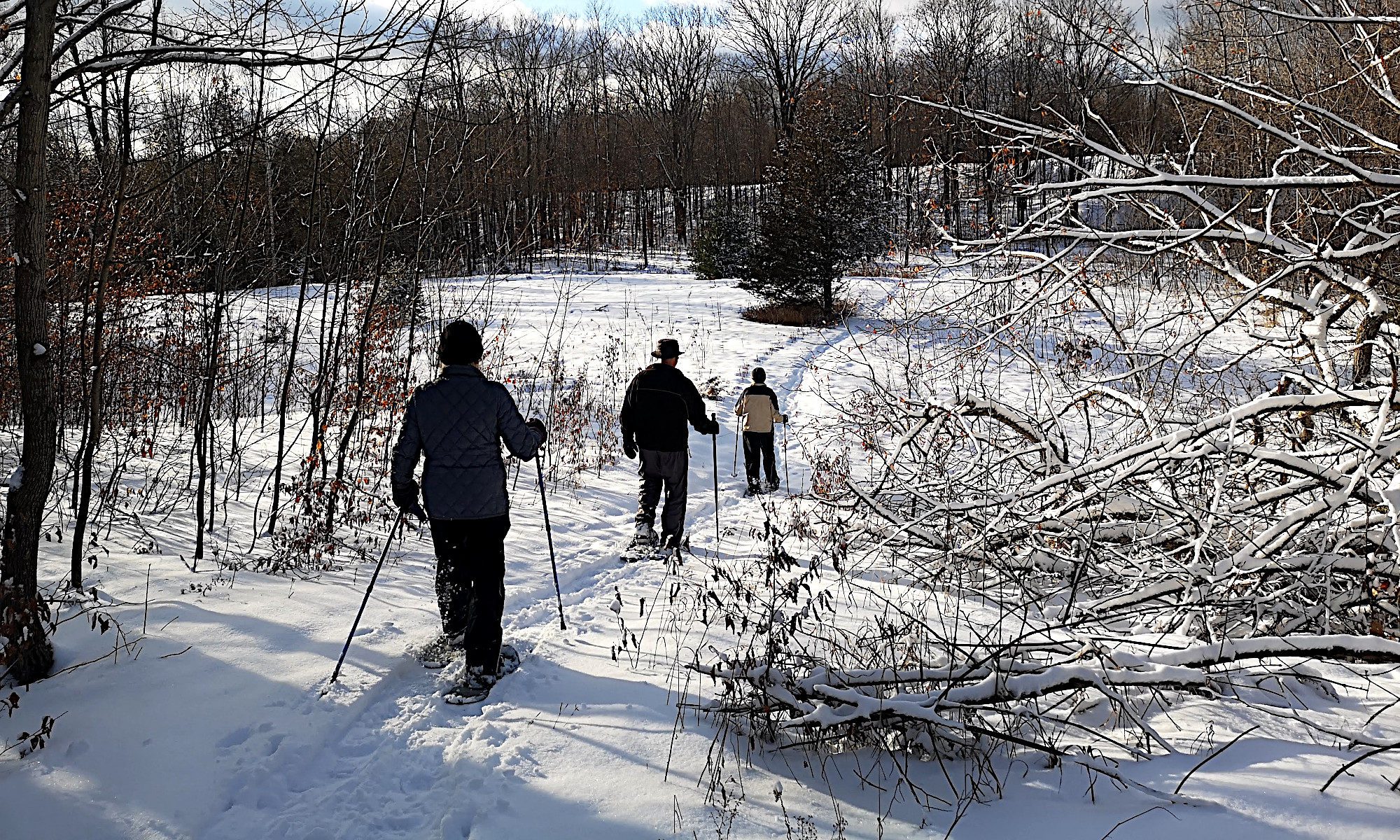
Our year started, as it has for the past several years, with a nice fresh snowfall at The Farm — the rural retreat and four-season playground disguised as the home of our friends Marc and Kris, where we snowshoed and hiked and snapped photos of tree branches so weighed down with snow they could barely hold themselves off the ground. Then it was off for some more winter-wonderland style shots at Dave and Jenn’s place in the countryside near Kingston, where the ravine behind their house looked like the set of the first Narnia movie. All it needed was Tilda Swinton as the White Witch. And we did the usual Winterlude thing in Ottawa, which meant some great canal-skating and beaver tails and maple taffy.

I spent some time in New York in the spring as well, at a social-media conference at Columbia University, which was a first. I got to wander around the wonderful campus, and I also got the cab driver to stop on my way to the airport so I could snap a shot of the classic Dakota hotel near Central Park, where John Lennon lived (and died). I also spent a few days in San Francisco, which was lovely and sunny — and I got some shots of the Bay bridge and the arrow sculpture on the Embarcadero near the ferry terminal. In March, we headed off to Florida with Dave and Jenn and a couple of their kids and sister-in-law Barb — and Caitlin even came with us to keep Zoe company (Meaghan had to stay at university and study). We spent time beach-walking and heron-spotting, and we even got out to a baseball game in Port St. Lucie. Back over on the Gulf side, we did a canopy walk and saw an alligator or two (we obeyed the sign and did not molest them). We also went bowling for Zoe’s 14th birthday, and Becky and I caught an amazing sunset while visiting her aunt and uncle on Siesta Key.

Later that month I was back in New York for a conference, and got to wander along the wonderful High Line park, as well as checking out the World Trade Center memorial for the first time. By coincidence, Caitlin happened to be in New York with some girlfriends from university at the same time, so we had a nice dinner at a fancy Italian restaurant just off Times Square and then we took a ride up to the top of the Empire State building and she stayed over in my room at the Waldorf Astoria. I also got to do one of my favorite things, which is to run through Central Park in the spring.

We also spent a day at Canada’s Wonderland, where we rode rollercoasters like the Leviathan (tallest rollercoaster in the world) until I had to lie down. Pretty soon, it was May 24th and we were off to Golden Lake, where we cleaned up the beach and had some amazing sunsets — and then for Meaghan’s 19th birthday in June, we went to her favorite tepanyaki restaurant and everyone got to try cooking behind the giant hot plate and doing the acrobatics that the chef does, which Caitlin and Meaghan and Becky and Zoe really enjoyed.

At the Farm, we put on a Great Gatsby-style garden party, which involved everyone either finding the appropriate costume in their grandparents’ closet or buying something at the local thrift shop. It was a great success, with champagne and finger sandwiches and croquet on the lawn. I squeezed in another trip to San Francisco for a conference, and then it was time for Zoe’s graduation from Grade 8, which went swimmingly and she looked lovely in her coral (salmon? watermelon?) dress.

In July, it was time to head to Golden Lake and open up the summer office of Ingram Inc., where we spent the better part of the next two months working from the deck and taking breaks now and then to swim and kayak and canoe and float around in tubes. Meaghan spent the whole summer there as well, after getting a job as a chambermaid at a local resort, and Zoe helped out at the summer camp down the road. We spent a little time at Go Home Lake near Muskoka helping Marc and Kris rebuild their dock (and I tried a different kind of outdoor office) and then it was back to Golden Lake. We also spent a weekend at Sand Banks provincial park in Picton with Dave and Jenn as well, which meant even more beaches and sunsets.

As an early 50th birthday present, Becky bought me a beautiful 14-foot touring kayak, which quickly became my new best friend — I spent hours paddling around in it, down the river and into various bays, tracking loons and watching sunsets (I even did a conference call in it once). It got so the loons would start hooting and hollering as soon as they saw me coming. We also spent a great weekend with Gord and Carina at their cottage on Georgian Bay, which involved boat trips and picnicking on rocky outcroppings.

Back in Toronto after the end of the summer, Becky and I got to play a day’s worth of golf for my birthday, and it was like having the course to ourselves — no one around and beautiful weather (and not a bad game either). We also went out for a special anniversary dinner because it was our 25th this year, so we had a great meal at the Auberge du Pommier, a lovely little restaurant that gave us a special dessert in honour of the event — as it turned out, the restaurant turned 25 this year as well.

After that, it was back to San Francisco for another conference, where I rented a lovely one-bedroom apartment in the Bernal Heights neighbourhood west of the Mission — a rental I found using Airbnb, which is a fantastic service that allows ordinary folks to rent out rooms, or even their entire house. I got to run up Bernal Heights to the park at the top of the hill (which was not easy, let me tell you) and while having breakfast in a local cafe I saw the space shuttle fly over on its last voyage.

Since GigaOM bought another company based in New York in the spring, we decided to have an off-site team-building weekend with the staff from the New York office, so we rented a beautiful house in the Hamptons on Long Island, where a bunch of us ran a 5K as part of the Hampton’s Marathon and spent the weekend hanging out and doing team-building things. I also spent some time in New York proper, where I rented another Airbnb apartment in the Flatiron district and got to visit my favourite burger spot: Shake Shack in Madison Square Park.

Pretty soon it was Thanksgiving, which we spent at the cottage in Golden Lake, where the colours were spectacular and I got to spend some more time kayaking around the lake and looking at the trees, and watching a couple of incredible sunsets. After that, it was off to Amsterdam, where GigaOM had a conference, and I got to spend a week wandering around the city looking at all the fantastic buildings (many of which seem to be leaning at a fairly dramatic angle) and strolling by canals and museums and other great Amsterdam-type things. And no, I didn’t do those other Amsterdam-type things 🙂

I also did a whirlwind one-day and one-night tour of Halifax, where I spoke to a group of journalism students, then I had a night’s sleep in Toronto before I had to head to San Francisco again (I know everyone is pretty sympathetic at this point). While Becky spent some time in Ottawa looking after my mom, who was in the hospital for awhile getting some tests done, Zoe and I did some fun Toronto things like spending a day down at the Distillery District, looking at the old buildings and getting some coffee and wandering through shops looking at things we couldn’t afford.

The fall also brought more hockey for Zoe, who has become quite the excellent defenceman/person, and in December we got to spend a great weekend at another farm — this one owned by a friend who is involved in the Mesh conference, a beautiful old homestead with a great old barn and a cozy fireplace. December also brought some surgery for my mom, who had to have a faulty aorta repaired and so spent a couple of weeks in hospital in Ottawa, and Becky and I stayed to help her through it (and I got some shots of the old buildings on the experimental farm near the hospital).

The surgery went really well, and my mom is getting stronger every day, and Meaghan is having a great time at the University of Ottawa (where she switched from linguistics to gender studies), and Zoe is getting some fantastic marks in her first year of high school, and Caitlin is working miracles every day on the pediatric intensive care ward at McMaster Hospital. So apart from some serious jet lag and some health scares here and there, we are as good as we could possibly be as 2012 draws to a close. Hope you and yours are well too, and here’s to a great 2013!

The Tow Center report

There’s been a lot written over the past few years about the future of the news industry — how the rise of the web and social media have disrupted it, and how traditional players like the New York Times and others can recover from this disruption and repair their business models by using things like paywalls. But a new manifesto from the Tow Center for Digital Journalism at Columbia University says that trying to figure out how to repair or rebuild the news industry is a waste of time: the paper’s authors argue that there is no such thing as the “news industry” any more, in any realistic sense, and the sooner both new and existing players get used to that idea the better off everyone will be.

The authors of the Tow report are well known to anyone who pays attention to the future of journalism: Clay Shirky is a journalism professor and author of books like “Here Comes Everybody,” C.W. Anderson is an assistant professor at the College of Staten Island and a frequent commentator on media and cultural theory, and Emily Bell is the former head of digital at The Guardian newspaper and now director of the Tow Center. The paper — which Josh Benton of the Nieman Journalism Lab has done a nice summary of — is a combination of analysis of the current situation, philosophical statements about the nature of the problems facing the industry, and recommendations for how to adapt.

“[This paper] is not, however, about ‘the future of the news industry,’ both because much of that future is already here and because there is no such thing as the news industry any more. There used to be one, held together by the usual things that hold an industry together: similarity of methods among a relatively small and coherent group of businesses, and an inability for anyone outside that group to produce a competitive product. Those conditions no longer hold true.”

Note: This was originally published at Gigaom, where I was a senior writer from 2010 to 2015. The site still exists but the archive is gone.

Continue reading “The Tow Center report”

One big red flag for Facebook investors: Zuckerberg’s iron grip

Facebook’s initial public offering is one of the most eagerly anticipated technology IPOs since Google went public in 2004: It is a launch that values the social network at more than $100 billion, and it has sparked a number of debates about the future of the company, including whether social advertising is effective or not and whether the company is failing to take advantage of mobile properly. But there is another issue investors should be concerned about when they look at Facebook, and it is arguably even more important than any of these operational questions: namely, the iron grip co-founder and CEO Mark Zuckerberg has over the shares of the company.

For someone who only just turned 28, Zuckerberg wields an almost unprecedented amount of power over the fate of Facebook — not just over the votes that go along with shares of the company but also over the board of directors. The secret to this tight grip is buried in the history of the social network and in particular in the advice Zuckerberg received from former Napster founder Sean Parker, who was a mentor to the Facebook founder and at one time was president of the social network. The implications of what he helped Zuckerberg construct are profound and create a substantial investment risk.

Sean Parker helped Zuckerberg take control of the company

Long before Facebook became the giant it is today, with almost a billion users and revenue of more than $2 billion, Parker advised its young CEO that he should do everything he could to hang onto control of his company. This advice was based on Parker’s own experiences at Napster and another company called Plaxo, where he was removed by the board. So when Facebook took its initial funding round in 2005, he convinced Zuckerberg to push for control over two seats on the board of directors. And when Parker left the company that same year (after some bad publicity over a drug charge), he gave Zuckerberg his seat as well.

That gave the Facebook CEO control over three of the company’s five board seats. But that was just the beginning: In 2009, the board (which he controls) created a new class of “super-voting” shares that have 10 votes per share, compared with the single vote normal shares have. Through his ownership of a chunk of these super-voting shares, Zuckerberg controls almost 30 percent of the votes in the company. Plus, he has proxy agreements with a number of other shareholders, including co-founder Dustin Moskovitz, that give him control over their shares as well.

In all, these various arrangements give the Facebook CEO control over the board of directors and about 58 percent of the votes in the company. If Zuckerberg decides to do something, he doesn’t even have to ask for permission from the board or put it to a shareholder vote (or if he does the latter, he knows he can prevail). Investors got a tangible example of what this means last month, when Facebook announced it would be acquiring the hot mobile photo-sharing service Instagram for $1 billion. According to a number of reports, Zuckerberg told the board of directors about this billion-dollar deal later — via email.

Super-voting shares are popular, but are they wise?

The visionary founder who controls the progress of the company he founded with an iron fist has become a Silicon Valley archetype, thanks in large part to Apple CEO Steve Jobs, who was famously ejected from the company he co-founded due to his erratic behavior. He returned later to rescue Apple from certain disaster and transform it into one of the most valuable companies in history, giving every startup founder a reason why he too should be allowed to control every aspect of his company, regardless of things like shareholder rights.

Google also helped popularize the idea of multiple-voting shares, which gave co-founders Larry Page and Sergey Brin and former CEO Eric Schmidt effective control over the company. In Google’s offering prospectus when it went public in 2004, the co-founders argued this kind of arrangement was necessary in order to ensure Google remained true to their long-term vision rather than getting sidetracked by questions of short-term financial value.

A number of other tech companies have chosen this same route, including both LinkedIn and Zynga. They have also made the argument that dual-class shares are necessary to protect the company and its vision from the vagaries of the daily stock market. (What many of these companies don’t say is that such structures also make it a lot harder to acquire the company, something that has made multiple-voting shares popular with media companies such as the New York Times and Washington Post.)

Multiple-voting shares are a double-edged sword

So why should investors be wary of multiple-voting shares? Because while they protect the long-term vision of the founders of a company, they can also protect the founders from the kind of shareholder action that is often necessary when a company loses its way. Yahoo and AOL, for example, have both been the target of lobbying efforts by activist shareholders who argue they have been mismanaged and that their share price has been damaged. If either AOL or Yahoo had provisions like Facebook does, there would be no hope of ever changing anything at either company.

As a number of shareholder-rights groups and activists pointed out in advance of Facebook’s IPO, tapping the public markets for funding is supposed to bring with it certain responsibilities on the part of corporate executives — including a duty to be answerable to common shareholders and for any failure to act in the best interests of those investors. If companies don’t want to abide by those rules, the argument goes, they should remain private and seek funding from banks or private venture-capital groups.

In a recent report about Facebook’s voting structure, the activist group Institutional Shareholder Services said the dual-class structure is “an autocratic model of governance” that makes Facebook “less viable than a competitor whose governance gives owners a voice proportionate to the economics they have at risk.” The group also criticized the growing trend for such super-voting shares, saying, “Facebook appears to have taken the same outdated dance lessons as many other recent tech sector debutantes.”

Having Zuckerberg control 58 percent of the votes at Facebook isn’t likely to be a problem for anyone as long as the company is making smart decisions about what to do with its money and as long as the stock price is going up. But if it starts to go south and Facebook makes some unwise decisions, it will become obvious that such voting structures are a fair-weather friend: They are great to have when things are going well, but they can become a huge liability.

The Ingram Christmas Letter for 2011

As I write this, I find myself torn between loving the warm weather that has made December in Toronto feel more like October — with green grass and warm breezes instead of howling winds and snowdrifts — and feeling anxious because it just doesn’t really seem like Christmas. Global climate change is a harsh mistress. Our year started with a strange omen, included a lot of travel to distant lands (if San Francisco and Greece qualify), saw offspring graduate from various educational institutions, and brough a summer of unparalleled beauty, a couple of mini-vacations at fancy resorts and a hectic fall filled with conferences in two different countries and three separate provinces.

The links below should open in a new window — and if you want to just read the text first, and then look at the pictures separately, they are all in a Flickr slideshow which you can browse at your leisure.

The year began with the usual New Year’s tradition of great food interspersed with a variety of outdoor activities at our friends’ farm near Buckhorn, northeast of Toronto. The activities included snowshoeing around the property, and the great food included my trademark (okay, Marc’s trademark) caviar pie. Then it was back to reality, and the usual kind of outdoor activies that winter brings — such as shovelling the driveway during a massive blizzard. And then came the strange omen: I looked out the window at the back of our house, and there was a shape in the snow on the roof of our shed — a red fox, curled up for a nap in the drift there, nose tucked under its black tail. I thought it was pretty special and took a photo, but he (or she) turned up again the next day, and the next, and the next. We had seen the fox in the neighborhood before, but having it sleep on our shed was a surprise.

Continue reading “The Ingram Christmas Letter for 2011”

Is Jack Dorsey the heir apparent to Steve Jobs?

Before Steve Jobs had even passed away, people had already started playing the “who is the next Steve Jobs” game — trying to come up with names of technology and design visionaries who might be able to don the mantle of the Apple co-founder and CEO. Jeff Bezos of Amazon? Napster and Spotify founder Sean Parker? Those names and others have been floated by industry watchers, but listening to Twitter and Square founder Jack Dorsey at GigaOM’s RoadMap conference on Thursday made me think that he is at least as strong a contender for that mantle (if such a thing even exists) as any of them. Could Dorsey change the way we interact with technology and the world around us in as profound a way as Jobs?

Why do we even need an heir to Steve Jobs? The obvious answer is that we don’t. Jobs was unique, in both positive and negative ways, and the precise combination of those features made him who he was and thus made Apple what it was. No one is going to be the next Steve Jobs because they will have a different combination of strengths and weaknesses, and they may not be as lucky or as smart in specific ways. But when it comes to the role that Jobs played in technology — the role of visionary designer, creator, instigator and disruptor — we need those people more than ever, because visionaries inspire others, even if the things they do themselves don’t always succeed. They change the way we look at the world in fundamental ways.

I haven’t spent a lot of time around Jack Dorsey, but based on his conversation with Om at RoadMap, he clearly spends a lot of time thinking about the big picture behind the technology that he is involved in. So it’s not just about Twitter and how it works — or what it looks like or even how to monetize it — but how it connects us to our own “humanness” as he put it, and enables us to experience things and see through the eyes of others. He described how he found this an incredibly powerful thing during the protests in Iran, and I think others have had a similar response to the events of the Arab Spring and the earthquakes in Japan and Haiti.

And when it comes to Square — the other company that Dorsey is helping to shape and create — it’s not just making payments easier or more efficient that interests him, but how making that easier can help artisans and individuals become fully functioning businesses more easily, and how that could help change society.

Dorsey’s roles with two very different companies have also sparked some comparisons to Jobs, who helped revolutionize animated films with Pixar while also changing the personal electronics industry at Apple (the differences between Square and Twitter are arguably even more dramatic than Pixar and Apple, since Square is a device that people pay for and Twitter is a service). And Dorsey was also forced out of the company he founded, much like Jobs was — after a dispute with former CEO Evan Williams, who funded the company in its early years — and then returned to become the product visionary.

One of the things that is very different about Dorsey and Twitter stems from the fact that Twitter is a service rather than a product. Under Steve Jobs, Apple excelled at product design, but it has been notoriously inept at anything service related: iTunes, to take just one example, is a total mess when it comes to usability and design despite years of evolution, and things like Ping have effectively been stillborn. One of the most powerful things about Twitter, however, is the way in which the service was transformed by its users, with additions like the @ mention and the retweet — features that were never even imagined by its creators. Steve Jobs, by contrast, wouldn’t even let people replace the battery in his products.

From what I can tell, Dorsey also seems to be missing what could charitably be called the “difficult” elements of Jobs’ personality (other people have more blunt terms for it), which are detailed in Walter Isaacson’s biography: the shouting, the merciless humiliation, the ruthlessness even with friends, the crying in meetings, and so on. One of the questions that this description of Jobs raised for me is whether those things were a necessary part of his success as a visionary and designer, or were they simply character flaws? Would Apple products have been the same, or been as revolutionary, if he were a different kind of person.

So is Jack Dorsey the new Steve Jobs? Probably not. But that said, he clearly has a vision about two fairly significant areas of the technology sphere — the way in which even a simple service like Twitter can change the way we interact with each other and distribute information in a digital and connected world, and the way a simple payment service like Square can potentially transform entrepreneurialism and small businesses. And he is thoughtful about the implications of those things in a way that many product or business-focused technology executives are not (he even has a fascination with the application of Zen Buddhist principles to design, as Steve Jobs did).

Dorsey has already altered the media landscape with Twitter — whether he knew that was what he was doing or not. And he is trying to alter the payment landscape as well with Square, which could ultimately help make it easier for entrepreneurs and small businesses to get paid. Whether those changes will be as massive and transformational as the ones Jobs unleashed remains to be seen, but we could definitely use more visionaries.