
When a bra maker got the job of making the first NASA spacesuit

In 1966, when seamstresses at the International Latex Corporation arrived at its new Apollo Suit shopfloor in Frederica, Delaware, they were essentially “taught to sew again from scratch.” And for good reason: Compared to the company’s bras and girdles, the craftsmanship needed to fashion a spacesuit was, in every sense, out of this world. The journey to this point had been improbable for a company whose grand name had initially belonged to a single founder and salesman, Abram Spanel, selling mail-order girdles through magazine ads. It was only thanks to one of Spanel’s first employees — his own TV repairman, MIT dropout Leonard (Lenny) Shepard — that ILC maintained a small “industrial” division researching government contracts. Shepard was optimistic that the firm’s expertise in rubber, nylon, and strapping could provide an answer to work in space. (via MIT Press)
Michael J. Fox and three other co-workers on a 1970’s TV show all got Parkinson’s

Canadian-born actor Michael J. Fox, while working on a CBC sitcom as a teenager, contracted a virus that some researchers say may have caused him to later develop Parkinson’s disease. Fox worked on show Leo and Me in Vancouver in 1977. Researchers studying the degenerative disease theorize that exposure to viruses or environmental toxins can trigger its onset years later. According to Dr. Donald Calne, director of the Neurodegenerative Disorders Centre at the University of B.C. Hospital, Parkinson’s can develop in clusters of people. Fox is one of four Leo and Me workers who have been diagnosed with Parkinson’s, which leads to muscle rigidity, tremors and involuntary movements. Japanese researchers have established that a virulent form of the flu, caused by a virus, can make its way into the same part of the brain that Parkinson’s attacks. (via the CBC)
Note: This is a version of my When The Going Gets Weird newsletter, which I send out via Ghost, the open-source publishing platform. You can see other issues and sign up here.
Continue reading “When a bra maker got the job of making the first NASA spacesuit”Bobby Brown fried chicken in cocaine when he was 10
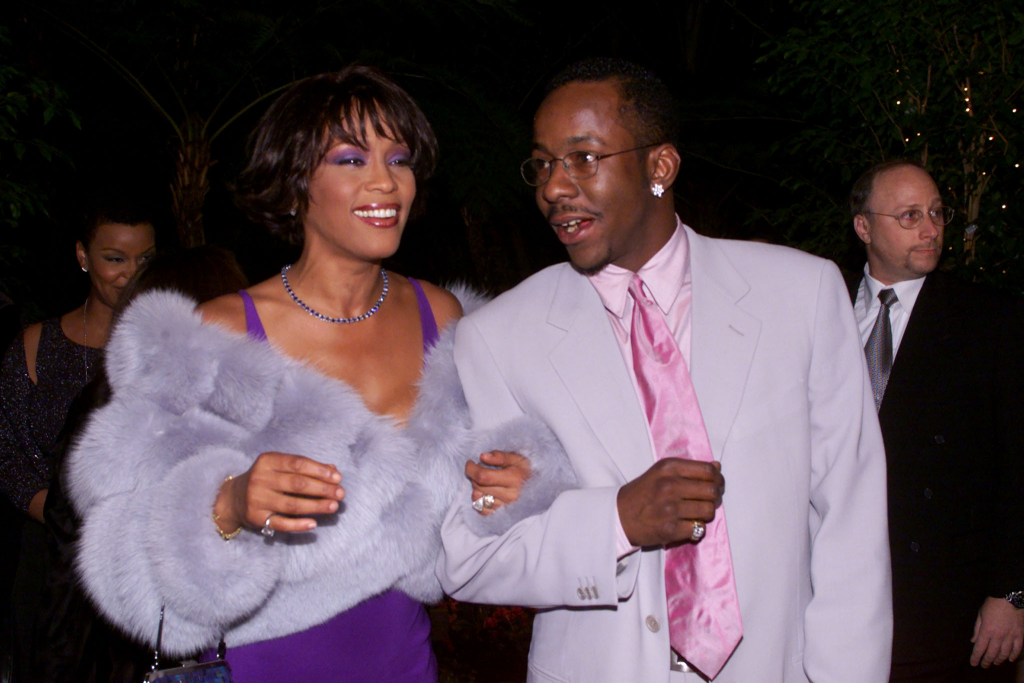
Brown says he was unaware his mother sold cocaine to support the family and while away, he decided to fry chicken, a meal his mother taught him to cook. He grabbed a bag of what he believed was flour to coat the chicken. His mother would later return, elated he took initiative to cook dinner, but soon realized he mistook the bag of cocaine for flour. “I was 10. So I didn’t recognize the strange smell emanating from the pan,” Brown writes. “After I had taken a few bites and feeling weirder with each bite, my mother walked in. With horror she realized what I had done,” he wrote. “I fried chicken in her cocaine — a radical new addition to the family’s culinary offerings. Cocaine chicken.” Brown says his mother never explained to him what he did, but months later he figured it out. (via Vibe)
Dancer with motor neuron disease performs again through a digital avatar

A ballerina with Amyotrophic Lateral Sclerosis (ALS) says she was able to dance again after her brainwaves were used to power an avatar live on-stage in Amsterdam. Breanna Olson, a mother of three, found out two and a half years ago she had ALS, the most common form of motor neurone disease (MND) and which, with no known cure, weakens muscles and over time affects speech, swallowing and breathing. However, using sensors to measure the electrical activity transmitted from her brain, her motor signals could be converted into an digital avatar. Breanna used an electroencephalogram (or EEG) headset to capture her brain activity and specific motor signals associated with imagining certain dance movements. A brainwave interface translating these signals into computer instructions then allowed her to convey which of these movements she wanted her mixed-reality avatar to dance in real-time. (via the BBC)
Note: This is a version of my When The Going Gets Weird newsletter, which I send out via Ghost, the open-source publishing platform. You can see other issues and sign up here.
Continue reading “Bobby Brown fried chicken in cocaine when he was 10”Kentucky cops arrest man for riding a horse while drunk

The driver, Kentucky cops say, had just left a liquor store, smelled of alcohol, and was found “partially slumped over” the controls of his brown vehicle. As a result, Jorge Hernandez, 48, was arrested for galloping under the influence (GUI) through a residential neighborhood in Bowling Green. According to an arrest report, an officer spotted the sagging Hernandez atop a horse around 6 PM Thursday. When Hernandez began to ride on the sidewalk, the cop performed a traffic stop. Hernandez reportedly smelled of alcohol, had bloodshot eyes, and his speech was slurred. He told police that he had just left a liquor store and was returning home. Tied to the horse’s saddle was a liquor store bag, the report states. He was arrested for operating a non-motor vehicle under the influence of intoxicants. The paperwork describes his vehicle’s make and model as “other.” The vehicle’s year is listed as 2024 and its color as brown. The report does not indicate who took custody of the equine post-arrest. (via The Smoking Gun)
Ohio’s “Serpent Mound” still fuels debate as America’s most mysterious earthwork

Located in Adams County, Ohio, the ancient site features a massive, undulating serpent whose coiled tail and gaping jaws have stood as an impressive monument to the Buckeye State’s ancient past, prompting serious investigations by archaeologists that have spanned nearly two centuries. First documented in the landmark work Ancient Monuments of the Mississippi Valley in 1848 by Ephraim Squier and Edwin Davis, the famous site features many peculiarities, including the large oval-shaped feature positioned within the serpent’s open mouth. “This oval is formed by an embankment of earth, without a perceptible opening,” Squier and Davis wrote, noting that the feature “is perfectly regular in outline” and “slightly elevated” while also containing an area of “large stones, much burned once, [that] existed in its center.” (via The Debrief)
Note: This is a version of my When The Going Gets Weird newsletter, which I send out via Ghost, the open-source publishing platform. You can see other issues and sign up here.
Continue reading “Kentucky cops arrest man for riding a horse while drunk”A Masonic lodge in France harbored a mafia hit squad

Twenty-two people went on trial in France on Monday on charges of murder and other serious crimes centred on members of a Masonic lodge accused of running hit squads. Thirteen of the defendants face life imprisonment. Those in the dock include four military personnel from France’s foreign intelligence service (DGSE), two police officers, a retired domestic intelligence officer, a security guard and two business executives. They are accused of the murder of a racing driver, the attempted murders of a business coach and a trade unionist, aggravated assault and criminal conspiracy – all on behalf of a mafia network inside the former Athanor Masonic Lodge in the Paris suburb of Puteaux. Several freemasons from the 20 or so members of the lodge are in the dock. Most of the accused, aged between 30 and 73, have no previous criminal records. (via France24)
He joined Apple as a teenager in 1976 and he is still working there 50 years later

In 1976, Chris Espinosa rode his moped a mile and a half every Wednesday afternoon, parked it and went to work. Just 14 years old, he still had to go to school and didn’t have a driver’s license. But his employer, Apple Computer, had customers who wanted to try its earliest computer, and Espinosa was responsible for demonstrating it. Espinosa’s job has changed many times in the 50 years since. But he still works for Apple. At 64 he is one among an increasingly rare breed in today’s economy: people who have spent all of their lives working for one company. When Steve Jobs and Steve Wozniak signed the documents to start Apple in 1976, Silicon Valley’s fruit orchards hadn’t yet been taken over by office parks. Espinosa became employee No. 8 at the scrappy start-up that assembled computers by hand in Mr. Jobs’s home. (via the New York Times)
Note: This is a version of my When The Going Gets Weird newsletter, which I send out via Ghost, the open-source publishing platform. You can see other issues and sign up here.
Continue reading “A Masonic lodge in France harbored a mafia hit squad”Using AI to write isn’t always wrong and other heresies

I’m a writer, as some (hopefully most) of you know. I’ve been a writer and journalist for more than 40 years now. It’s one of the few things I really know how to do, and it’s about the only way I have ever managed to make any money, so not surprisingly, I am pretty attached to it. As a writer, I think many people assume that I would belong to the “AI writing over my dead body” group in terms of the current debate over artificial intelligence and writing-slash-journalism. These are the kinds of folks behind a recent campaign to convince publishers not to deal with those who use AI: it asks writers to not only renounce AI, and promise they will never use it, but to also refuse to support or do business with writers who do use AI. There’s been a dramatic increase in that kind of sentiment recently, which isn’t surprising, since there seems to have been a pretty dramatic increase in the numbers of writers and journalist who are happy to use AI. I think the important question is: What are they using AI for? And is that defensible?
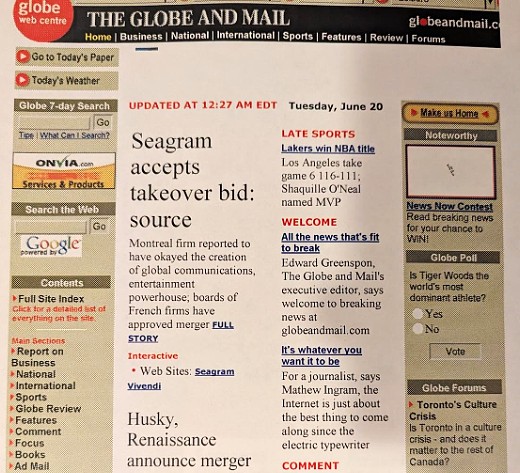
If you believe that everything AI is involved with is worthless “slop,” you should probably stop reading. As with most things (apart from a few exceptions) I think there is a place for most tools when it comes to doing the work, and to me AI is just another tool, much like the printing press or the typewriter or the internet. I’m old enough to remember when people were pretty upset about the internet and the impact it was going to have on creative pursuits or the world in general (no, I don’t remember the arrival of the printing press, contrary to what my kids might think). As one of the first staffers at the Globe and Mail‘s live news site in 2000, I wrote an inaugural column about how great the internet was for writers like me — the ability to have our work read (and commented on) by large numbers of people with little or no friction. Did I regret some of those words after a decade or so online, especially the comment part? Sure I did. But on balance I still think it was and is mostly good. After all, it makes it easy for me to send you this!
I realize that artificial intelligence and everything it involves — the training on data that AI companies don’t have the rights to, for example, or the fact that it sometimes encourages people to believe that they should kill themselves — makes it somewhat different from the printing press or even the internet (although I would argue not as much as some seem to think). Then there’s the whole “will AI kill everyone” question, which I’m not really equipped to answer. But in terms of a tool that can help with writing, or pretty much any other task, I think it makes perfect sense — in certain contexts. Is it going to pollute the internet with slop? Of course. But so have countless human beings over the past few decades. So that’s a difference of magnitude, rather than a difference in kind. Is it going to take some people’s jobs? Of course — just as countless other technologies have, from the automated loom to the colour printer or the electronic calculator. But it could also create new jobs along the way. Will they be as good? I have no idea.
Note: This is a version of my Torment Nexus newsletter, which I send out via Ghost, the open-source publishing platform. You can see other issues and sign up here.
Continue reading “Using AI to write isn’t always wrong and other heresies”Morning visitors
The creator of the SAT exam was an infamous racist

As you read this, hundreds of thousands of high school students across the country are busy preparing for the most important test of their lives so far — the dreaded SAT. The most common college entrance exam has come under fire in recent years for glaring racial disparities, with critics pointing to the racism of its architect, Carl Brigham, as evidence the test belongs in the dustbin of history. Was Carl Brigham a racist? The short answer is yes. The long answer is also yes, and his racism led him to twist his own data to arrive at faulty — and bigoted — conclusions. During World War I, Brigham was tasked with developing psychological tests to measure the cognitive abilities of newly drafted soldiers. There was also a eugenics movement sweeping the country, and Brigham bought into the notion that some races were superior to others. While he viewed Blacks as inferior to whites, this wasn’t his primary concern. Instead, he was focused on the influx of “inferior” white immigrants coming into the country. (via Nautilus)
He ran 500 miles from Colorado Springs to Moab while microdosing psychedelics
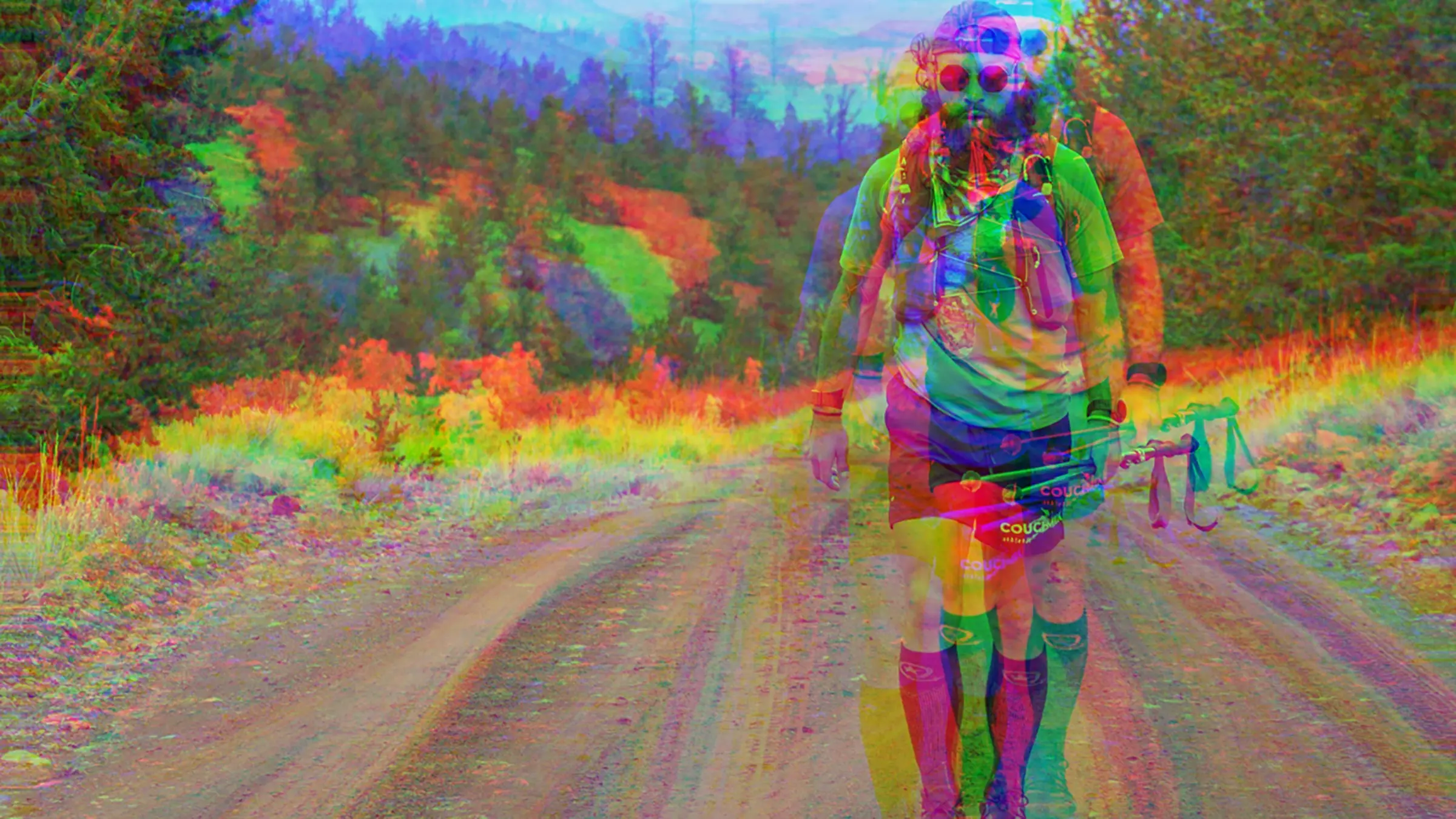
Dante Liberato was somewhere around Olathe, Colorado, on the edge of the desert when the drugs began to take hold. Maybe it wasn’t a chemical taking hold of Liberato, but rather exhaustion from having jogged 241 miles across mountain ranges and river valleys. No matter what it was, a powerful force made him to sit down on the side of an empty road. This moment marked the crux of a seemingly insane personal challenge that Liberato—an ultrarunner, coach, and yes, regular psychedelics user—took on in 2025. Over the course of 11 days, Liberato ran 500 miles from his home in Colorado Springs, Colorado, to Moab, Utah. Along the way, he ingested LSD and psilocybin, a naturally occurring psychotropic found in certain mushrooms. A film crew followed Liberato’s every step for a forthcoming documentary, titled Dante, about his very unorthodox approach to endurance sports. Spoiler alert: Liberato completed the journey, celebrating the feat by eating an ice cream sandwich at a small grocery store. (via Outside)
Note: This is a version of my When The Going Gets Weird newsletter, which I send out via Ghost, the open-source publishing platform. You can see other issues and sign up here.
Continue reading “The creator of the SAT exam was an infamous racist”Spring in Ontario
Two hikers found a can with $300,000 in gold coins inside

A field in an overgrown Czech Republic forest has, for nearly 100 years, served as the hiding place for a secret stash of nearly 600 gold coins and other precious metal goods tucked into a stone wall. But the cache of treasure is hiding no more. Two hikers traversing the Krkonoše Mountains (Giant Mountains) came across the small aluminum can, which had been hidden in a crevice in the wall, and opened it up to find the collection of gold coins. Just a few feet away, they found another hidden cache — this one an iron box holding jewelry, cigarette cases, and other personal items all made from gold. The lucky hikers wound up finishing their trip with an extra 15 pounds of precious cargo. They eventually took their discovery for an assessment by experts at the Museum of Eastern Bohemia. Whoever stashed the treasure may have done so to conceal valuables while fleeing the Nazis’ annexation of the region.(via Popular Mechanics)
This entire family had their stomachs removed and had to learn how to live without one

“What do you mean, you just take the stomach out?” Karyn Paringatai wondered, when doctors first said her stomach had to be surgically removed. Could she still eat? Yes, but differently. What would replace it? Nothing. She would have to live the rest of her life missing a major organ. Paringatai was not actually sick, not yet. Her stomach was fine. But her cousin, just a few years older, had recently died of an aggressive stomach cancer at age 33, leaving behind three children. The cousin’s own mother had died young of stomach cancer. So had her grandmother. So had her sister. To the doctors who saw Paringatai’s cousin in Tauranga, New Zealand, this pattern was hauntingly familiar. The doctors had witnessed the same rare cancer run through a large Māori family near Tauranga. In that family, one woman lost six of her siblings to stomach cancer. (via The Atlantic)
Note: This is a version of my When The Going Gets Weird newsletter, which I send out via Ghost, the open-source publishing platform. You can see other issues and sign up here.
Continue reading “Two hikers found a can with $300,000 in gold coins inside”Climbing Everest has become a magnet for insurance scams

In Nepal, helicopter rescue on high altitude is, by any measure, a genuine lifesaving operation. At high altitude, where oxygen thins and weather changes without warning, the ability to airlift a stricken trekker to Kathmandu within hours has saved countless lives. But threaded through that legitimate system, exploiting its urgency, its opacity, and its distance from oversight, — is one of the most sophisticated insurance fraud networks in the world. Nepal’s fake rescue scam is not new. The Kathmandu Post first exposed it in 2018. Months later, the government convened a fact-finding committee, produced a 700-page report, and announced reforms. In February 2019, The Kathmandu Post published a long investigative report. Last year, Nepal Police’s Central Investigation Bureau reopened the file, and what they found is that the fraud did not stop — instead it was growing. (via Kathmandu Post)
Israel’s mysterious Stonehenge of the East is not alone new research reveals

Israel’s strange Wheel of Ghosts, first discovered in 1968, turns out not to be so unusual after all, as new research combining remote sensing and AI now confirms the presence of many similar sites in the region. Situated in the Golan Heights and composed of 40,000 tons of rock, archaeologists estimate the structure to date back between 3,500 and 6,500 years. Known as the “Stonehenge of the East,” the site’s official name is Rujm el-Hiri, and it is cast in a decidedly new light in a recent paper, revealing many similar structures. Existing interpretations have diverged in their explanations of what the Wheel of Ghosts meant to the people who built it. Those explanations run the gamut of what is assumed of these mysterious ancient sites: a ceremonial space, a burial mound, or an astronomical observatory. However, these interpretations all relied on a major assumption that has proven false: that the Wheel of Ghosts is unique to the area. (via The Debrief)
Note: This is a version of my When The Going Gets Weird newsletter, which I send out via Ghost, the open-source publishing platform. You can see other issues and sign up here.
Continue reading “Climbing Everest has become a magnet for insurance scams”When a fake Cartier and a fake Rockefeller went into business

That fall, with her sights set on even bigger targets, Bartzen headed to Palm Beach and began hanging around with someone who appeared to be a genuine member of the scion class: a much younger man who introduced himself as Matthew Rockefeller. Suddenly, Bartzen and Global Passion Projects, to which Rockefeller signed on, took on a new gloss. Rockefeller, who is 39, told potential event partners that he ran the philanthropy arm of the oil baron’s family. For fees of up to $12,000, Bartzen and Rockefeller promised event sponsors access to a network of 50,000 investors, according to emails. The entrepreneurs agreed to co-host the event, which was scheduled for late January, on the condition that they would not be responsible for any costs. The party was to be held at the Mansion Yacht House, a new waterborne private club. Bartzen assured him she had the money. “The Rockefellers are coming!” she insisted. (via NY Mag)
McDonald’s once tried to create and sell bubble-gum flavored broccoli

It sounds like one of Willy Wonka’s rejected ideas: Bubble gum-flavored broccoli. But the creation was far from fictional: It was a concoction whipped up by the fast-food giant McDonald’s. Chief executive Don Thompson said that the motivation was to create a way to get kids to eat healthier. So why isn’t your local McDonald’s selling bubble-gum flavored brassicas? Apparently adding a sweet flavor to broccoli doesn’t make it any more appetizing to kids, who were confused by the taste, Thompson said. The test came as the fast-food chain was under pressure to create healthier options, while some consumers are shifting to rivals such as Chipotle. Still, McDonald’s isn’t giving up on tweaks to its menu. Instead of candy-flavored veggies, it’s focusing on tactics such as reducing the size of its fry servings and adding low-fat yogurt to its Happy Meals. (via CBS)
Note: This is a version of my When The Going Gets Weird newsletter, which I send out via Ghost, the open-source publishing platform. You can see other issues and sign up here.
Continue reading “When a fake Cartier and a fake Rockefeller went into business”CIA officer says he stopped Iran from getting the nuclear bomb

Chalker told me that he wanted to repair his reputation. He had always been an American patriot, he insisted, and to prove it he was willing to talk publicly, for the first time, about his years of clandestine work for the C.I.A. — which, he said, had “prevented Iran from getting a nuke.” He insisted that he had helped obtain pivotal information that laid the groundwork for more than a decade of American efforts to disrupt the Iranian nuclear-weapons program, from the Stuxnet cyberattacks, which occurred around 2010, to the Obama Administration’s nuclear deal, in 2015, to the U.S. air strikes in the summer of 2025. Chalker told me that, as he understood it, the Pentagon had suggested running commando operations to kill key Iranian scientists, as Israel subsequently did. But the C.I.A. proposed recruiting those scientists to defect instead, as U.S. spies had once courted Soviet physicists, and that he was involved in this program. (via The New Yorker)
These snakes become deadly killers by eating poisonous frogs and absorbing their toxins

Red-necked keelback snakes are highly toxic—mere drops of their pungent yellow poison could blind a mongoose and stop its heart within minutes. But the snakes don’t make that toxin themselves; rather, they steal it from the poisonous toads they eat.After a red-necked keelback (Rhabdophis subminiatus) eats a true toad (a member of the Bufonidae family), the snake’s intestines soak up the toxic bufadienolide molecules from the amphibian’s skin. The toxins are then shuttled into more than a dozen pairs of storage pockets in the snakes’ necks called nuchal glands. Then the snakes act fearless. They rise and jut their necks at mongooses and other would-be predators as if to say, “Go ahead — I dare you.” That brazen attitude doesn’t last, though. If their dinner has been nontoxic recently — poison-free frogs or fish, for example — these reptiles often hurriedly slither away rather than pick a fight they might lose. (via Scientific American)
Note: This is a version of my When The Going Gets Weird newsletter, which I send out via Ghost, the open-source publishing platform. You can see other issues and sign up here.
Continue reading “CIA officer says he stopped Iran from getting the nuclear bomb”Social media may be bad for you but the remedy could be worse
Meta has been found guilty in two separate but related cases involving the alleged harms of its social platforms in the past couple of weeks. In one, a jury found that Facebook and Instagram harmed a young user with features that were addictive and either caused or exacerbated her mental distress. Meta had to pay the relatively paltry sum of $4.2 million (YouTube, which was also part of the suit, had to pay $1.8 million), but the dollar value — a sum that Meta likely makes every 10 minutes on the average day — isn’t the important part. In many ways, the decision was a landmark ruling, and when combined with the second case against Meta it could either trigger or help fuel a firestorm of related lawsuits. In the second case, a jury found that the company failed to protect its younger users from child predators, and Meta was told to pay $375 million.
Governments have been trying for at least a couple of decades to go after social platforms, arguing that they cause significant harm to users, especially younger ones. The problem is that for the last 30 years, digital platforms have been protected by something called Section 230, a clause in the Communications Decency Act of 1997, which in turn is part of the Telecommunications Act. Section 230 has been called “the 26 words that created the internet” (which is good or bad, depending on whether you like the internet or not). Without going into detail, the clause says that digital platforms like Meta and TikTok aren’t responsible for the content that their users post (it also protects people who write blogs and newsletters, but that often gets overlooked). Critics have called it a get-out-of-responsibility-free card, but haven’t managed to kill it.
So how have the courts in the two recent cases against Meta gotten past this restriction? By using an argument that gained currency in the 1990s, during lawsuits against big tobacco companies and asbestos makers. In effect, the lawyers in the cases against Meta didn’t argue that the content on Facebook and Instagram harms people, because that is protected by Section 230 — instead, they argued that the actual structure of those social products is by itself inherently addictive and therefore damaging. In other words, the argument isn’t that Facebook and Instagram are harmful accidentally, or because the company isn’t paying attention, but because they are harmful by design. As the New York Times explained in an analysis of the two recent cases:
Note: This is a version of my Torment Nexus newsletter, which I send out via Ghost, the open-source publishing platform. You can see other issues and sign up here.
Continue reading “Social media may be bad for you but the remedy could be worse”An adrenaline junkie’s quest to become a cocaine kingpin

The British de Havilland DH-112 Venom is one of the most iconic combat jets of the Cold War, with a distinctive two-pronged tail design that stretched out far behind the main body of the aircraft and a striking red and black paint job. That was the aircraft 50-year-old Marty Tibbitts flew one summer afternoon at a Wisconsin air show in July 2018. A millionaire who made his money launching call center businesses, he regularly flew historical aircraft. People on the ground saw the Venom’s wings rock back and forth, then the plane stalled. Tibbitts crashed into a nearby barn and flames engulfed the plane and set the barn and other buildings on fire too. As news of Tibbitts’ death spread, his wife received a phone call from one of those business associates: Tibbitts, it turned out, had a secret life. The pair commissioned the construction of an elaborate underwater drone that would be stuffed with cocaine and latch onto ships with magnets. Tibbitts was the money and brains behind the operation. (via 404 Media)
WNBA players had an ace up their sleeve in pay negotiations: A Nobel Prize-winning economist

After Claudia Goldin became the first woman to win a solo Nobel in economics in 2023, she received hundreds of invitations and requests. She accepted just three.One of them was advising the WNBA players union as the women prepared to negotiate a new labor deal with the league. When Goldin replied via email to Terri Carmichael Jackson, executive director of the players union, “I remember just reading it and screaming,” Jackson said. Goldin had one requirement: She refused to be paid. This month, the two sides reached a collective bargaining agreement that gave Women’s National Basketball Association players a nearly 400% raise. Starting this season, players’ average salary will top $580,000. It isn’t just the biggest pay increase in U.S. league history. It is the biggest increase any union anywhere has ever negotiated. (via the WSJ)
Note: This is a version of my When The Going Gets Weird newsletter, which I send out via Ghost, the open-source publishing platform. You can see other issues and sign up here.
Continue reading “An adrenaline junkie’s quest to become a cocaine kingpin”