Are we living in a golden age for journalism, or is it the Dark Ages? There’s nothing that gets a group of media types going like that question, which is kind of an updated version of a perennial favorite: “Are bloggers journalists?” Obviously, the kind of upheaval that leads to mass layoffs at papers like the Chicago Sun-Times or the loss of $500 million in ad revenue for the New York Times is nothing to sneeze at.
But it’s important to take note of the good things that the web has brought as well — and the best is that journalism has been freed from its confines, and is available to anyone, anywhere, at any time. And that can be very, very powerful.
Everyone likes to point out when this state of affairs fails in some way: like when Reddit users identified the wrong man as the Boston bomber in 2013, for example, or when a network of media sites perpetuate obvious hoaxes and misinformation because they care more about clicks than the truth, something Craig Silverman described in detail in his recent report for the Tow Center for Digital Journalism at Columbia University.
Note: This was originally published at Gigaom, where I was a senior writer from 2010 to 2015. The site still exists, but the archive has been taken down.
Craig Silverman, the author of a book about journalism and fact-checking called Regret The Error and a column by the same name at the Poynter Institute, has come out with a major report on the problem of online hoaxes and misinformation, a study he did for the Tow Center for Digital Journalism at Columbia University. It is an impressive survey of how the desire for pageviews and online “engagement” compels many online media outlets to distribute fake news.
In the pre-amble to his report, Craig (who I should note is a friend) points out that while we usually expect news organizations to disseminate “quality, accurate information” about the world around us, many media companies — and not just digital upstarts but traditional ones — persist in distributing questionable information, even when they suspect it is false: ”News websites dedicate far more time and resources to propagating questionable and often false claims than they do working to verify and/or debunk viral content and online rumors. Rather than acting as a source of accurate information, online media frequently promote misinformation in an attempt to drive traffic and social engagement.”
Recent examples of hoaxes are legion, and many of them have been debunked on a site that Craig started called Emergent.info — an attempt to create a kind of crowdsourced verification engine that can latch onto hoaxes and determine quickly whether they are true or not. From snow on the pyramids in Egypt to a woman who allegedly had three breasts, every month or so seems to spawn a fresh batch of questionable news reports, many of which show up on some of the leading news websites such as CNN and even Reuters.
As Craig notes in his report (which I encourage you to read if you care about this topic), hoaxes and rumors are not new to journalism — there have been outlets that specialize in that for as long as there have been newspapers, whether it’s the British tabloids or the National Enquirer. But a combination of factors have led to the explosion of misinformation we see all around us, including the rise of the social web and the 24-hour news cycle. Silverman uses the example of the disappearance of Malaysian flight 370:
”The drive to fill the empty space with something — particularly on cable news — was partly human nature, and also partly dependent on the need to meet the public’s insatiable demand for information. All of us — journalists and the public — sought to understand what had happened. But facts were sparse. So we engaged in collective sensemaking and rumor propagation to fill the void.”
Fake news goes viral
In effect, we are all CNN now: Every website that wants to attract an audience, no matter how large or how small, feels the overwhelming pressure to be first with a news report — regardless of how questionable it might be. And the more salacious or titillating that report is, the more likely an editor is to hit the publish button, and to hide his or her doubts behind a question-mark headline or the phrase “reports say.” And then many of those sites will double down on this strategy by running stories about how their initial reports were false.
Occasionally, the tension between wanting to be first with a report that people might click on and wanting to be accurate bursts out into the open. In his report, Silverman mentions a discussion in 2013 between Gawker founder Nick Denton and one of his then-writers, viral specialist Neetzan Zimmerman — who at the time was responsible for posts that drove tens of millions of unique visitors to the site, by reporting on whatever was going viral on dozens of social networks. At one point, Zimmerman says:
”Most viral content demands from its audience a certain suspension of disbelief. The fact is that viral content warehouses like BuzzFeed trade in unverifiable schmaltz exactly because that is the kind of content that goes viral. People don’t look to these stories for hard facts and shoe-leather reporting. They look to them for fleeting instances of joy or comfort. That is the part they play in the Internet news hole.”
Who cares if it’s true?
As part of his report, Silverman talks about the psychology behind why we all participate in distributing hoaxes and rumors and questionable information — and we definitely all do it, even journalists. I freely confess that I have retweeted news stories or headlines or reports that I haven’t verified, even though I am regularly humiliated for doing so. Usually it’s because I am in a hurry, and the report seems so interesting that I don’t bother to check.
In many cases, we re-publish and distribute these reports because on some level we want them to be true. We want to believe that a woman who posed for a photo in Iraq with a rifle is single-handedly leading a battalion against the forces of ISIS. Why? Because it would make a great story. And that’s why the single best advice for journalists — or anyone else, for that matter — when it comes to news is “If it seems too good to be true, it probably isn’t.”
This photo shows a female fighter known as the Angel of Kobane, who allegedly killed hundreds of ISIS soldiers
In other cases, however — and I would argue that this is a much larger problem than media companies redistributing false information — the vast majority of people simply don’t care whether a report is true or not. They are going to share it anyway, because it is funny, or touching, or creepy, or disturbing. In other words, it sparks some kind of human emotion. Fusion writer and former Reuters columnist Felix Salmon described this well in a piece he wrote in 2013: ”The reasons that people share basically have nothing to do with whether or not the thing being shared is true. If your company was built from day one to produce stuff which people want to share, then that will always end up including certain things which aren’t true.”
The lines have blurred
This is the one big issue with attempts at crowdsourced verification, whether it’s Emergent.info or Facebook’s recent announcement that it is trying to crack down on hoaxes that get spread via the social network: Facebook’s attempt in particular relies on people to click a button and flag something as a potential hoax — but most people are never going to do this, not just because it takes effort on their part, but because they probably don’t even care whether the report is true or not. They will share it anyway.
In the old days, when media came to us via certain distinct channels — a newspaper, a TV network — it was easy to distinguish fact from entertainment, or gossip from truth. Certain outlets could be trusted, and others couldn’t. But now, the media we consume comes at us from all directions, and the original source isn’t always obvious. And factual news content blurs into entertainment content until everything looks the same.
In effect, we are all trying to figure out whom to trust and when, and the barriers between us and the sausage-making process known as journalism have been removed. That means it’s not just up to media organizations to fix this problem — although they definitely play a major role — it’s up to all of us as news consumers.
Almost every week, it seems, we have a new case in which social platforms and media outlets — which are increasingly becoming the same thing, in many ways — are faced with a difficult choice: Should they post that video of someone being beheaded, or some other horrible thing? Or should they save users and viewers from seeing it by never publishing it, or taking it down if it’s posted? In the most recent case, YouTube chose to remove a video of a Jordanian pilot being set on fire by ISIS, while Fox News published it.
The argument in favor of not publishing such videos — or taking them down when they are posted — is fairly obvious: Namely, that it’s horrific, and many people will be offended by seeing it, especially the family and friends of the victim. Also, these videos are essentially recruiting tools for ISIS, and so many argue that by publishing them, Fox News and others are aiding the enemy.
Assuming these things are true, what justification could there be for arguing that media outlets should publish them, or that YouTube and Twitter and Facebook are wrong to remove them? At the risk of agreeing with Fox News, I think there are a couple of good reasons. One is that there’s a public interest in allowing free speech, even speech we disagree with or find abhorrent. In fact, the real test of our commitment to this principle is whether we defend someone’s right to say offensive things.
Freedom of speech
One common response to the free-speech argument is that platforms like Twitter and YouTube and Facebook are private companies, and therefore they don’t really have any commitment to uphold free speech, because the First Amendment only applies to actions taken by the government. But this doesn’t really hold water for a number of reasons: for one thing, freedom of speech is a principle many believe is worth upholding even when it doesn’t apply to government — that’s why there were “Je Suis Charlie” marches.
Papers with ‘I am Charlie’ displayed are left near candles at a vigil in front of the French Embassy following the terrorist attack in Paris on January 7, 2015 in Berlin, Germany.
Also, media outlets like the New York Times are private companies just the same as Facebook is, and yet most people see these traditional media entities as having a public duty to freedom of information and free speech. So why doesn’t YouTube have the same duty? Why do we complain when the New York Times hides important information, but we don’t see it as a breach of social responsibility when Facebook takes down pages with information about Syrian chemical weapon attacks, or breastfeeding videos?
There’s a clear risk to handing over much of our free-speech rights to private platforms like Facebook, or even Twitter — a risk that critics like Jillian York of the Electronic Frontier Foundation and Rebecca MacKinnon of Global Voices have written about. How do we know what they are removing, or why? You may agree with their decision to not show a beheading video, or to filter Google searches so that “How do I join ISIS?” doesn’t come up, but what else are they hiding from you for your own good? You don’t know.
A duty to be informed
But free speech isn’t the only reason why I think we should be pressuring YouTube and Facebook not to remove this kind of content. The second reason was summed up well by Sylvie Barak — when I asked on Twitter whether such videos should be banned. She (and several others) argued that it is our duty as citizens to be as informed as we can be about the behavior of groups like ISIS, especially when we are committing significant military resources to fighting them:
@mathewi also, during the Holocaust, many Germans claimed they “didn’t know” the horrors of the death camps. With ISIS, we know.
Piers Morgan made essentially the same argument in a post he wrote about why he forced himself to watch the video of the Jordanian pilot being set on fire: he said he felt it was necessary in order to fully appreciate the barbaric nature of ISIS — something he said wouldn’t be accomplished by just reading a description of the incident. A writer with the Times of Israel made a very similar casein a piece she wrote about watching the video.
My friend Andy Carvin wrote a post recently in which he talked about wrestling with the issue of whether to link to or embed this kind of content — something he ran up against during his time reporting on the Arab Spring uprisings. Such behavior is horrific, he said, and yet there are dozens of cases in which media entities have made the decision to show similar things: naked children running from U.S. napalm attacks on Vietnam, for example, or American soldiers dead on a beach.
The argument in these cases is that there is a social duty that trumps the digust such images produce: that people need to see this kind of behavior in order to appreciate what is happening in the world — either what is being done to our citizens by others, or what we are doing to someone else. Isn’t that a duty that should apply to Twitter and Facebook and YouTube as well as the New York Times? And if not, why not? If you want to see the video in question, there’s a Fox News version here.
I’ve been fascinated with the work of British investigative blogger Eliot “Brown Moses” Higgins for some time now, in part because he is a classic example of how someone with the right skills and motivation can use the social web to function as a journalist with little or no professional training. Last year, Eliot created a site called Bellingcat to build on the work that he and others are doing around real-time verification, and now the team has launched a project designed to develop a crowdsourced database of military activity in Ukraine.
Higgins and Bellingcat have been working on identifying and cataloguing movements of armored vehicles, troops and other activity in and around Ukraine ever since Russia started interfering in that country and then subsequently annexed the Crimean peninsula. In one of the site’s major efforts to date, it used social media and various other tools to help confirm that Malaysian Airlines flight MH17 was taken down by pro-Russian separatists with a BUK M1 missile launcher last July.
Real-time verification
The site did this using much the same process that Higgins (whom I consider a friend) used when he was the first to confirm that the Syrian government had used cluster bombs against its own people in a series of attacks. By correlating images and video clips — which in many cases were posted by militant groups themselves — with locations from Google Earth and other sources with data about the area and military hardware, Higgins was able to establish how the attacks occurred, and the specific types of weapons that were involved.
For the Ukraine project, Bellingcat has created a real-time database of Russian and Ukrainian military movements, with photos and geographical location information, and has opened that database up for anyone to contribute to. For verification, the team is using its own expertise as well as a service called Checkdesk, a live-blogging platform that was started by social-technology group Meedan and won a Knight Fund challenge last year. And the data behind the project is all being hosted publicly through a site called Silk, which allows anyone to see, embed and potentially even modify the data.
As a blog post at Bellingcat describes, the project was jump-started with the data that Daniel Romein put together while trying to confirm when and how Flight MH17 was attacked. But Bellingcat team member Veli-Pekka Kivimäki says the site didn’t want to just post a photo or location every time there was a new confirmed sighting of troops or vehicles in Ukraine — it wanted to create a database that would grow and evolve with each new piece of information.
In an email message, Eliot said the project brings together a bunch of things he has been trying to do since he started the Bellingcat site, such as giving others who want to develop the same kinds of skills the tools to start learning with: ”By using Checkdesk, we hope to build a community of open source and social media investigators, helping them build their skills and knowledge by participating in a live, on-going project. We’re collecting, verifying, and presenting the information in an as open way as possible.”
Using Silk as a data platform means the information about military activity and identification of vehicles and weaponry can be continually updated, Higgins said. And because of the way Silk works, anywhere the representations of that data are embedded — whether as maps or image galleries — will automatically be updated when new information is added.
“There’s already a lot of people working on collecting and geolocating these videos, so we know there’s plenty of information out there already, it just needs to be collected in one place,” Higgins said. Bellingcat team member Kivimäki notes in the blog post that the hope is to “build a large data set that can be mined to make entirely new discoveries.” So, for example, a group of vehicles was seen travelling towards the Donetsk region in June, and similar vehicles were seen in Ukraine the same day — were they the same ones?
The data hosted in Silk is broken down into three categories: Sightings contain links to whatever media is available — whether it’s photos or video — along with data like location, type of equipment, etc. These can also be grouped. Another category is equipment, which contains a list of the different kinds of weapons and vehicles that have been seen. And the “unique units” category collects items that have been conclusively identified, via licence plate or other ID.
Plenty of media outlets are tracking and reporting on what’s happening in Ukraine — but Higgins is the only one I can think of who is taking a completely open approach, not just with his reporting, but with all of the images and videos and geographical data related to that work, to the point where anyone can embed and/or contribute to it. That’s a model more media companies could stand to adopt, in my view, and a great example of the benefits of crowdsourced verification and networked or “citizen” journalism.
No one seems to like web comments any more, at least not in the traditional media anyway. Websites like Reuters and Re/code and Popular Science and Bloomberg have gotten rid of them, and plenty of media insiders have been cheering this movement on, since they see comment sections as cesspools. So it’s nice to hear someone like Guardian digital editor Aron Pilhofer say killing off comments is a “monumental mistake.”
In a talk at the News:Rewired conference in London, Pilhofer — who used to run the digital team at the New York Times, before joining the Guardian last year — said that many traditional newsrooms are failing to take full advantage of the web’s ability to create a two-way relationship with readers, and that this is a crucial element of what journalism has become in a digital age. As he put it: ”I feel very strongly that digital journalism needs to be a conversation with readers. This is one, if not the most important area of emphasis that traditional newsrooms are actually ignoring. You see site after site killing comments and moving away from community – that’s a monumental mistake…. readers need and deserve a voice. They should be a core part of your journalism.”
Open journalism
Pilhofer talked about how the Guardian looks at its audience, which is as a partner in its journalism, through projects like Guardian Witness — a site where readers can suggest story ideas and also become involved in the reporting of them — which emerged from its repeated experiments in “crowdsourcing.” For the British paper, the concept of “open journalism” as a dialogue between reporters and readers has been a central part of its mandate under outgoing editor-in-chief Alan Rusbridger.
Alan Rusbridger, Editor in Chief, The Guardian paidContent Live 2013 Albert Chau / itsmebert.com
The fact that I agree whole-heartedly with Pilhofer probably won’t come as a surprise to anyone who has been reading Gigaom over the past few years: I’ve argued repeatedly that real and ongoing engagement with readers — which involves more than just a passive “Here’s our content, please click on it” kind of relationship — is a crucial part of what journalism is now, in part because this trusted relationship with readers is the only real asset that media companies have left to monetize in an increasingly competitive landscape.
Projects like Guardian Witness are the kinds of things that all media companies should be doing more of, Pilhofer said, because reader engagement is “a huge resource we are largely ignoring” as an industry. That’s the bottom line: not so much whether a newspaper or news site has comments or not, but whether it is trying to reach out to its readers in any real way and make them part of its journalism. Or do they just see the audience as a giant click factory?
All readers matter
Whenever I try to make this point, someone inevitably says that of course they want to have a relationship with their readers, but comments aren’t the way to do it, because they are just a cesspool of bad behavior — and/or because the people who post in the comments aren’t their real readers, as Bloomberg editor Joshua Topolsky argued in an interview about the site’s redesign: ”You’re really talking about less than one percent of the overall audience that’s engaged in commenting, even if it looks like a very active community. In the grand scheme of the audience, it doesn’t represent the readership.”
Topolsky’s is a common response to comments: “Those people aren’t our real readers, so we can afford to ignore them, and pay attention only to the people who choose to be on the social networks that we frequent, like Twitter and Facebook.” But what about the people who don’t want to have their comments tied to their identity on Facebook — or the readers who choose not to belong to those social networks at all? They in effect become second-class citizens, whose opinions or input aren’t wanted or valued.
On top of that problem, the readers who are on those networks still have to seek out the commentary on the stories they are interested in discussing. Tools exist to pull responses from Twitter and Facebook back into a comment section on a news site, but few publishers use them. It seems that most would rather outsource their commenting — and by extension, their relationship with their readers — to these third-party networks.
But comments are unfixable, right? Or at least, without spending huge amounts of time and resources on them. That’s another common response when anyone proposes that they not be killed off. But some sites have shown that it is possible to improve them without an enormous resource commitment: Digiday wrote recently about how comments at Salon improved dramatically once someone started to pay attention to them, and took a few steps to encourage good behavior.
Comments aren’t the ultimate expression of community or a relationship with readers by any means. Social networks are also very powerful tools in different ways. But if you can’t figure out how to engage with your readers and build a community of some kind on your own website — around your own content — how can you expect any of your readers to take your commitment to that relationship seriously?
Not surprisingly, the announcement by veteran political blogger Andrew Sullivan that he is retiring from active duty sparked a firestorm of blogging-related responses (including one from me) in which many argued that the days of the lone blogger are over — just like the days of the cowboy or the gentleman adventurer are over. Technology analyst and blogger Ben Thompson begs to differ, however: he says his site is doing better than ever, and that his success is proof that a subscription-based niche model for publishing can work.
I’ve written about Thompson a number of times before, because I think his attempt to build a business around just his writing is an interesting one: he launched his site, Stratechery, in April of last year as a fairly unknown blogger — certainly not a household name, even in tech circles — with a tiered “freemium” subscription plan that was based primarily on long, analytical blog posts and a daily newsletter with similar content.
Within about six months, he had over a thousand subscribers paying him $100 a year for access to his newsletter (the shorter daily posts on the website are free). That meant an annual revenue run-rate of about $100,000 — enough to make it a living, along with some speaking and consulting, and tentative proof that a “thousand true fans” model like that envisioned by Wired editor Kevin Kelly could actually work on a practical basis.
Niche readers will pay
In a response to the “blogging is dead” meme that was triggered by Sullivan’s announcement, Thompson says that he just passed the 2,000-subscriber mark, which means he now has a revenue run-rate of about $200,000 a year (the “churn” rate, or the rate at which subscribers drop off, is less than 10 percent he said). And this proves a niche model that serves a specific interest group will work, Thompson argues — as well or better than a model that relies on mass advertising revenue.
”I am, of course, acutely aware that there is a tradeoff when it comes to the subscription business model: by making something scarce, and worth paying for, you are by definition limiting your number of readers. Stratechery, though, serves a niche, and niches are best served by making more from customers who really care than from milking pennies from everyone.”
In fact, Thompson argues — and I agree — that Sullivan’s own success helps prove this case as well: in just a year, the Daily Dish blogger managed to convince more than 30,000 subscribers to contribute money, and by last year was pulling in close to $1 million in revenue solely from subscriptions. That may look sad compared to the revenues of a site like BuzzFeed or Vox, but it’s an amazing success for a small blog.
The core of Thompson’s argument is that the more niche and targeted your content is, the better off you are likely to be with a subscription model (The Information, a business and technology site started by former Wall Street Journal reporter Jessica Lessin, is another good example). Sites like Vox and BuzzFeed have to go broad, Thompson says, but that ultimately means that advertising revenue is your only real option, and making that work requires hundreds of millions of pageviews (unless you go after a very specific topic niche like Daring Fireball blogger John Gruber does).
In a sense, the blogging world — or even the world of online publishing as a whole — has bifurcated to create what I call a barbell effect: sites or even publications like newspapers that are huge and broad and have powerful brands will likely succeed, because they can make advertising work. And those that are small and targeted (either by topic or by geography) will likely also be fine. Everything in the middle, however, is in for a world of pain.
Vox’s Ezra Klein and BuzzFeed’s Ben Smith may argue that size and scale is the only route to success, says Thompson, but that isn’t the case — there is room for the one-man (or woman) blogger as a lifestyle business as well:
”I almost feel compelled to note that my conclusion – and experience – is the exact opposite of Klein’s and all the others’: I believe that Sullivan’s The Daily Dish will in the long run be remembered not as the last of a dying breed but as the pioneer of a new, sustainable journalism that strikes an essential balance to the corporate-backed advertising-based scale businesses that Klein (and the afore-linked Smith) is pursuing.”
Not everyone will be able — or will even want to — put in the kind of work required to maintain such a site, as Thompson admits. After all, Sullivan’s departure didn’t come because his model wasn’t working, but because he was simply worn out. But for those who do want to pursue this individual model, the Stratechery blogger argues that the potential for them to do that, and to be successful at it, is larger than it has ever been.
All it takes is the retirement of one blogger — namely, Andrew Sullivan, founder of The Daily Dish and long-time thorn in the side of the liberal blogosphere — and the social web explodes with a mixture of praise, recriminations, eulogies for the death of blogging as we know it, and righteous indignation about whether he was one of the first or not. I don’t think Andrew’s departure is the end of the world, but I confess that it did make me stop and think about the nature of blogging, and where it stands now.
One of the reasons it made me think is that Andrew (who I consider a friend) said he decided to stop blogging in part because the pace of publishing multiple items a day had worn him down after 15 years, and he was getting too old for such things. As I looked through his bio, it occurred to me that I am a year older than he is, although I have only been blogging regularly for about 10 years or so. But enough with the self pity!
The other thing that got me thinking was the wide variety of reactions to Andrew’s decision: some said it was about time, since he had become a parody of himself, while others said they would miss his willingness to debate. Some said blogging as we know it died a long time ago, when blogs started to become businesses (as Gigaom and many of its contemporaries did). But others said that the spirit of blogging lives on, through people like blog pioneers Dave Winer, and Jason Kottke, and Andy Baio.
Note: This was originally published at Gigaom, where I was a senior writer from 2010 to 2015. The site still exists but the archive of old posts has been removed
All it takes is the retirement of one blogger — namely, Andrew Sullivan, founder of The Daily Dish and long-time thorn in the side of the liberal blogosphere — and the social web explodes with a mixture of praise, recriminations, eulogies for the death of blogging as we know it, and righteous indignation about whether he was one of the first or not. I don’t think Andrew’s departure is the end of the world, but I confess that it did make me stop and think about the nature of blogging, and where it has gone, or is going.
One of the reasons it made me think is that Andrew (who I consider a friend) said he decided to stop blogging in part because the pace of publishing multiple items a day had worn him down after 15 years, and he was getting too old for such things. As I looked through his bio, it suddenly occurred to me that I am a year older than he is, although I have only been blogging regularly for about 10 years or so (I had a website that I posted links to before that, but didn’t think of it as a blog). But enough with the self pity!
Blogging as business
The other thing that got me thinking was the wide variety of reactions to Andrew’s decision: some said it was about time, since he had become a parody of himself, while others said they would miss his willingness to debate. Some said blogging as we know it died a long time ago, when blogs started to become businesses (as Gigaom and many of its contemporaries such as TechCrunch and Read/Write Web did). But others said that the spirit of blogging lives on, through people like blog pioneers Dave Winer, and Jason Kottke, and Andy Baio.
BuzzFeed editor-in-chief Ben Smith is one of those who argues that blogging is gone forever, a case he advanced in a long (blog) post in which he described his own adoption of the medium as a way to rise up through the media ranks as a reporter, using early political bloggers like Josh Marshall (who hasn’t retired, but continues to run Talking Points Memo) and Sullivan as his assignment editors, pursuing stories that they were interested in. But in the mid-2000s, he says, things had already started to fall apart:
[blockquote person=”” attribution=””]”First, Josh Marshall made a rational decision that destroyed these silent assignments and ultimately undercut, in a way, the influence that he and the others wielded. He started building his own aggregation, and then reporting operations, linking first to their own back page, capturing the audience, and sending a trickle rather than a flood of traffic.”[/blockquote]
In other words, Ben is saying that some bloggers stopped thinking as much about being part of a larger ecosystem — one in which they linked to and sent traffic to other bloggers, and in turn relied on their resources and links — and started thinking about becoming their own independent media entities instead. In effect, they turned inwards, and became more concerned with creating their own content and building up their readership, and turning that into a business.
Conversation vs. viral
At Vox, co-founder Ezra Klein talks about something else that he thinks helped accelerate this transformation: namely, the rise of the social web, and platforms like Twitter and Facebook. In a market where the most important thing is to have your content “go viral,” he argues, there is less and less value in what blogs used to specialize in, which was a kind of multi-threaded, networked conversation (and the gradual decline in value of blog comments has arguably been a part of the same phenomenon).
”At this moment in the media, scale means social traffic. Links from other bloggers — the original currency of the blogosphere, and the one that drove its collaborative, conversational nature — just don’t deliver the numbers that Facebook does. But blogging is a conversation, and conversations don’t go viral. People share things their friends will understand, not things that you need to have read six other posts to understand.”
In a piece for The Daily Beast, another early blogger whose opinion I respect — Ana Marie Cox, the founding editor of the Gawker blog Wonkette — writes about Andrew’s decision as mostly being a stylistic choice, since he will presumably continue to write in other forms. She also says that she never really understood why there had to be a specific term for writing online. “A blog is a tool or a medium, it’s not a thing one does,” she says. In other words, it was just a term for a specific form or style of writing.
The voice of a person
I’m not sure I agree with Ana Marie, however. The blogs that I have always liked, and continue to like — like Jason’s or Andy’s or John Gruber‘s, or Union Square Ventures’ founder Fred Wilson’s blog, which is a classic of the genre — all conform to Dave Winer’s description of blogging as being “the unedited voice of a person.” That lack of a filter, and the back-and-forth with other bloggers that usually resulted, was what made blogging magic for me, and still does, even though it is much less common than it used to be.
But where I think Ana is right is that these elements of what we called blogging are all around us now, in a thousand different ways. When blogs first showed up, there was no other economical way to write and share your thoughts and hear from other writers or readers, but now they are everywhere. We can tweet and Snapchat and Instagram, and post things to Facebook or Google+ or Medium or dozens of other places. As she puts it:
”Today, the advantages and limitations that shaped blog writing into an even notionally recognizably form don’t exist. Blogging was once the fastest form of one-to-many publishing available; today, there’s a kaleidoscope of options: Facebook (which in the early days of blogging was still limited to people will specific .edu addresses), Instagram, Vine, Twitter, Snapchat, things the kids are using that I haven’t heard of.”
Blogging is everywhere
Clinging to a specific form like blogging is an anachronism, Ana argues — like wearing spats, or driving a Model T roadster when there is a perfectly good Porsche in the garage, or referring to driving as “Model T-ing.” And she has a point: publishing on Medium or Facebook is as easy as blogging ever was, and probably has the chance to reach orders of magnitude more people. Newspapers like the New York Timeshave done away with many of their blogs, and incorporated that content into the paper.
At the same time, though, I miss the days when you could reliably find the writing or thinking of a specific person in one place — their blog. And as I mentioned in a previous nostalgic look back at the “good old days,” one of the best parts of that era was that you owned your own real estate, rather than renting it from Facebook or Twitter or Medium. That’s why I enjoy movements like the Indie Web, which is trying to recover some of that, and the connectedness that the early blogosphere shared.
Ana is right that the spirit of blogging — the desire to share your thoughts or links or commentary with the world, in something approaching real time — lives on, and in fact is far more widespread and available than it ever was. And that’s undoubtedly a good thing (even if it has led to an alarming increase in noise). But it can’t stop old farts like me from getting a little misty-eyed when someone we admired decides it is time to hang up their blogging tools and put the Model T back in the garage.
Historically, new-media ventures haven’t triggered the same kind of frenzied stampede of venture investors as other online businesses, in part because their profitability and scalability remains very much in question, but the last six months have seen an almost unheard-of amount of money pouring into media companies. It’s not like anyone is buying them for $22 billion, the way Facebook did with WhatsApp, but there’s no question that some very large — and potentially risky — bets are being placed.
The latest deals were announced on Wednesday by Mashable, which said it has closed a new round of financing worth $17 million — bringing the total amount it has raised so far to $31 million — and Business Insider, which has pulled in $25 million from a group of venture investors, putting its total investment backing to date at almost $60 million. Both companies say their readership and revenues are growing at a rapid pace.
Traditional media buys in
One interesting thing about these announcements is that the lead investor is both cases is a traditional media entity: at Mashable, it’s the venture-capital arm of Time Warner, the media conglomerate which spun off its magazine unit last year, and in Business Insider’s case it’s German media giant Axel Springer, which owns a number of leading German newspapers and magazines. Existing media also play a role in some of the other major deals that have closed in the past six months or so, which include:
Vice: Raised $250 million from A&E Networks for 10 percent of the company in August of last year, plus another $250 million from the VC fund Technology Crossover Ventures, both of which valued the company at about $2.5 billion. Vice is expanding its foreign reporting as well as its video operation, and is also one of the leaders in the “native advertising” market, with a custom-content unit that creates branded content for advertisers.
BuzzFeed: Closed a $50-million round led by Andreessen Horowitz in August last year, theoretically valuing the company at close to $1 billion. BuzzFeed now has almost 1,000 employees — including its L.A.-based video unit, known as BuzzFeed Motion Pictures, run by Ze Frank — and plans to invest in opening more foreign bureaus. Like Vice, it also has a large unit creating custom-content for advertising partners.
New players on the field
Vox: Closed a round of $46 million from a venture-capital group led by a fund called General Atlantic, which values the company at close to $400 million. Until it invested in Vox, General Atlantic — which invests on behalf of Chuck Feeney, the reclusive co-founder of the Duty Free Shopping empire — had never made a media investment. At the time, a partner in the fund said: ”We think we are at an inflection point. For the next five years, you are going to have the next generation of media platforms emerge. There are parallels to cable in the ’80s. There is going to be a huge amount of value creation.”
Business Insider: Just closed a $25 million funding round led by Axel Springer, which owns popular daily newspapers such as Bild and Die Welt. Business Insider, which has about 200 staff, says it plans to hire about 100 more and expand into video, and a source also told the Wall Street Journal that the company was profitable last year. Business Insider says it has the highest traffic of any business site in the U.S., with 35 million visitors per month.
Mashable: Just closed a $17 million financing round led by Time Warner Investments. Mashable says it will hire 100 new employees and is expanding into video. The Time Warner connection is particularly interesting because there was a widespread rumor in 2012 that Mashable was going to be acquired by CNN. Whether this investment is a stalking horse for a full acquisition remains to be seen. Mashable told the Wall Street Journal that its revenue in the past year grew by 45 percent.
Gawker: Although it isn’t an equity financing — since founder Nick Denton clearly wants to retain control — Gawker is in the process of raising $15 million in debt financing to pay for its planned expansion, including further investment in its Kinja discussion platform and mobile, as well as a new office planned for the Flatiron district in New York. Unlike most of its competitors, Gawker makes a substantial amount of revenue from affiliate links, which Denton says pulled in $10 million last year.
But can they scale?
As I tried to point out in a post late last year after the BuzzFeed and Vice financings were announced, there is still a rather large unanswered question about this influx of venture-capital funding into new media: Can these ventures scale to a point where they can justify all that investment? Both Vox and Business Insider make a point of talking about their content-management systems (which Vox calls Chorus and BI calls Viking) but having a CMS doesn’t make you a tech company.
When it comes to showing that they can scale to a size that would make them a competitor for existing major-media brands, only Vice has arguably achieved that, with a business that covers news on a global level, produces entertainment and drives a lot of advertising revenue, all based on a valuable millennial audience.
At the same time, however, advertising is also part of the problem. For the most part, these companies are still fundamentally identical to old-media companies in some crucial ways: for example, while they may have lower distribution costs because they are online, they still have to employ the most inefficient value-creation engines ever invented — namely, human beings. And their businesses are still driven primarily by advertising, which is going through almost as much upheaval and disruption as the media business itself. And the stakes have just gotten exponentially higher.
If you mention social-media platforms like Twitter or Facebook in the context of political uprisings in places like Turkey or Ukraine or Egypt — or even the Occupy movement in the United States — the person you’re speaking to will likely either a) agree that they can be very powerful tools, or b) argue that they are just sound and fury, signifying nothing, and have had no real effect on the outcome of these movements.
But the truth is actually much more complex, according to sociologist Zeynep Tufekci, who has spent her career studying the effects of such social platforms on political behavior.
In a paper published in the Journal of International Affairs, Tufekci looks at this question in detail, based on her observations of and interviews with protesters in her native Turkey and elsewhere. And her conclusion is that while social platforms can have a positive impact on the ability of dissidents and alternative political movements to organize and communicate — as she has described in previous articles looking at social tools and the political “tipping points” they helped to trigger — they can also have far-reaching negative effects.
Crucial information source
The benefits are obvious when looking at uprisings like the “Arab Spring” in Egypt and Tunisia in 2011, or the political events leading up to the more recent Gezi Park protests in Turkey, Tufecki says. In the latter case, social media became a crucial source of news, in part because the traditional media in Turkey weren’t covering the demonstrations for fear of upsetting the government. And in Egypt, mobile phones and blogs became the tools of a protest movement that ultimately helped unseat the government:
”The advent of blogging and the rise of cheap cell phones with video cameras also created major changes as activists started acquiring, publishing, and circulating video evidence of the many grievances that made every day life difficult for citizens.”
By giving dissidents the ability to share this kind of information quickly, social tools such as Facebook (which was much more widely used in Egypt than Twitter) made it easy to connect groups of protesters and plan events. That kind of organizational feature can have a powerful psychological impact, Tufekci has said, because once people know that others share their beliefs or feelings about a movement it becomes easier to take collective action, something she calls an “information cascade.”
The landscape has changed since the Arab Spring, however. As the University of North Carolina professor and Harvard Berkman Center fellow notes in her paper, governments have more or less caught up to political protesters when it comes to social media. Twitter and Facebook aren’t just for nerds any more — they have become mainstream, and that means governments have figured out not only how to block them (or how to force Twitter and Facebook to remove content) but how to use them for their own social purposes.
”Many governments have developed methods to respond to this new information environment, which allows for fewer gatekeeper controls, by aggressively countering these new movements, often with a combination of traditional repression as well as novel methods aimed at addressing online media.”
Double-edged sword
But that’s not the only problem: As Tufekci discussed previously in a post on Medium, the use of ubiquitous social tools by protest movements and dissidents is a double-edged sword: the fact that these tools make it so much easier to find like-minded individuals and organize them is a positive thing, because it allows a movement to grow and become effective much more rapidly, and to adapt to a changing environment.
At the same time, however, those same features may prevent protest groups from becoming as cohesive and robust as they need to be in order to survive over a long period of time. Old-fashioned political movements took years — or even decades — to develop and build an organization, and while that often meant that political change also took a lot longer to occur, the movements themselves were arguably more powerful.
”Digital technologies certainly add to protester capabilities in many dimensions, but this comes with an unexpected trade-off: Digital infrastructure helps undertake functions that would have otherwise required more formal and long-term organizing which, almost as a side effect, help build organizational capacity to respond to long-term movement requirements.”
In a sense, it’s probably fitting that social media would be a double-edged sword when it comes to political movements, since the internet as a whole has proven to be the same kind of thing: even as it facilitates piracy and arguably incites hatred and violence, it also promotes creativity and helps people in need find others who share their problems. We often want things to be either good or evil, but they rarely are. You can read Tufekci’s paper here.
Back when the iPad was just a rumor, there was much excitement within the newspaper and magazine industries at the idea that this new device might allow them to create a kind of “iTunes for news,” in which readers would pay a monthly fee for an all-you-can-read subscription to their content. Nothing like that happened, of course, but there are still those trying to make it work — except now they call it a “Spotify for magazines” or a “Netflix for newspapers.”
The latest comes from Magzter, a company that is offering an all-you-can-read subscription to a universe of 2,000 magazines for $9.99 a month. Most of the titles the service offers tend to come from international sources (the company started in India but is now based in New York), but it has magazines from a number of U.S. publishers, including Maxim and Men’s Fitness.
Magzter’s subscription feature is similar to one already offered by NextIssue, which gives readers access to more than 140 top magazines for $9.99 a month, and some other services like Blendle, which is a Dutch company trying to provide an iTunes-style service for newspaper content. NextIssue (which is backed by major publishers like Hearst, Conde Nast and News Corp.) recently raised $50 million in financing from a group of VCs including Kohlberg Kravis Roberts, so there are clearly some who believe in the model.
The discovery problem
I don’t share this enthusiasm, however, for a number of reasons: One of them is the user interface that is offered by most of these services — which tends to employ a somewhat tired “bookshelf” or “newsstand” metaphor that can be difficult to navigate. Meanwhile, the magazines themselves tend to be bloated PDF-style formats that are effectively giant photographs of existing print pages. They take forever to download they are cumbersome to navigate through.
Another reason why I’m skeptical is that the content doesn’t fit with a Spotify or Netflix model in several crucial ways. Music services, and even those devoted to TV shows or movies, benefit because people will often listen to the same song or watch the same movie multiple times — and are willing to pay for the privilege. I don’t know anyone who wants to read the same news story or magazine piece over and over, let alone pay someone for it.
But the biggest problem with such services is the problem of discovery: One of the main reasons why people like to use Spotify and Rdio and Netflix and similar services is that they make it easy to find new content, whether it’s by sharing playlists or by using algorithm-driven recommendation engines.
Netflix, in fact, has what is probably one of the most powerful recommendation algorithms on the web today, and it has spent hundreds of millions of dollars developing it and fine-tuning it so that it works for people. There is nothing similar in most of the NextIssue-style services, and so they essentially force you back into old-fashioned behavior — namely, browsing through magazines, flipping virtual pages.
The atomic unit of content
Magzter claims that it has solved the discovery problem, and that its recommendation engine will highlight content for users based on the titles they decide to click on and even what content they read within those magazines. But this kind of recommendation is incredibly difficult to do, especially across 2,000 or more sources. Has Magzter really cracked this problem? Perhaps, but I doubt it.
The bottom line is that these kinds of services may work for finding content to read in magazines that you know you like, but they aren’t very good for discovering new content in magazines you don’t already know about. For that, you have to use services like Prismatic or Nuzzel or Digg Deeper, which take in your social networks and then recommend articles based on what’s being shared and read by those you follow.
Another big flaw with the “Netflix for magazines” model is that it tends to see the magazine itself as the most important thing, despite the fact that in the current media environment — a world in which social sharing is rapidly becoming the most important tool for discovery — the article has arguably become the atomic unit of content. It’s as though iTunes or Spotify forced you to navigate by album instead of by song.
Of course, it’s possible that I’m completely wrong about NextIssue and Magzter. The latter says it has more than 20 million users, up from about 10 million a year ago, so perhaps there is a larger market for such services than I thought. But I still think this newsstand model is missing the point about how our consumption behavior is changing, and that will ultimately spell doom unless the model changes.
In the aftermath of the brutal killings of a dozen staff members at the French satirical weekly Charlie Hebdo last week, rallies in support of free speech sprang up across Europe and elsewhere, most featuring the slogan “Je Suis Charlie.” Among those who spoke out against the terrorists and championed the cause of free speech was Facebook CEO Mark Zuckerberg — but as some users have pointed out, his company’s policies often don’t live up to that commitment.
The Facebook co-founder posted a long statement on Friday, in which he talked about being the subject of a death threat from an Islamic extremist in Pakistan several years ago, because the social network wouldn’t ban material that depicted the prophet Mohammed in a way that offended him. But Zuckerberg said he didn’t back down, and added that he remains committed to free speech despite such threats:
“We stood up for this because different voices — even if they’re sometimes offensive — can make the world a better and more interesting place. Facebook has always been a place where people across the world share their views and ideas. We follow the laws in each country, but we never let one country or group of people dictate what people can share.”
Content routinely removed
It didn’t take long before someone questioned the Facebook CEO on his commitment, however: when Zuckerberg posted a follow-up on Sunday night about the marches in Paris and elsewhere and the value of being connected, a reader noted that Facebook had removed a comment from a user in Pakistan that questioned the limits of free expression when it is used for racism or other offensive ideologies.
To his credit, the Facebook CEO said that the comment was likely removed in error, and he asked a Facebook staffer — vice-president Justin Osofsky — to look into it. Several hours later, as The Guardian noted in a post, Osofsky said that Facebook had made a mistake in removing the comment and that it would be reinstated:
While that particular comment may have been removed in error, however, Facebook has become notorious for removing content of all kinds — in many cases without ever saying why it was removed. The social network seems to have a thing about breastfeeding photos, for example, which are still routinely removed, as well as content related to a number of dissident groups or anything that trips its standard filter for violence and other offensive content.
As many Facebook supporters like to point out, the company is a private entity and therefore isn’t bound by the First Amendment (which only applies to restrictions on free speech by the government), and it also has a duty to abide by the laws of the countries in which it operates, as Zuckerberg noted in his post. But the social network goes above and beyond those duties routinely, despite its founder’s rhetoric about the value of free speech.
Playing nice with governments
As Eliot “Brown Moses” Higgins has pointed out, Facebook has removed posts and even entire pages created by dissident groups in Syria, many of which were designed to record the outcome of attacks by the army on innocent civilians — including some using chemical weapons. By removing those posts and pages, Higgins notes, Facebook has actually destroyed an important part of the historical record of criminal behavior by the Syrian government.
Facebook has also been accused of removing content related to dissident activity in China. And in a more recent example, the network removed content relating to a rally in Russia in support of opponents to President Vladimir Putin, after pressure from the Russian government. While Facebook is open to such pressure just as Google and other companies are, it’s interesting to look at the difference between how a company like Twitter responds to similar requests, compared with how Facebook does.
When Twitter was asked by the Pakistani government to remove access to posts that allegedly broke the law, it did so, but then reinstated them later after the government failed to convince the company that removing them was justified. And while Twitter has resisted attempts by the Turkish government to get information on dissidents who use the network or to block content the authorities don’t like, Turkey has boasted about its friendly relationship with Facebook.
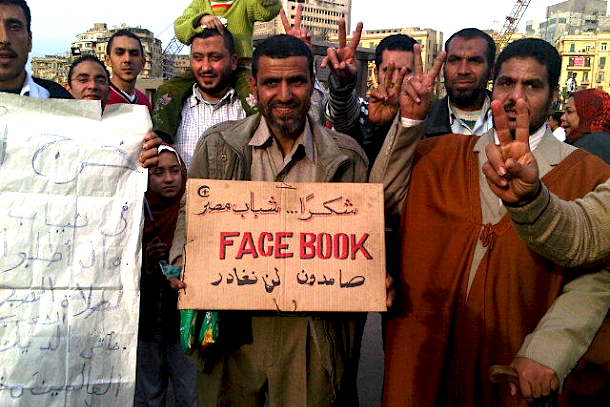
Facebook can be a powerful force for free speech, as we saw during the Arab Spring uprisings in Egypt and elsewhere, and I have no doubt that Zuckerberg is personally sincere when he champions the cause of free speech and not submitting to violent extremists. But the company is going to have to do a better job of following through on those principles in places like Turkey and Pakistan and Russia, if it wants to be believed.
In the aftermath of the brutal killings of a dozen staff members at the French satirical weekly Charlie Hebdo last week, rallies in support of free speech sprang up across Europe and elsewhere, most featuring the slogan “Je Suis Charlie.” Among those who spoke out against the terrorists and championed the cause of free speech was Facebook CEO Mark Zuckerberg — but as some users have pointed out, his company’s policies often don’t live up to that commitment.
The Facebook co-founder posted a long statement on Friday, in which he talked about being the subject of a death threat from an Islamic extremist in Pakistan several years ago, because the social network wouldn’t ban material that depicted the prophet Mohammed in a way that offended him. But Zuckerberg said he didn’t back down, and added that he remains committed to the ideal of free speech even in the face of such threats of violence:
“We stood up for this because different voices — even if they’re sometimes offensive — can make the world a better and more interesting place. Facebook has always been a place where people across the world share their views and ideas. We follow the laws in each country, but we never let one country or group of people dictate what people can share across the world.”
Note: This was originally published at Gigaom, where I was a senior writer from 2010 to 2015. The site still exists but the archive of old posts has been removed
The week or so between Christmas and New Year’s is always a slow period, even on social networks like Twitter, but one article made my feed light up despite the slowdown, at least for the media folks that I follow: namely, a piece in the New Yorker about Emerson Spartz, a 27-year-old entrepreneur the magazine refers to as the “King of Clickbait.” For most of my Twitter stream, the reaction to this piece was a combination of horror, disgust and resignation.
As depressing as the profile might be for those interested in “serious” journalism, however, I think it should be mandatory reading in all newsrooms, both traditional and digital. You may not like his work, but Spartz is learning everything he can about how content works online — which is more than I can say for plenty of other outlets. And the less we all know about that subject, the more likely it is that Spartz and his ilk will win.
By now, many media-watchers have grown accustomed to reading about viral content or “clickbait” specialists like Upworthy or BuzzFeed — which founder Jonah Peretti started as a kind of laboratory to test his theories about how and why content gets shared. People are pretty familiar with “attention gap” headlines and other tricks of the trade used by such outlets to drive huge amounts of traffic. But Emerson Spartz and his network of click factories make most of these sites look like the New York Times by comparison.
Spartz started at 12
I confess that I had never heard of Spartz before, nor most of his websites, and I expect I am not alone, even among those who follow the online media industry. His company is simply called Spartz Inc., and the names of the websites he runs are continually changing — and in any case their actual names or brands are almost irrelevant, as the New Yorker piece points out. All that matters is traffic, the vast majority of which (not surprisingly) comes from Facebook:
“The company operates thirty sites, which have no unifying aesthetic. Their home pages, which can be chaotic and full of old links, don’t always feature a Spartz logo; traffic is generated almost entirely through Facebook, so brand recognition is relatively unimportant. Most of the company’s innovations concern not the content itself but how it is promoted and packaged.”
Figuring out how content works online is something Spartz has been doing since he was a child: at the age of 12, he built and ran what became one of the largest and most popular sites devoted to Harry Potter, called MuggleNet. He used the funds from that to start a series of other sites — devoted to online memes, or inspirational content, or amazing facts. The main site in the Spartz stable right now is a site called Dose.com, formerly known as Brainwreck.
Put together, the sites run by Spartz and his team — which consists of about 35 people based in Chicago — are generating more than 60 million pageviews a month, with Dose.com accounting for about half that. By way of comparison, the Gawker Media empire of blogs like Gizmodo, Jezebel and Deadspin generates about 500 million pageviews in an average month and founder Nick Denton estimates the company is worth about $200 million. Emerson Spartz raised $8 million in venture financing last year, the New Yorker piece says, and made several million more in advertising revenue.
The fact that Spartz is building a company by trying to engineer viral content similar to BuzzFeed didn’t come as a surprise to anyone — but many in the traditional media industry did seem shocked by Spartz’s somewhat cavalier attitude towards crediting the sources of the content he uses (something BuzzFeed has also been criticized for). It’s almost as though he doesn’t see the actual source of the content as having any value at all:
“If you want to build a successful virus, you can start by trying to engineer the DNA from scratch — or, much more efficient, you take a virus that you already know is potent, mutate it a tiny bit, and expose it to a new cluster of people… more original lists take more time to put together, and we’ve found that people are no more likely to click on them.”
Providing either no credit or very little credit (usually by way of a “hat tip” link near the bottom) is arguably unethical, most of the media types in my stream pointed out. But the reality is that many readers don’t care where a piece of content came from, or even if it’s true or not — regardless of whether you think they should. I’m not saying that’s right, I’m simply pointing out that it’s a fact, one that people like Emerson Spartz will always use to their advantage.
The other thing that seemed to horrify many of the media people I follow was the fact that Spartz is not particularly interested in objective measures of quality — the only factor that determines whether his content matters is whether people share it or not. As he puts it in the New Yorker piece: “The way we view the world, the ultimate barometer of quality is: if it gets shared, it’s quality.”
What do readers want?
Journalists and publishers, of course, prefer to define quality in terms of the industry awards that their content wins, or the attention that it gets from a specific audience. But in a very real sense, Spartz is right — you can produce the best content you want, but if it doesn’t reach readers, then on some level it has failed. And how does it reach readers? That’s the part we all need to understand, and currently people like Jonah Peretti and Emerson Spartz are doing a better job of it than many traditional media companies.
Does that mean you have to indulge in clickbait? Not at all. But it does mean that you have to pay attention to how your content is (or isn’t) flowing and moving and being shared online, and that means devoting resources to it. BuzzFeed thinks so highly of data around this question that it recently appointed Dao Nguyen, the head of its data team, as publisher. Mashable doesn’t have a front-page editor — its front page is created algorithmically based on what people are reading and what they are sharing.
Media companies are still used to thinking of themselves as being in control of content, and of having some say in how and when it reaches readers, but this is a fiction. What control they used to have over distribution channels is gone — Facebook and Twitter and SnapChat control it now. Content has been freed from its restraints, like a virus escaping from a test tube. We can figure out how it works and what it wants, or we can twiddle our thumbs while others do.
The news that Citigroup now thinks Instagram could be worth as much as $35 billion likely caused some mouths to fall open last week, and the list of those who found themselves agape probably included co-founder Kevin Systrom and Twitter CEO Dick Costolo, although for very different reasons. Whether Citigroup has the actual number right or not is impossible to say — but what is clear is that the Instagram acquisition could be one of the smartest things that Facebook has ever done, and one of the best deals of the past decade.
The reason why Kevin Systrom might be shaking his head a little at the valuation is that such a huge number implies he might have sold the company too soon, something that Silicon Valley founders and their financial backers often worry about after the fact. Of course, it’s difficult to say whether Instagram would ever have gotten there if it had remained an independent company and not had Facebook’s marketing power behind it.
As for Dick Costolo, he’s likely remembering when Twitter tried to buy Instagram — and, according to some reports, had a deal ready to go — only to have Mark Zuckerberg swoop in and yank the company out of his grasp with a much higher offer. Now Instagram not only has more users than Twitter (although Twitter co-founder Evan Williams said recently that he doesn’t care about those figures) but it is now worth more too, at least theoretically.
Photo sharing = ads
Getting to $35 billion requires you to do some mental gymnastics of the kind that Wall Street analysts are pretty accustomed to — you take the 300 million users that Instagram says it has, then estimate what each one could generate in terms of advertising revenue, then look at what proportion of Facebook’s overall revenue that represents, then apply the same multiple that Facebook’s stock has and bingo: eventually you get $35 billion.
Om Malik with Instagram founder and CEO Kevin Systrom
So Citigroup analyst Mark May previously argued that Instagram was worth about $19 billion based on this arithmetic, but now he says its almost twice as much. Why? Because he thinks that Instagram’s advertising — with companies like Adidas, GE and Lexus — is going so well that the company could bring in far more revenue than he expected. In fact, he estimates that Instagram’s revenue will be close to $3 billion next year, or about three times what Facebook paid for the company.
Even if you disagree with the $35 billion price tag that Citigroup has come up with, it’s hard not to argue that Mark Zuckerberg got a hell of a deal when he bought Instagram for only $1 billion, even though that sounded like an awful lot of money at the time (of course, that was before Facebook paid an even more mind-boggling $19 billion for WhatsApp). Is it the best deal of the past decade? I think it’s right up there.
Better than YouTube?
It’s not just that Facebook paid $1 billion for something that might now be worth $35 billion, although that is pretty incredible in itself. It’s that by buying Instagram, Mark Zuckerberg was able to tap into something that had the potential to disrupt Facebook in the worst kind of way: a photo-sharing app that not only was growing like a weed, but appealed to younger users — the very same user base that was becoming increasingly disenchanted with Facebook proper.
Facebook’s purchase looks even smarter because of what it did after the acquisition, which is virtually nothing — in other words, it left Instagram alone to function more or less as it had before. I come across younger fans all the time who don’t even know that Facebook owns Instagram, and that’s probably for the best. This is a classic example of Zuckerberg’s willingness to disrupt himself and his business at the drop of a hat, often by spending billions (WhatsApp is another great example).
The only acquisition I can think of that comes close to Facebook’s purchase of Instagram is Google buying YouTube: just as it was in Instagram’s case, most analysts thought the $1.65 billion price tag for the video-sharing site was insane — especially given the potential copyright issues. This year, YouTube is estimated to be worth about $40 billion to Google, which is right in the same ballpark as Instagram, if you believe Citigroup’s numbers. And Google did the same thing with YouTube as Facebook did with Instagram — namely, mostly left it alone. There’s a lesson in there somewhere.