“Terra nullius.” Under international law, this Latin phrase meaning “nobody’s land” describes an area of land unclaimed by any sovereign nation-state. In an age where nearly every inch of the world’s landmass has been mapped, examples of terra nullius are exceedingly rare. Along the Croatian-Serbian border, a drawn-out dispute along the River Danube has resulted in claims of terra nullius around at least four small pockets of land. The boundary dispute began in 1947, after World War II, and flared again in the 1990s when attempts were made to restore the historical separation between Serbia and Croatia. Serbia claims its border runs down the center of the Danube; Croatia claims a different border, based on 19th-century land ownership maps, when the river ran a different course. 20-year-old Daniel Jackson, a dual British and Australian citizen, is the self-declared president of the “Free Republic of Verdis,” or Pocket 3, as it’s labeled on international maps. The microstate he lays claim to is located on the sandy shores of an uninhabited, 124-acre patch of land along the Danube. (via CNN)
It’s not looking good for a cow whose fate was sold off by a performance art group
Two years ago, a prankster art collective in Brooklyn known as MSCHF sold off shares in a black calf they nicknamed Angus, pledging to butcher him into burgers and leather handbags unless his arty stakeholders chose to save him. On March 13, the fully grown bull’s fate will be decided, and it’s looking grim.Only around a third of Angus’s 404 owners have plied their tokenized shares of the animal into the artists’ online Remorse Portal, signifying their wish to save his life. If Angus doesn’t cross the 50% mark by Friday, he’ll be butchered and shipped out as 1,200 hamburger patties and four leather handbags designed by the group to look like meat. The art world is typically accustomed to shock art, but “Our Cow Angus” is stirring up polarizing debates among collectors and on social forums at a level not seen since British artist Damien Hirst displayed rotting cow heads as art in the 1990s. Animal-rights activists are decrying MSCHF’s life-or-death project as a barbaric stunt while museum curators hail it as a relevant critique of consumer dissonance about beef. (via the WSJ)
Note: This is a version of my When The Going Gets Weird newsletter, which I send out via Ghost, the open-source publishing platform. You can see other issues and sign up here.
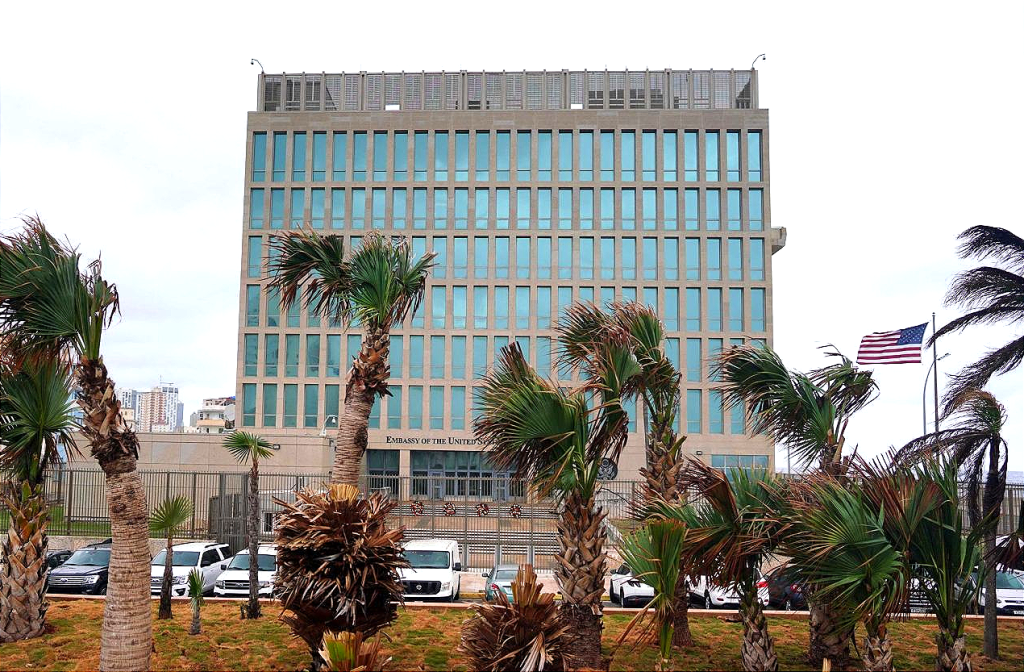
In In 2016, staff at both the U.S. and Canadian embassies in Cuba started reporting a host of unusual physical symptoms: severe headaches, nausea, muscle aches, nose bleeds, etc. Adults and children were both affected to varying degrees. Many of those who reported these symptoms said they heard high-pitched noises, clicks and other audio phenomena shortly before they felt the physical ailments in question. Many complained to their superiors, reports started getting out into the press, but little action was taken. Some within the military community — since the symptoms were also felt by members of the CIA and the Army — argued that the Russians must have some kind of microwave energy weapon that was causing these attacks. There was good reason for skepticism on the part of the U.S. government and other observers, however: namely, no existing weapon — even those in research labs — was believed to be capable of creating harmful sound waves that would affect individuals at close range.
There is a fairly long history of audio technology being used for things like crowd control etc. Police and other authorities in the U.S. have used what are called long-range acoustic devices or LRADs, large devices that emit a loud, painful sound over a long distance. These kinds of devices were used by police during demonstrations at the 2009 G20 Summit in Pittsburgh and during the 2014 protests in Ferguson, Missouri, following the fatal shooting of Michael Brown. As of the year 2017, the LRAD Corporation, the company that originally created the device, was selling them to police forces and the military in more than 70 countries. For 30 years or more there have been devices that emit what’s called “infrasound,” which is sound waves that are too low for the human ear to hear, and they can cause pain and nausea — but the devices involved are large, and the sound waves are spread over a large area, so are useful only with groups.
After the initial reports in Cuba in 2016, the mystery continued, as more and more diplomatic staff in Cuba described feeling the same symptoms, with some lasting weeks or even months. One staffer had to get a hearing aid. Some members of the staff had to leave Cuba and return to their home country to seek medical attention, but the cause was still unknown. Cuban diplomats were expelled from the U.S. even though it wasn’t clear they were involved, or what even happened, and both Canada and the U.S. reduced the number of staff they had in Cuba to a minimum. Then came the medical and government reports investigating the cause of what had become known as “Havana Syndrome.” Both American and Canadian embassy workers were tested by their respective governments, and scientists said that brain scans of staff from both countries showed some neurological damage. Meanwhile, similar symptoms or “attacks” were reported at other U.S. embassy locations, including in Russia, Poland, and Taiwan.
Note: This is a version of my Torment Nexus newsletter, which I send out via Ghost, the open-source publishing platform. You can see other issues and sign up here.
Lieutenant Thomas Conrad was standing in a control room in Nashville’s new central jail when he noticed something off with one of the key rings hanging on the wall. It was midday on December 30, 2019, and in two weeks the still empty jail would take in about seven hundred inmates. While contractors were finishing their work, Conrad, a senior correctional officer with the Davidson County Sheriff’s Office, was organizing equipment: handheld radios, handcuffs, and keys. Conrad had been an infantryman in Iraq, where he’d learned to spot slight inconsistencies in the landscape. Looking more closely at the key ring, he realized what was wrong: it was circular. All the others were horseshoe-shaped. Beazley pulled up footage from the control room that housed the keys. The footage showed nothing unusual until December 27th at 12:54 P.M. when the circular ring suddenly disappeared from its hook. A purple hand appeared in the frame. (via The New Yorker)
New Zealand’s possum problem had an unlikely solution: Selena Gomez’s Oreo-style cookies
Last year, American pop star, actor and beauty mogul Selena Gomez launched a surprising new expansion of her empire: Oreos. Nearly 200 years before the arrival of Selena Gomez Oreos, European settlers first introduced possums to Aotearoa. They’ve been wreaking havoc on our natural ecosystem ever since. Possums eat native birds and their eggs, contributing to 25 million killed each year. They spread tuberculosis to livestock, costing farmers $35 million a year. So a wildlife biologist decided to try the treats as bait in traps designed to catch possums. Hickling estimates he bought 20 packets of Selena Gomez Oreos for the trial, and soon was out in the field in Leeston attaching the cookies along the planks that lead up to the possum traps. In the control traps without Selena Gomez Oreos, they caught one possum in nine days. Once they began the “Selena Gomez regime”, they caught 15 possums in 20 days. (via The Spinoff)
Note: This is a version of my When The Going Gets Weird newsletter, which I send out via Ghost, the open-source publishing platform. You can see other issues and sign up here.
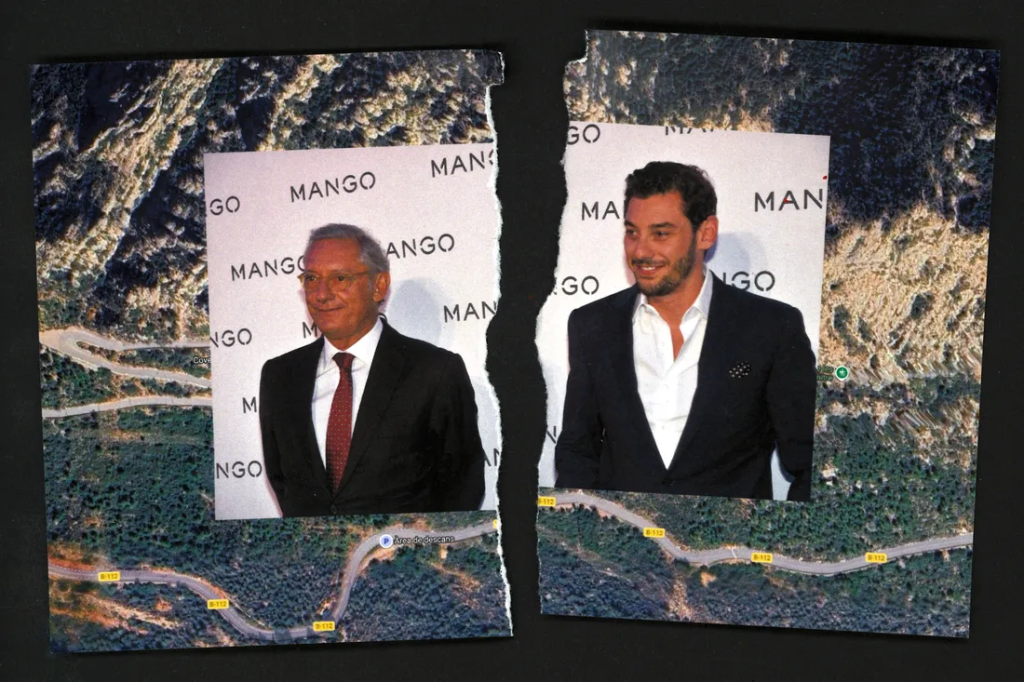
One afternoon in March 2024, Spanish society gathered at a prestigious Barcelona business school to celebrate Isak Andic, an unassuming Turkish-born entrepreneur who used to sell embroidered blouses in a Barcelona market stand and went on to found the affordable fashion brand Mango, becoming a billionaire in the process, the fifth-richest man in Spain. Nine months later, Andic was dead. On December 14, 2024, he went for a hike on Montserrat, the mountain just outside Barcelona, and plunged to his death from a cliff some 300 feet high. The only person with him was his son, Jonathan, then 43 and the firstborn of his three children. A few nights before Andic died, Mango had hosted a party at Barcelona’s Palau Sant Jordi arena celebrating Mango’s highest turnover in years, €3.3 billion. Now, the future and reputation of the company he built was in doubt, as was the largest fortune in Catalonia, an estimated $4.5 billion. (via The Cut)
A King penguin at the Edinburgh Zoo is the colonel-in-chief of the Norwegian King’s guard
The family of Norwegian shipping magnate Christian Salvesen gave a king penguin to Edinburgh Zoo when the zoo opened in 1913. When the Norwegian King’s Guard visited the Edinburgh Military Tattoo of 1961 for a drill display, a lieutenant named Nils Egelien became interested in the zoo’s penguin colony. When the King’s Guard returned to Edinburgh in 1972, Egelien arranged for the regiment to adopt a penguin. This penguin was named Nils Olav in honour of Nils Egelien, commander of the drill platoon, and Olav Siggerud, contingent commander of HMKG in 1972. Nils Olav was initially given the rank of lance corporal. He has been promoted each time the King’s Guard has returned to the zoo. He was made a corporal in 1982, then promoted to sergeant in 1987. Nils Olav I died shortly after his promotion to sergeant in 1987, and his place was taken by Nils Olav II, a two-year-old near-double. (via Wikipedia)
Note: This is a version of my When The Going Gets Weird newsletter, which I send out via Ghost, the open-source publishing platform. You can see other issues and sign up here.
As Perardi approached the terrace, he saw that his friend, Kota Youngblood, sat at one of the tables. Youngblood was tall and imposing, with a paunch and black hair that framed pale skin. He was dressed in black, with military tattoos on his arms, and the white athletic tape that always seemed to cover his fingers. They found Eventine, Youngblood said. He was dead. Youngblood’s oldest son had been found dead on a beach in Baja California, Mexico. The cartel had cut his throat and dismembered him. In a shaky voice, Youngblood claimed that the cartel had only gone after Eventine because he’d been trying to save Perardi and his family. Youngblood had used all of his military and government contacts to stop Perardi from being killed, and now his own son was dead. The only thing that could save them was if Perardi mustered $70,000. (via Rolling Stone)
Why are there giant arrows made of concrete spread across the United States?
From 1918 until about 1926/1927, the Post Office Department operated the nation’s airmail service. This was the early days of air travel, and the department needed a way for pilots to get from point A to point B safely and reliably, especially during nighttime flights or in bad weather. The solution? The department installed a system of 50-foot lighted beacon towers across the country, spaced several miles apart from each other. Eventually, the Post Office Department turned airmail delivery over to private contractors. In 1927, the Department of Commerce took over responsibility for the airways, and they continued to build additional flyways and expand existing ones. And it was around then that they installed the 70-foot-long concrete directional arrows at the beacons. It was an easy enough system: The beacon towers were each assigned a number. The arrows would point to the beacon with the next highest number. (via Saving Places)
Note: This is a version of my When The Going Gets Weird newsletter, which I send out via Ghost, the open-source publishing platform. You can see other issues and sign up here.
When I saw the post above, my response was “that’s the kind of bookstore I would like to own” — just tons of books and never any customers to bother you. It got me thinking about an old bookstore I used to go to in a small town, the kind of town with only one stop sign. The store was in an old log cabin from probably the turn of the century or so — no straight walls or 90-degree corners to be seen. The shelves were filled with books, but there were also piles of books on the floor, and the sorting method on the shelves might have made sense to someone, but not me — it didn’t appear to be alphabetical or by topic.
When I spoke to the older lady who ran the store, she appeared to be almost completely uninterested in selling any books. She was happy to talk about them until the cows came home — favourite authors, new books and old books, anything related to books. Or the weather for that matter. But she never mentioned how much a book cost, and when you asked to buy one it seemed like she just made up a price on the spot. And she seemed almost sad to let it go (maybe I am making this up but it seemed that way to me).
There was an overstuffed arm chair in the corner that looked very lived-in, with a small table that had a vase of flowers and a teapot and a cup and saucer, and a pile of books. Of course, there were cats who came and went — I have no idea whether she owned them or not, they paid no attention to her. And as I left the last time (she closed it not long afterwards and someone sells weed out of there now) I thought what a perfect life that would be. I honestly can’t even remember whether she had a cash register or not.
The bookstore below feels similar, although they do sell books somewhat more enthusiastically. It’s the Shakespeare & Co. bookstore on the Left Bank in Paris, right across the Seine from Notre Dame cathedral. It was opened in 1951 by George Whitman, and named after a bookstore of the same name that was founded in 1919 and closed in 1941. In addition to selling books, it houses aspiring writers in exchange for helping out around the bookstore — more than 30,000 people have slept in the beds found tucked between bookshelves. The shop’s motto, “Be Not Inhospitable to Strangers Lest They Be Angels in Disguise”, is written above the entrance to the reading library.
My city’s ‘Casual Fridays’ workplace default is not a coincidence, nor an act of free will by our bosses. It is the result of an extremely successful lobbying campaign. Specifically: A coordinated 1960s–90s effort by the Hawaiian Fashion Guild to convince mainland corporations that allowing employees to dress more casually on Fridays would boost morale, increase productivity, and, critically, increase the purchase of aloha shirts. This effort was branded “Operation Liberation,” which sounds like something from a declassified CIA memo. In the postwar period, Hawaii’s economy was struggling. Industries beyond tourism were in dire need of mainland demand. So the Guild began sending two aloha shirts to every member of the Hawaiian Senate and House, encouraging them to wear them to work on Fridays. The idea was to normalize the shirt locally, then export the concept to the continental U.S. It worked at every level. (via Why Is This Interesting)
When smallpox was eradicated Larry Brilliant sent a doctor a single Land Rover tire
Years ago, at the World Health Organization, I was working on the campaign to eradicate smallpox. One of our most vocal critics was a senior leader at WHO named Dr. Ignatovitch. He called the effort a waste of time and resources, saying: “If smallpox is ever eradicated, I’ll eat a Land Rover tire.” In 1975, a search of Bangladesh found one last case of smallpox in a young girl named Rahima Banu, in a village on Bola Island. I was sent from New Delhi to confirm she was indeed the last case of variola major in nature. In 1980, the world officially declared the disease eradicated—the first (and so far only) time that’s ever happened. And yes—one of the happiest days of my life was when we sent Dr. Ignatovitch a Land Rover tire. It was cleaned, boxed, and shipped with a note that read: “Dear Dr. Ignatovitch, In keeping with your promise, here is your tire. Would you like ketchup or mustard to go with that?” (via the Steve Jobs Archive)
Note: This is a version of my When The Going Gets Weird newsletter, which I send out via Ghost, the open-source publishing platform. You can see other issues and sign up here.
Among the many mysteries surrounding Jeffrey Epstein is how, exactly, a website famous for pornography and white nationalism got the scoop on his death. At 8:16 a.m. on August 10, 2019, an anonymous 4Chan user posted, “don’t ask me how I know, but Epstein died an hour ago from hanging, cardiac arrest. Screencap this.” It was the first public indication that Epstein, awaiting trial for sex-trafficking charges in Manhattan’s Metropolitan Correctional Center, died while in the custody of the Department of Justice. It beat ABC journalist Aaron Katersky’s post about Epstein’s death on Twitter, now known as X, by 38 minutes. The Epstein files show that the Justice Department tried to identify the 4Chan user behind the posts — but couldn’t figure it out. They subpoenaed 4Chan for the user’s IP addresses four days after the posts were made as part of the FBI’s investigation. From there, the trail went cold. (via Business Insider)
He just wanted to control his own robot vacuum but wound up controlling thousands of them
A software engineer accidentally uncovered a major smart-home security flaw after trying to control his robot vacuum with a PlayStation 5 controller, only to discover he could access thousands of devices around the world. Sammy Azdoufal was experimenting with his new DJI Romo robot vacuum and building a custom app so he could steer it using a PS5 controller. But while testing the setup, he realized the same credentials used to control his own device also opened the door to thousands of others. Instead of just moving his vacuum around the living room, Azdoufal suddenly had visibility into nearly 7,000 robot vacuums across 24 countries. The unexpected access didn’t just allow remote control; The backend flaw meant he could view live camera feeds, listen through microphones, and retrieve detailed home maps and device data from the vacuums. (via Dexerto)
Note: This is a version of my When The Going Gets Weird newsletter, which I send out via Ghost, the open-source publishing platform. You can see other issues and sign up here.
I came across a maxim many years ago in a blog post written by Chris Dixon, a startup guy who is now a partner with Andreessen Horowitz, the Silicon Valley VC outfit. In 2010 Dixon wrote: “The next big thing will start out looking like a toy,” a phrase inspired by Harvard professor Clay Christensen. Dixon’s post made a big impression on me at the time. I had just started writing for GigaOm in San Francisco, covering the intersection of media and technology, and it really fit a lot of what was happening. For example, I (and many others) had initially dismissed Twitter as a toy, a goofy app with no real purpose. My then-boss Om Malik was one of the first to write about it in 2006, and said it seemed annoying and not very useful for much. But somehow this goofy and annoying toy became a central player in things like the Arab Spring (which was quickly followed by the Arab Winter) and turned into a billion-dollar colossus that played a pivotal role in the rise of everyone from Donald Trump to Snoop Dog. Lesson learned!
A more recent example of this phenomenon with a much darker outcome is artificial intelligence, or at least the version we all know now as ChatGPT and other similar products (the GPT stands for “generative pre-trained transformer”). Large-language models. Since it feels like only yesterday that OpenAI released ChatGPT, it’s easy to remember how goofy and useless it seemed at the time. Sure, you could ask it to answer to something you could easily have Googled, and it would respond in an artificially human sort of way. How cute! Then came the image and video versions, where you could make your picture look like The Flintstones, or generate a creepy-looking video of someone with too many fingers, or Will Smith’s face melting while he tried to eat spaghetti. Remember those? So fun. But then slowly it started happening: the toy started to become more useful, and in the process it started to become a lot more frightening (to me anyway).
At the same time AI engines like Claude from Anthropic and Gemini from Google were helping to solve math problems or discovering new pharmaceuticals, these tools – or similar ones – were also being used by the ICE division of Homeland Security to surveil a huge proportion of the population, in what I and others have described as a modern Panopticon. Not that long ago, taking photos from license-plate readers and combining them with facial recognition from visual ID systems, and then combining that with images from Ring doorbells or traffic cameras, and adding data from social media or shopping apps or what have you would have been a Sisyphean task for human beings – technically feasible but hugely time intensive. This provided what some like to call “privacy through obscurity.” But the kinds of searches and indexing and comparisons and matching of databases that I’ve just described is literally child’s play for an AI engine.
Note: This is a version of my Torment Nexus newsletter, which I send out via Ghost, the open-source publishing platform. You can see other issues and sign up here.
Novartis has settled a lawsuit by the estate of Henrietta Lacks that alleged the pharmaceutical giant unjustly profited off her cells, which were taken from her tumor without her knowledge in 1951 and reproduced in labs to enable major medical advancements, including the polio vaccine. It’s the second settlement in lawsuits filed by the estate that accused biomedical businesses of reaping rewards from a racist medical system that took advantage of Black patients like Lacks. The settlement ends litigation between Novartis and the estate of Lacks, a mother who died of cervical cancer at age 31. Doctors at Johns Hopkins Hospital took Lacks’ cervical cells in 1951 without her knowledge, and the tissue taken from her tumor before she died became the first human cells to continuously grow and reproduce in lab dishes. HeLa cells became a cornerstone of modern medicine, enabling countless scientific and medical innovations, including the development of genetic mapping and even COVID-19 vaccines. (via AP News)
Why did British barrister Charles Foster decide to live like an animal?
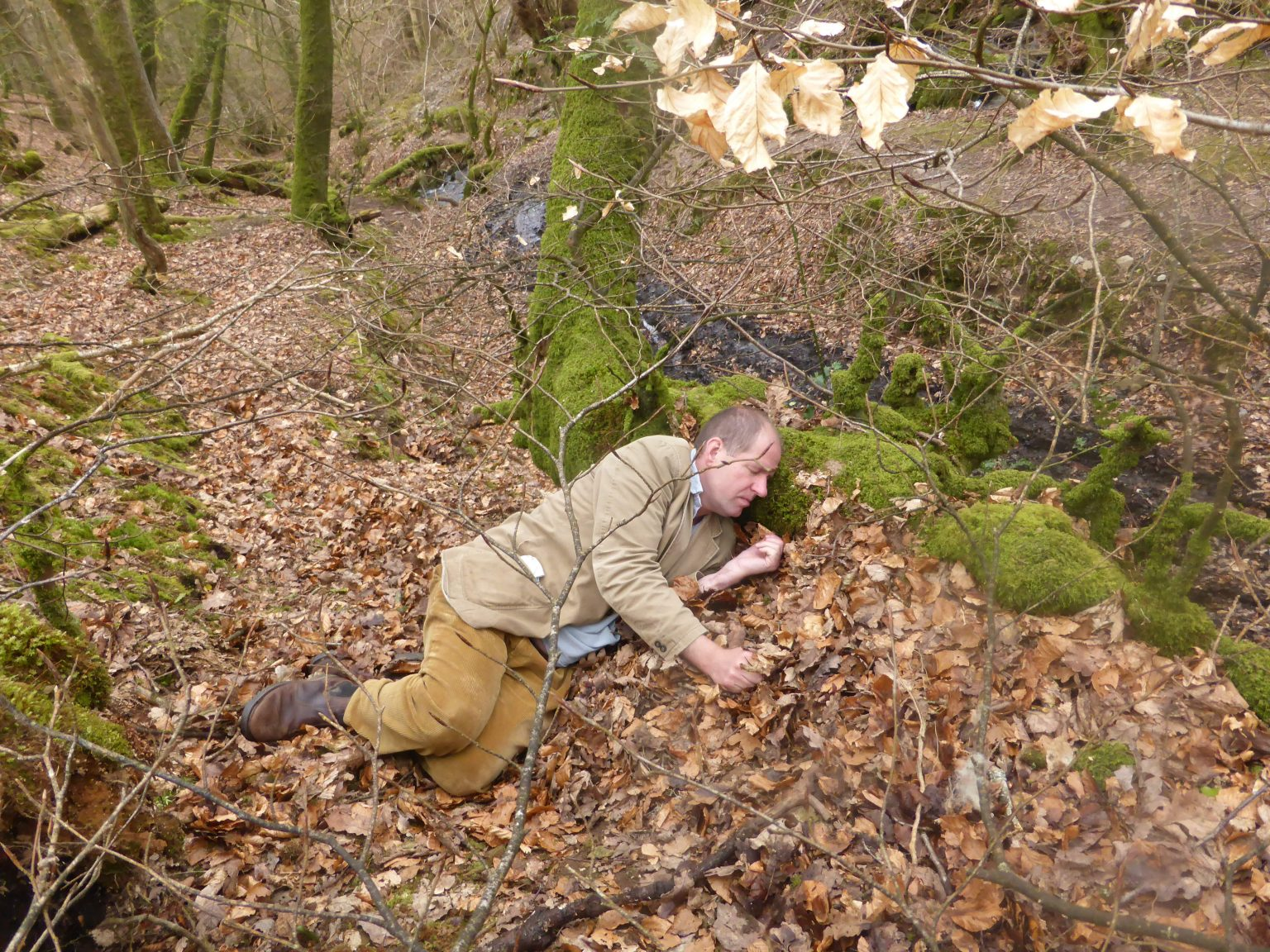
have become The Man Who Eats Worms,” Charles Foster shrugs, sorrowfully. “It’s not really a very interesting subject. It doesn’t tell you anything about how badgers experience the world.” This combination of self-deprecation and a quest for deeper purpose is what defines Foster, the 53-year-old barrister and Oxford medical tutor who decided to shed his professional human trappings and live like an animal. It also defines the book he has written about his experiences, called Being a Beast . Eating earthworms, licking slugs and scuffling around on all fours, he and his then eight-year-old son (or cub) Tom lived nocturnally for six weeks as badgers in a Welsh wood; his farmer friend dug out a sett for them in the hillside. In the East Lyn river, Foster thrashed around as an otter, catching the occasional unlucky fish in his mouth, and failing to notice a leech attached to his lip for an hour as his face numbed from the cold. (via New Statesman)
Note: This is a version of my When The Going Gets Weird newsletter, which I send out via Ghost, the open-source publishing platform. You can see other issues and sign up here.
A couple of months ago, a man arrived for his 50th dinner at Nisei, the one-Michelin-starred Japanese fine-dining restaurant in Russian Hill. As he sauntered up Polk Street in his signature white tennis shoes, jeans, blazer, and backpack, the entire Nisei staff was waiting outside to greet him with a round of applause. It was as if royalty had arrived. Except by all accounts, it was just a guy named Michael Grepo. Grepo, 67, is a single, former federal employee who, for the past 38 years, has been living in a rent-controlled in-law apartment in Miraloma Park. It’s the same neighborhood where he grew up in a Filipino family. He pays $1,000 a month, utilities included. He doesn’t own a car. He takes Muni to dinner. When he’s not eating out, he makes himself monastic bowls of tofu and steamed kale. But since his retirement in 2018, he has become a regular at the kind of restaurants that don’t normally have regulars. (via the SF Standard)
The European witch trials were a result of competition between Catholics and Protestants
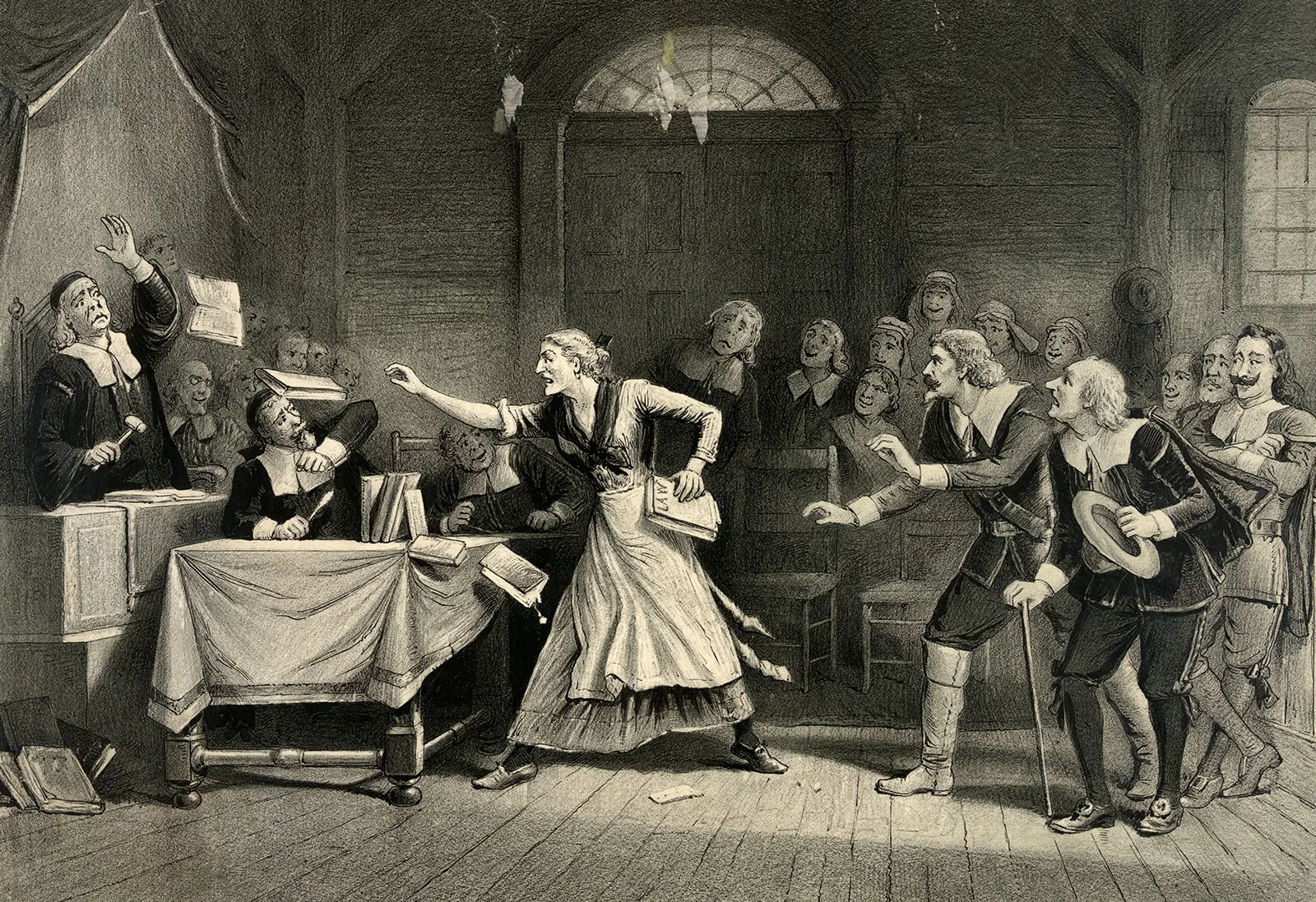
Between 900 and 1400, Christian authorities were unwilling to so much as admit that witches existed, let alone try someone for the crime of being one. This was not for lack of demand. Belief in witches was common in medieval Europe and in 1258 Pope Alexander IV had to issue a canon to prevent prosecutions for witchcraft. By 1550, Christian authorities had reversed their position entirely. Witches now existed in droves and, to protect citizens against the perilous threat witchcraft posed to their safety and well-being, had to be prosecuted and punished wherever they were found. In the wake of this reversal, a literal witch-hunt ensued across Christendom. The great age of European witch trials would not end for another 150 years. By the time it did, no fewer than 80,000 people had been tried for witchcraft, half of them executed. We argue that this reflected non-price competition between Catholic and Protestant churches for religious market share in confessionally contested parts of Christendom. (via Peter Leeson)
He thought they were homework but they were famous unsolved problems
In 1939, George Dantzig rushed off to his graduate statistics class at UC Berkeley. As he sat down among the other graduate students in class, his eye was caught by a set of math problems written up on the blackboard. Assuming them to be the day’s assigned homework, he copied them down and turned them in to his professor, and apologized for taking so long to do the homework. Early Sunday morning about six weeks later, Dantzig and his wife were awakened by someone banging on their front door. They were surprised to find an out-of-breath Neyman with an excited look on his face, clutching a couple of rumpled papers. He had just written an introduction to one of the papers and wanted to send it out for publication. As it turned out, the problems Dantzig had mistaken for homework were really two famous unsolved statistics problems that were now, at the suggestion of Neyman, taken up as his doctoral dissertation. (From UMD)
Hi everyone! Mathew Ingram here. I am able to continue writing this newsletter in part because of your financial help and support, which you can do either through my Patreon or by upgrading your subscription to a monthly contribution. I enjoy gathering all of these links and sharing them with you, but it does take time, and your support makes it possible for me to do that. I also write a weekly newsletter of technology analysis called The Torment Nexus.
The Tully Monster was an ancient marine animal whose fossils have only been found in Illinois
Tullimonstrum, colloquially known as the Tully monster or sometimes Tully’smonster, is an extinct genus of soft-bodied bilaterian marine animal that lived in shallow tropical coastal waters of muddy estuaries during the Pennsylvanian, about 310 million years ago. Examples of Tullimonstrum have been found only in sediments deposited far from the palaeocoast (formally termed the Essex biota), in the Mazon Creek fossil beds of Illinois. This creature had a mostly cigar-shaped body, with a triangular tail fin, two long stalked eyes, and a proboscis tipped with a mouth-like appendage. Amateur collector Francis Tully found the first of these fossils in 1955 in a fossil bed known as the Mazon Creek formation. He took the strange creature to the Field Museum of Natural History, but paleontologists were stumped as to which phylum Tullimonstrum belonged to. (via Wikipedia)
Scientists say that the giraffe’s long neck evolved for sexual combat
If you’re a fan of Rudyard Kipling’s Just So Stories, you’ll recall “How The Elephant Got His Trunk,” “How The Leopard Got His Spots,” and the like. You probably also remember from basic biology the regnant evolutionary account of “How The Giraffe Got His Long Neck.” It lent itself to contrasting Lamarckian selection — in which early giraffes stretched their necks to reach higher leaves, thereby bequeathing their long neckedness to subsequent generations — with Darwinian natural selection, in which evolution favored those individual giraffes whose genetic background endowed them with longer necks, thus selecting for this trait. Although Lamarck remains in disfavor, research recently published in the journal Science strongly suggests that a different and far sexier variant of natural selection — appropriately termed sexual selection — has been operating. Time to revise the textbooks. But not completely. (via Nautilus)
He built a chessboard with a taser built in that shocks you if you make the wrong move
Acknowledgements: I find a lot of these links myself, but I also get some from other places that I rely on as “serendipity engines,” such as The Morning News from Rosecrans Baldwin and Andrew Womack, Jodi Ettenberg’s Curious About Everything, Dan Lewis’s Now I Know, Robert Cottrell and Caroline Crampton’s The Browser, Clive Thompson’s Linkfest and Why Is This Interesting by Noah Brier and Colin Nagy. If you come across something you think should be included here, feel free to email me at mathew @ mathewingram dot com
Svetlana, who was then eighty-one years old, lived in a senior citizens’ center in Spring Green, Wisconsin. When we met, she was dressed in baggy gray sweatpants and sunglasses. She was short and compact, and her once red hair had turned white and had started to thin. Scoliosis had given her a hunch, and she used a cane. She showed me her one-bedroom apartment, and the little desk by a window where her typewriter stood. Her bookshelf included the Russian-English dictionary that her father had used. Svetlana was welcoming, and spoke with the energy of someone who hadn’t told her story in a long time. After a few hours, she wanted to take a walk. We headed down a quiet street, to a garage sale, where a man in a Harley-Davidson T-shirt was selling a small cast-iron bookshelf. He asked Svetlana if she wanted to buy it. She couldn’t, she said. She had only twenty-five dollars until her welfare check came. (via the New Yorker)
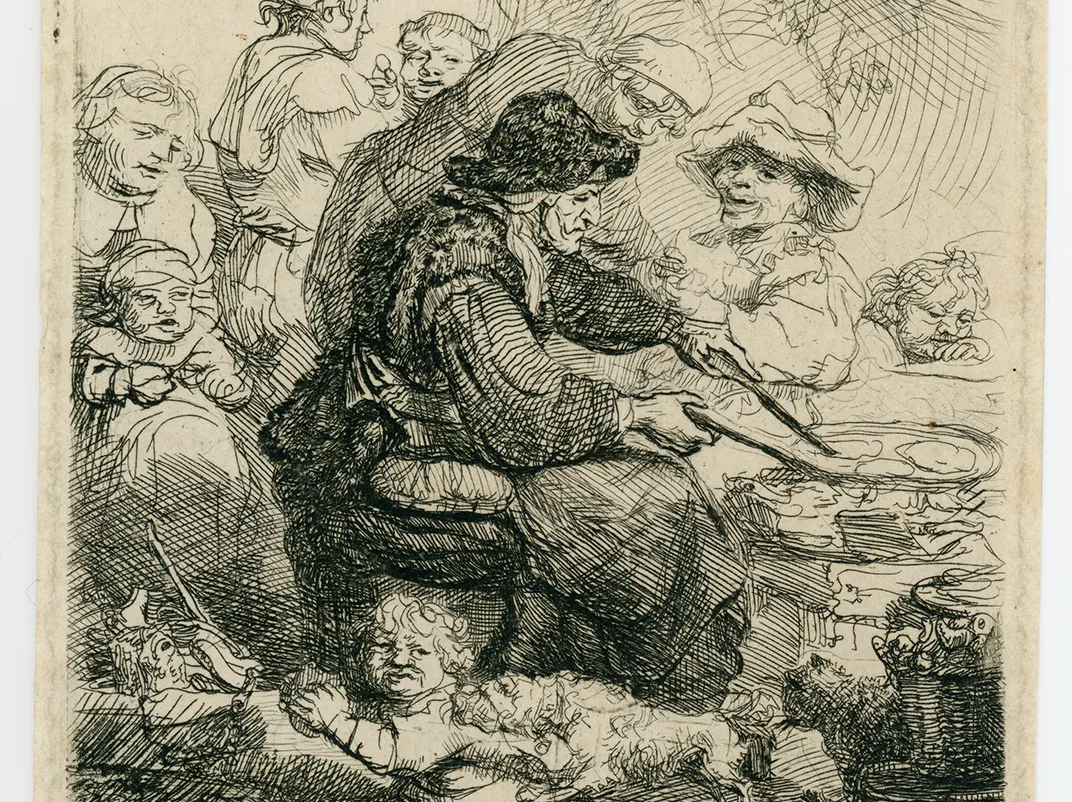
She discovered 35 forgotten Rembrandt etchings while cleaning out an old desk
Charlotte Meyer is a Dutch woman who made a life-changing discovery in 2020, when she decided to sort through a drawer of heirlooms that had long gone untouched. Years before, when Meyer’s grandfather died, he left her a folder of prints that had been in the family for roughly a century. When Meyer finally opened the folder, she found 35 etchings created by the Dutch master Rembrandt van Rijn, whose 17th-century paintings and prints are renowned as some of the greatest visual art to come out of the Western world. Meyer’s grandfather collected the etchings between 1900 and 1920. They were small, with some measuring only a few centimeters in length. At first, Meyer wasn’t sure if the artworks were truly by Rembrandt. She felt sheepish calling experts at the Stedelijk Museum Amsterdam, but when the experts arrived at Meyer’s home and went through the etchings, the full weight of the find sank in. (via the Smithsonian)
Note: This is a version of my When The Going Gets Weird newsletter, which I send out via Ghost, the open-source publishing platform. You can see other issues and sign up here.
Svetlana, who was then eighty-one years old, lived in a senior citizens’ center in Spring Green, Wisconsin. When we met, she was dressed in baggy gray sweatpants and sunglasses. She was short and compact, and her once red hair had turned white and had started to thin. Scoliosis had given her a hunch, and she used a cane. She showed me her one-bedroom apartment, and the little desk by a window where her typewriter stood. Her bookshelf included the Russian-English dictionary that her father had used. Svetlana was welcoming, and spoke with the energy of someone who hadn’t told her story in a long time. After a few hours, she wanted to take a walk. We headed down a quiet street, to a garage sale, where a man in a Harley-Davidson T-shirt was selling a small cast-iron bookshelf. He asked Svetlana if she wanted to buy it. She couldn’t, she said. She had only twenty-five dollars until her welfare check came. (via the New Yorker)
She discovered 35 forgotten Rembrandt etchings while cleaning out an old desk
Charlotte Meyer is a Dutch woman who made a life-changing discovery in 2020, when she decided to sort through a drawer of heirlooms that had long gone untouched. Years before, when Meyer’s grandfather died, he left her a folder of prints that had been in the family for roughly a century. When Meyer finally opened the folder, she found 35 etchings created by the Dutch master Rembrandt van Rijn, whose 17th-century paintings and prints are renowned as some of the greatest visual art to come out of the Western world. Meyer’s grandfather collected the etchings between 1900 and 1920. They were small, with some measuring only a few centimeters in length. At first, Meyer wasn’t sure if the artworks were truly by Rembrandt. She felt sheepish calling experts at the Stedelijk Museum Amsterdam, but when the experts arrived at Meyer’s home and went through the etchings, the full weight of the find sank in. (via the Smithsonian)
Note: This is a version of my When The Going Gets Weird newsletter, which I send out via Ghost, the open-source publishing platform. You can see other issues and sign up here.